













We’ve long known that music is “good” for us. But in 2026, music is increasingly being recognized as a non-pharmacological intervention that can, in some cases, be as effective as anti-anxiety medication, especially for aging adults.
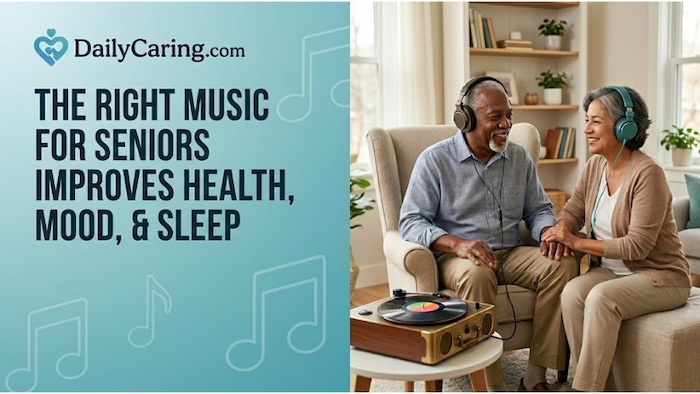
Whether your loved one is aging at home or in memory care, building a purposeful “music ecosystem” can drastically improve their quality of life.
Why Music Matters More Than Ever
Recent studies, including those highlighted in the documentary Alive Inside, show that music engages parts of the brain that remain active even as language and memory begin to fade. For a senior with dementia, a specific song can act as a “backdoor” to their identity.
The 2026 Therapeutic Playlist Guide
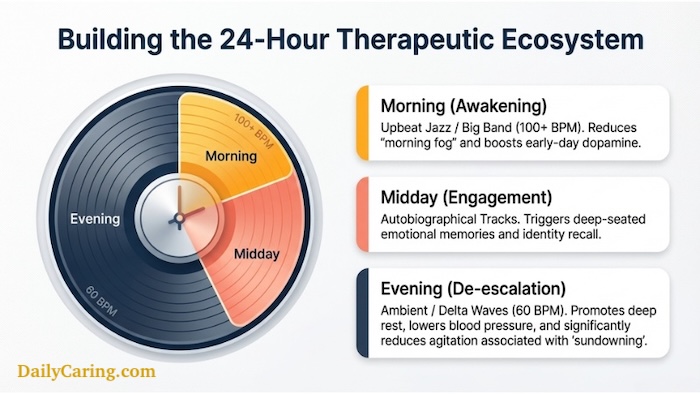
To get the most out of music therapy at home, you need to match the “vibe” to the goal. Use this chart to build a 24-hour therapeutic schedule:
Music Can Improve Health, Mood, and even Sleep
This study showed that in stressful pre-surgery situations, patients who listened to music rather than taking anti-anxiety meds actually had less anxiety and lower cortisol (stress) levels.
Other studies say that music can also:
- Reduce pain
- Reduce blood pressure
- Help post-stroke recovery
- Improve memory and engage people with memory disorders like Alzheimer’s or dementia
- Improve sleep
- Improve mood and decrease depression
- Have an anti-seizure effect
- Boost immune function
These are all great reasons to make music a part of your senior’s daily routine. As a bonus, music might help you feel happier and less stressed, too!
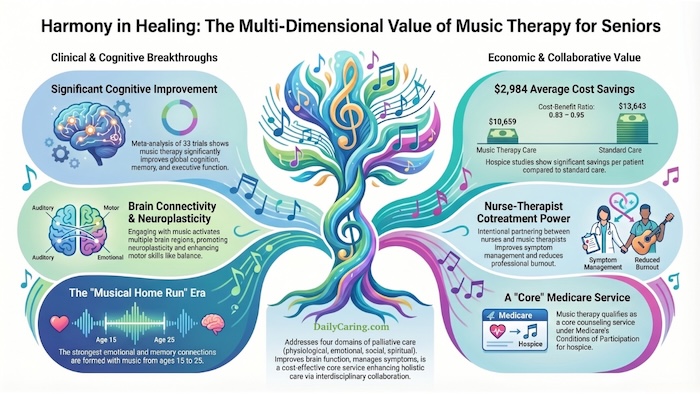
INFOGRAPHIC: Music Therapy for Seniors
Modern Tools for 2026
- Smart Speakers: Devices like the Amazon Echo or Google Nest are game-changers. A senior can simply say, “Alexa, play Frank Sinatra,” restoring a sense of independence and control.
- Personalized AI Playlists: New services use AI to cross-reference a senior's hometown and graduation year to “resurrect” songs they haven't heard in decades.
- Solfeggio Frequencies: Many caregivers are now using specific sound frequencies (such as 528Hz) to support anxiety and emotional regulation during transitions or “sundowning” periods.
VIDEO: The Case for Music Therapy in Dementia
Next Steps: Build Your Caregiver Strategy
Don't let the music stop. Use these resources to integrate sound into your daily routine and manage your own stress in the process:
1. Find the Favorites: Explore our curated list of music seniors love from every generation to find the specific hits that will spark a smile.
2. Calm the Chaos: Use customized stress-reducing music for caregivers to keep energy steady while managing difficult behaviors.
3. Restore Rest: If nighttime is a struggle, implement these 2 strategies for improved senior sleep alongside your evening playlist.
4. Expert Guidance: For more on clinical applications, visit the American Music Therapy Association to find a board-certified therapist in your area.
Your 3-Step Music Action Plan
Healthcare Disclaimer:
The information provided on DailyCaring is for educational purposes and does not substitute for professional medical advice. Music therapy is a powerful tool, but it should be used as part of a comprehensive care plan. We recommend consulting with your board-certified music therapist or primary physician before making significant changes to a senior's care routine.
You might also like:
— Alive Inside: Movie Shows How Music Helps Dementia
—6 Everyday Products That Help with Caregiving
— Questions to Ask When Hiring a Caregiver
About the Author

Connie is the founder of DailyCaring.com and was a hands-on caregiver for her grandmother for 20 years. (Grandma made it to 101 years old!) She knows how challenging, overwhelming, and all-consuming caring for an older adult can be. She also understands the importance of support, especially in the form of practical solutions, valuable resources, and self-care tips.


Hai, I’m doing the master thesis about the senior citizen join the church choir. Thank for the information. It’s helping me a lot. Thanks and GOD bless!
I’m so glad we could help in your research! I love that you’re focusing on older adults who sing — it’s such an uplifting activity. Best, Connie
All of this is very true but you can’t just put on music and then let them be. You have to have specialized training to fully benefit the person and their health. A music therapist would be perfect for this task. Music therapists know all about the healing power of music and they know what to do when the music triggers such a response. In general, I love this article! I just wanted to further inform those who may not know about the music therapy field. Keep on advocating for the healing powers of music!
Hi Gregory, thank you! I’m so glad you found the article helpful. Thank you for sharing how music therapists can help seniors benefit from music even more. However, there’s also a lot to be said for simply sitting and enjoying music together. We don’t have to be experts to put on some tunes for our loved ones, listen to great songs, and reminisce with them when the music brings back fond memories. That’s one of the best things about music — it’s universal and can be enjoyed by everyone from birth to end-of-life.