













No. A crossword puzzle will not cure Alzheimer's disease. Word games cannot stop the physical pathology of dementia, nor can they prevent the amyloid plaques and tau tangles that physically deteriorate the brain.
However, if you are looking for a data-driven reason to encourage your aging parent to pick up a pencil, the medical evidence supporting the benefits of engaging in crossword puzzles and other brain games is compelling.
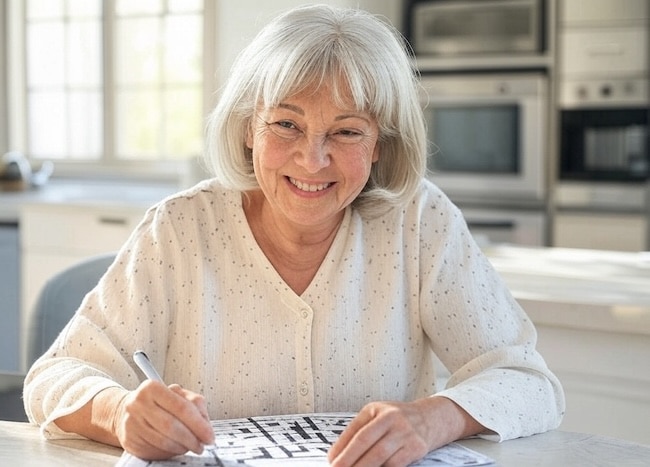
Research indicates that cognitively stimulating activities, such as solving daily crossword puzzles, build a critical neurological buffer known as “cognitive reserve.”
A comprehensive, peer-reviewed study by researchers at Rush University Medical Center found that maintaining a highly active cognitive lifestyle can delay the onset of clinical Alzheimer's dementia symptoms by up to 5 years.
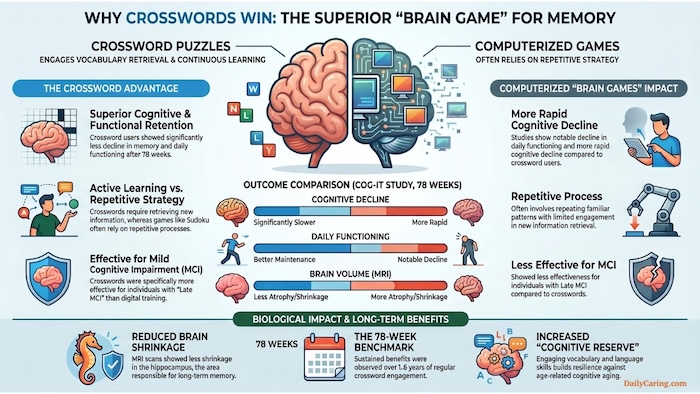
Crossword Puzzles Help Exercise the Brain
Crossword puzzles are a low-stress way to keep the mind active. They support memory, attention, language skills, and problem-solving. These activities can help maintain mental acuity in older adults and are often recommended as part of a brain-healthy routine.
Working through clues helps with recall and cognitive flexibility. Daily crosswords, in particular, can create a helpful habit of engaging the brain in short, focused bursts. Searching for the correct words improves focus and language processing.
People who enjoy reading, learning, and playing with language often excel at puzzles like these. But you don’t need to be a trivia expert — puzzles are available for all skill levels, so anyone who enjoys a mental challenge can benefit.
VIDEO: Crossword Puzzles Can Promote Brain Health
Understanding Cognitive Reserve
When an aging adult routinely challenges their brain with language processing, memory recall, and problem-solving, they strengthen their neural connections. This robust network allows the brain to essentially “work around” the physical damage caused by aging or disease for longer.
To understand why this matters for daily caregiving, you must understand the clinical difference between Alzheimer's pathology and dementia symptoms.
| Clinical Aspect | How Crossword Puzzles Impact It |
|---|---|
| Physical Brain Pathology | No impact. Brain games cannot stop the biological accumulation of plaques and tangles that define Alzheimer's disease. |
| Symptom Onset | Significant impact. By building cognitive reserve, seniors can delay the visible signs of cognitive decline, maintaining their independence and communication skills for years longer than they otherwise would. |
| Current Dementia Patients | Measurable benefit. Reviews by the Cochrane Library show that mental stimulation in patients who already have mild to moderate Alzheimer's can delay the worsening of symptoms by six to nine months, improving overall quality of life. |
Where to Find the Right Puzzles For Brain Health
To reap these cognitive benefits, the activity must be engaging rather than frustrating. Handing a senior with mild cognitive impairment a Sunday New York Times crossword will likely cause anxiety and agitation. You need puzzles designed specifically for aging eyes and varying cognitive abilities.
Free Monthly Puzzle Options
Q.E.T.S. is an excellent resource that publishes new, free large-print puzzles every month. Their free offerings include:
- 5 standard crossword puzzles
- 5 free-form crosswords (non-square layouts that are highly accessible)
- Assorted word search puzzles for pattern recognition
These puzzles are provided in an easy-to-print PDF format. If the standard large print is still too small, simply adjust your printer settings to scale the image up before printing.
Premium Curated Collections
If you prefer not to hunt for new puzzles every month, Goodday Puzzles offers a specialized, downloadable pack of 25 themed crossword puzzles. Designed entirely for seniors, this premium pack includes an answer key and accessible themes for $5.
“One of my favorite memories as a child was waking up in the middle of the night and finding my grandmother awake at the dining room table finishing the daily crossword puzzle in her local newspaper. She used a pen, and as an adult who attempts the crosswords now, I'm still in awe of her confidence.” – Amie Clark – DailyCaring
Frequently Asked Questions About Senior Brain Games
Are crossword puzzles good for seniors?
Yes. Crossword puzzles help seniors stay mentally active, support memory and concentration, and encourage problem-solving skills. They are low-cost, accessible, and simple to fit into a daily routine, making them an excellent option for brain engagement.
Do word games prevent dementia?
Word games cannot prevent the physical pathology of dementia, but they can help slow cognitive decline. Regular mental activity builds cognitive reserve, which is associated with a delayed onset of clinical Alzheimer's symptoms over time.
Which games lower the risk of dementia?
Games that stimulate thinking, memory, and attention are best for cognitive reserve. Crossword puzzles, word searches, Sudoku, chess, and complex card games are highly recommended for their sustained cognitive benefits.
Final Thoughts on Crossword Puzzles for Brain Health
There is no magic pill to prevent Alzheimer's. However, helping your loved ones engage with a daily crossword puzzle is a proven, data-backed method to build cognitive resilience. It is a low-cost, low-stress intervention that can buy families precious, functional time before the most severe symptoms of dementia take hold.
Recommended for you:
- Jigsaw Puzzles for Seniors at All Ability Levels
- Entertain and Engage Seniors with Books on Tape
- 9 Enjoyable Activities for Seniors with Limited Mobility
About the Author

Connie is the founder of DailyCaring.com and was a hands-on caregiver for her grandmother for 20 years. (Grandma made it to 101 years old!) She knows how challenging, overwhelming, and all-consuming caring for an older adult can be. She also understands the importance of support, especially in the form of practical solutions, valuable resources, and self-care tips.


As an at-home hospice patient, I spend much of my time resting. I found your site with the offering of crossword puzzles which has helped me feel that time is more productive now. Thank you!
You’re most welcome Janna! We’re glad that you are finding them helpful. Have a great day.
This is a fantastic resource — large print puzzles do help keep seniors mentally active without adding eye strain. I’ve shared this with my mother, and she’s loving it!
Thanks again for all the helpful content on this site!
I’m a nurse and I got to share the crossword puzzles with my dementia patient. It helped put his mind at ease. Thank you!
I am 95 and love to work crossword puzzles I like to print them off so I don’t have to sit at computer
Crosswords are a fantastic and fun activity, we hope you enjoy these!
Don’t know where to get the answers.
The answers are on the last page of each set of printables
Preferably free please!
The large print crosswords linked above are free to use.
Love this service. I am the caregiver for my wife. These puzzles are truly helpful.
Thanks James! So glad this is helpful!
Please add help information so I would be able to participate.
Hi Martha, Click the “Next Step” link to go directly to the website that offers dozens of free puzzles. Have fun!