













The holiday season brings cherished traditions and joyful gatherings, but for families caring for a loved one with Alzheimer's disease or dementia, it can also bring stress, exhaustion, and worry that the magic is gone. The good news is that meaningful celebrations are still possible.

By shifting expectations and focusing on connection over perfection, you can reduce sensory overload and create moments of genuine comfort. Below are four practical, caregiver-tested strategies to help seniors with Alzheimer's enjoy the holidays while protecting your own peace of mind.
These four simple yet powerful strategies will help you adapt your celebrations, reduce overwhelm, and rediscover the peace and happiness of the holidays together.
Quick Guide: 4 Ways to Make the Holidays Easier With Alzheimer's
- Protect Your Own Calm: Older adults with dementia mirror caregiver stress, so scale back commitments, ask family for help, or use respite care.
- Simplify Family Traditions: Focus on one or two favorite rituals, such as singing classic songs or baking, rather than trying to do everything as you used to.
- Include Them in Simple Prep: Offer failure-free tasks like rolling cookie dough, wiping the table, or folding napkins to build a sense of purpose.
- Limit Visual & Noise Clutter: Avoid blinking lights and crowded rooms that trigger disorientation, and brief visitors in advance on how to communicate.
Alzheimer's Holiday Planning Strategies at a Glance
| Holiday Strategy | Simple Action Step | Real-World Benefit |
|---|---|---|
| Minimize Caregiver Stress | Say no to extra obligations and take 2-minute breathing breaks. | Prevents mood contagion, agitation, and caregiver burnout. |
| Modify Traditions | Host shorter daytime gatherings instead of late-night dinners. | Avoids evening sundowning and preserves energy for everyone. |
| Involve Them in Prep | Assign safe, familiar tasks like stringing cranberries or polishing silver. | Sparks feelings of usefulness, inclusion, and calm engagement. |
| Limit Decorations | Skip flashing lights and keep walkways clear of extra clutter. | Reduces sensory overload, confusion, and indoor fall risks. |
| Prepare Visitors | Send a brief pre-visit note explaining symptoms and setting up a quiet room. | Eliminates awkward moments and gives your loved one a safe retreat. |
Why Are the Holidays Stressful for Seniors With Alzheimer's?
Holidays often trigger stress and confusion for seniors with Alzheimer's because they disrupt familiar daily routines and introduce loud noises, unfamiliar faces, and extra visual clutter. Scaling back plans and adapting traditions can help your loved one feel safe, included, and emotionally comforted, even if they don't remember the details later.
“When a loved one has dementia, the goal of the holidays shifts from creating the perfect celebration to sharing moments of simple, present-moment joy. It's not about what they remember, but about the feeling of love and safety you can create for them right now.” – Paula Spencer Scott, dementia care specialist and author of “Surviving Alzheimer's: Practical Tips and Soul-Saving Wisdom for Caregivers”.
How Can You Help Seniors With Alzheimer's Enjoy the Holidays?
You can help a loved one with Alzheimer's enjoy the holidays by managing your own stress first, simplifying family traditions, involving them in failure-free preparations, and keeping decorations minimal. Preparing extended family members in advance and designating a quiet room also prevents overwhelm and makes gatherings more enjoyable for everyone.
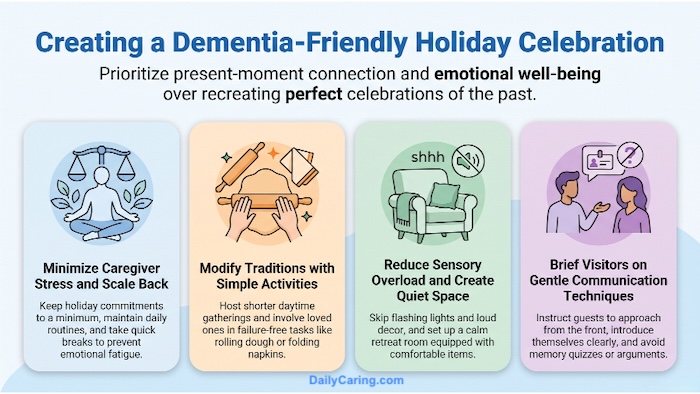
4 Tips to Help Seniors with Alzheimer’s Enjoy the Holidays
1. Minimize Your Own Stress
People with Alzheimer’s or dementia are usually quite sensitive to other people’s moods and feelings.
If you’re stressed and anxious, they’re likely to become stressed and agitated, too. That can lead to challenging behaviors, which in turn will make you even more stressed. It’s a vicious cycle.
You can’t eliminate stress, so keep extra commitments to a minimum. That way, you won’t be overwhelmed by time-consuming holiday tasks.
Ask family to help with your senior, use respite programs, hire in-home help, or start saying no to things you don’t want to do.
If stress starts getting the better of you, take a brief break away from your older adult so it doesn’t affect them. Step into another room (even the bathroom) to take some deep breaths or do a 2-minute calming exercise.
2. Plan to Modify Family Traditions
With so many caregiving responsibilities, trying to do everything “as we used to” will likely feel overwhelming and stressful, so find ways to make traditions work for your loved one.
Minimize everyone’s stress by paring down to a few of the most meaningful traditions.
Ask your loved one which traditions they value most. This helps them feel important and involved.
That could mean choosing something meaningful to them, like trimming the Christmas tree, lighting the menorah, singing traditional songs, or baking special holiday treats.
VIDEO: 4 Strategies to Enjoy the Holidays Despite Dementia
3. Let Seniors Get Involved in Preparations for the Holidays
Letting older adults participate in holiday preparations helps them feel included and familiar with the upcoming festivities.
Focus on their current abilities and have them assist with small tasks they can accomplish. They’ll feel helpful and be happily occupied while you work on other things.
Activity suggestions:
- Peeling potatoes or carrots
- Rolling cookie dough
- Wiping the table
- Polishing silverware
- Stringing cranberries
- Wrapping presents
Even if they don’t do a great job, let them continue if they’re enjoying themselves. You can redo any essential tasks later.
4. Limit Holiday Decorations
Use moderation when decorating. Too much clutter, decor, or twinkling lights could cause overstimulation and disorientation.
Focus on cheerful items that evoke happy memories and are integral to family traditions.
Bonus Tip: Prepare Family and Visitors in Advance
Extended family members who haven't seen your older adult recently may be shocked by their cognitive decline or unsure of how to interact. Set everyone up for success by sending a quick email or text before the gathering.
Briefly explain what symptoms they might see (like repetitive questions or confusion) and offer simple communication tips, such as approaching from the front, speaking clearly, and avoiding arguing. Remind guests that if the senior becomes overwhelmed, you have a designated “quiet room” where they can retreat to rest without feeling rude.
Frequently Asked Questions About Dementia and the Holidays
Why do the holidays make dementia symptoms worse?
The holidays often involve sudden changes to a senior's daily routine, an influx of unfamiliar faces, loud background noise, and visual clutter from decorations. This combination of disrupted routines and sensory overload frequently triggers anxiety, confusion, and challenging behaviors in older adults with dementia.
Should we correct a senior with dementia if they forget a family tradition?
No. Arguing or trying to force them to remember will only cause frustration and agitation for both of you. Instead, practice validation therapy by meeting them in their current reality, focusing on the emotions they are expressing, and gently redirecting them to a calming, failure-free holiday activity like listening to familiar music.
How long should holiday visits be for someone with Alzheimer's?
Keep visits short and time them strategically. Aim for gatherings during your loved one's best time of day, which is usually late morning or early afternoon. Limit visits to one or two hours to prevent exhaustion, and avoid late afternoon or evening events if they are prone to sundowning.
What if my loved one gets overwhelmed during a holiday gathering?
Gently escort them to a pre-planned quiet room away from the noise and crowd. Offer a comforting drink, play soft familiar music, or sit quietly together until they feel calm again, and reassure guests ahead of time that taking breaks is normal and helpful.
Final Thoughts on Enjoying the Holidays Despite Dementia
By embracing these simple shifts, you can transform the holidays from a source of stress into a season of meaningful connection. Remember, the goal isn't to recreate the perfect celebrations of the past, but to find moments of joy and comfort in the present.
When you prioritize your loved one's emotional well-being over tradition, you create a peaceful environment where everyone, including you, can truly appreciate the season's warmth and love.
This year, give yourself the gift of lowered expectations and celebrate the small, beautiful moments of connection that are the true heart of the holidays.
Recommended for you:
- 5 Top Alzheimer’s Holiday Tips for an Enjoyable Season
- 10 Stress Relief Tips to Get You Through the Holidays
- 4 Benefits of Activities for Dementia and 5 Ways to Adapt Daily Tasks
About the Author

Connie is the founder of DailyCaring.com and was a hands-on caregiver for her grandmother for 20 years. (Grandma made it to 101 years old!) She knows how challenging, overwhelming, and all-consuming caring for an older adult can be. She also understands the importance of support, especially in the form of practical solutions, valuable resources, and self-care tips.


[…] Fonte: dailycaring.com […]