













If you’re a caregiver feeling stretched thin, overwhelmed by your to-do list, or guilty for craving just five minutes of peace, you are not alone – and you are not failing. Caregiver stress is not a sign of weakness; it is a universal and exhausting part of the job. The constant demands can leave you feeling irritable, exhausted, and like you’ve lost yourself.
But managing this stress is not a luxury; it is essential for your well-being and your ability to provide compassionate care. This article cuts straight to the heart of the problem with 15 practical, realistic, and quick-action tips. These aren't major lifestyle overhauls; they are small, powerful strategies you can start using today to immediately lighten the load, recharge your spirit, and rediscover the balance you desperately need.
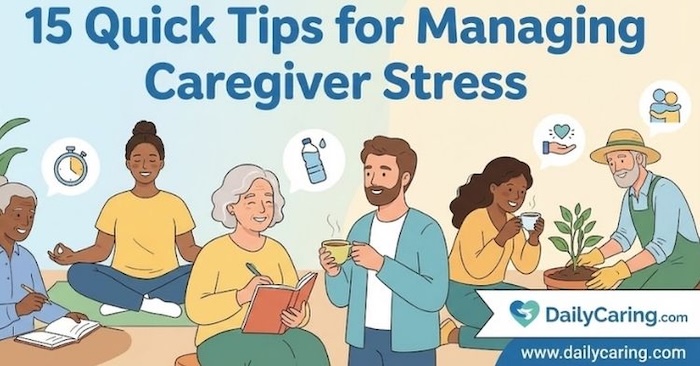
When you’re caring for an older adult, caregiver stress is part of the job. To combat feelings of anxiety and frustration, it helps to have a long list of ways to cope and get relief.
The Rising Spoon has a great article with over 30 helpful stress-relief tips. From these, we selected the top 15 stress-relief tips that are most useful and practical for busy caregivers.
We’ve also added additional ideas and resources, especially for caregivers, to make it even easier to benefit from these stress-relief strategies.
15 Quick Tips for Managing Caregiver Stress
1. Take slow, deep breaths
One of the fastest ways to calm down and relieve anxiety is to breathe deeply and mindfully.
Taking slow, deep breaths quickly shifts your body out of stress mode and allows you to relax.
Breathe in through your nose and out through your mouth. This increases oxygen delivery to your blood and provides a concrete focus.
We recommend a free mobile app called Breathe2Relax that uses visual cues to help you breathe at a slow, steady rate.
2. Use aromatherapy to help relax and rejuvenate
Smells can instantly trigger significant memories and are a powerful way to affect the body’s nervous system.
For example, a study found that lavender essential oil can have a calming effect comparable to anti-anxiety medications.
Suggestions:
- Use a diffuser to scent the air with a relaxing essential oil
- Place a drop of essential oil in your hands, rub your palms together, cup them to your face, and inhale
- Put drops of essential oil on a few cotton balls in a dish to diffuse the scent
3. Drink calming herbal tea
Sipping a caffeine-free herbal tea is an excellent way to take a break and rehydrate your body, too.
Some calming herbs, such as mint, lemon, and ginger, can also serve as aromatherapy.
We love Lemon Balm, Chamomile Lemon, Cup of Calm, Ginger Chamomile, Cinnamon Stress Ease, Turmeric Ginger, and Peppermint.
4. Meditate or pray
Meditation is excellent because it’s free, can be done anywhere, and has been proven to reduce stress. If you’re religious, prayer works similarly.
Studies show that meditation reduces blood pressure, improves immune function, and increases concentration.
It’s also efficient – you can get the benefits in just a few minutes a day.
We recommend a free mobile app called Calm.com that helps you relax with meditation in just 2 minutes.
If that one isn't your preference, we've also got additional meditation app recommendations.
5. Release tension with exercise
Exercise is an excellent way to relieve tension, boost mood, and improve both physical and mental health.
It helps you burn off nervous energy, do something that’s just for you, and focus on something positive. Regular exercise also helps you sleep better.
You don’t need to spend hours at the gym to get the benefits; even a 5-minute workout makes a real difference.
We’ve even created a gentle, super-efficient 4 minute workout that’s perfect for caregivers.
6. Talk with a trusted friend
Connecting with supportive people that you trust is another good way to reduce stress.
You’ll be able to vent your frustrations, know that you’re not alone in the world, and talk about something other than your older adult.
Meeting in person is ideal, but talking on the phone or on video chat works well too. Even texting back and forth is helpful.
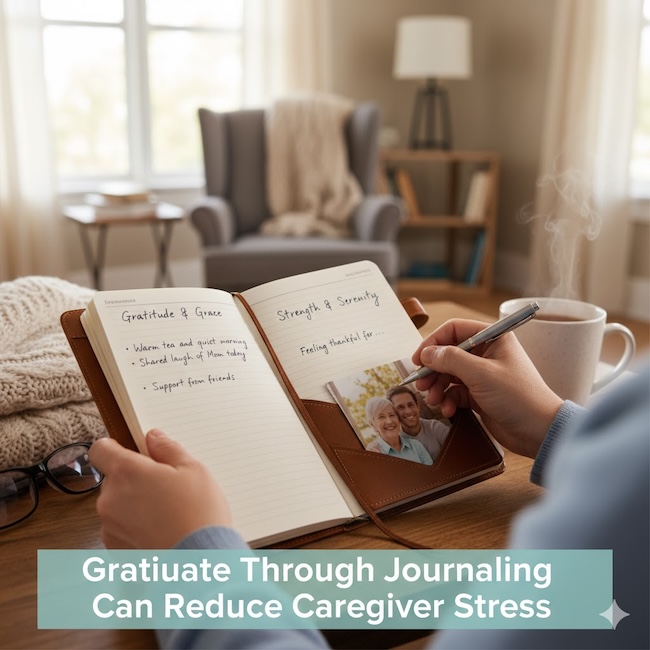
7. Practice gratitude and generosity
Thinking about the things you’re grateful for helps you notice the good things in your life, no matter how small or big they may be.
Getting into a habit of gratitude helps you look on the bright side more often and adds a new perspective.
Instead of focusing on the negative aspects of life, it will be easier to balance things out with a dose of the positive.
We’ve got suggestions for creating a gratitude calendar, 5 simple ways to practice gratitude, and a 10-day gratitude challenge.
8. Listen to music
Music is a fantastic way to improve your mood.
Whether you like to sing and dance to energetic tunes or relax with soothing classical or jazz, playing music is a sure way to help you de-stress.
Create a mood-brightening playlist on a free online music service like iHeartRadio, Spotify, or Pandora.
9. Go outside, move, and breathe some fresh air
Spending time outdoors, breathing fresh air, and taking in the natural scenery is a simple yet effective way to reduce caregiver stress.
Studies have shown that spending time in nature reduces stress hormone levels, boosts the immune system, reduces anxiety and depression, and more.
10. Massage tired muscles
Caregivers often hold stress in their neck and shoulders.
The next best thing to an in-house massage therapist is to use a foam roller, massage therapy ball, or even a regular tennis ball to massage those knots out of your tense muscles.
11. Stretch or do some yoga
Something as simple as stretching once or twice a day can relieve significant tension.
Do a few stretches at your desk, a 5-minute yoga stretching routine, or treat yourself to a relaxing 20-minute beginner yoga session.
12. Do something creative like painting or writing
Take a break from reality occasionally and focus on a creative project such as painting, writing, photography, gardening, cooking, coloring, crafting, or knitting.
This takes your mind off caregiving and directs your energy toward something positive and engaging.
13. Do a brain dump and write in a journal
If your mind is spinning with To-Dos, worries, reminders, and errands, take a moment to write it all down. Journaling has become very popular and helps people who have too much on their minds.
Get everything that’s bouncing around your brain out onto paper so you won’t feel like you need to remember it all anymore. That definitely takes a load off your mind!
14. Watch or read something that makes you laugh
Sometimes you need a good laugh. Read a funny book, browse the cartoons in the paper, or watch an amusing video. We love funny animal videos like this one.
15. Take a spa-like bath or shower
A hot bath or shower is a refreshing way to start the day and a soothing way to unwind at night.
Take the relaxation factor up a notch by adding magnesium flakes or epsom salts and some essential oils or scented bath salts.
Magnesium baths are said to soothe sore muscles, reduce stress, and improve circulation. This is easiest in the bath, but you might not have time to clean the tub and have a soak.
For a quick spa-like experience, use a shower aromatherapy tablet that’s designed for use in the shower – keep it at the edge of the water so it won’t wash away too quickly.
Or try a magnesium spray, or this simple DIY version.
Final Thoughts on Managing Caregiver Stress
Remember, managing caregiver stress is not a one-time event but an ongoing practice of self-compassion. Start small. Choose just one or two tips from this list (whether it’s asking for a five-minute break or writing down your worries) and implement them today. The goal isn't to add more to your plate but to find sustainable ways to take something off of it.
By consistently carving out small moments for your own well-being, you are not being selfish; you are fortifying the very foundation from which all your care and strength flows. You are doing a monumental job, and you deserve to feel supported and sustained throughout it. Begin today. You have the power to relax by prioritising yourself first.
Next Steps: Get all 33 stress relieving tips in the full article at The Rising Spoon
Recommended for you:
- 3 Ways to Turn Caregiver Worry Into Productive Action
- 4 Ways to Reduce Caregiver Stress with Positive Self Talk
- Manage Caregiver Stress with the Virtual Hope Box App
This article contains affiliate links. We never link to products or services for the sole purpose of making a commission. For more information, see How We Make Money.
About the Author

Connie is the founder of DailyCaring.com and was a hands-on caregiver for her grandmother for 20 years. (Grandma made it to 101 years old!) She knows how challenging, overwhelming, and all-consuming caring for an older adult can be. She also understands the importance of support, especially in the form of practical solutions, valuable resources, and self-care tips.

Each day I begin being greatful for so many things. No.1 my health. I’m greatful for friends and family. There are so many things. By the middle of the day. I question everything I’m doing. I feel like a child. I can’t do anything right. Mid afternoon I’m in full melt down some days. I call a girlfriend. Rant and cry. That gets me through the tuff days. One person can’t do this alone. I could use help But it is what it is.
It’s wonderful that you’re able to start the day on a positive note, that’s very helpful. I certainly understand that it’s not always realistic to keep it up when the events of the day get difficult or frustrating. Please don’t beat yourself up for being human and struggling when things are tough. It’s great that you’re able to lean on friends to support you — that’s a great way to release stress and gather strength to keep going. You may find a caregiver support group helpful. Here’s more info about some good online groups — https://dailycaring.com/11-caregiver-support-groups-on-facebook-youll-want-to-join/ And here’s info about in-person groups — https://dailycaring.com/8-benefits-of-caregiver-support-groups/