












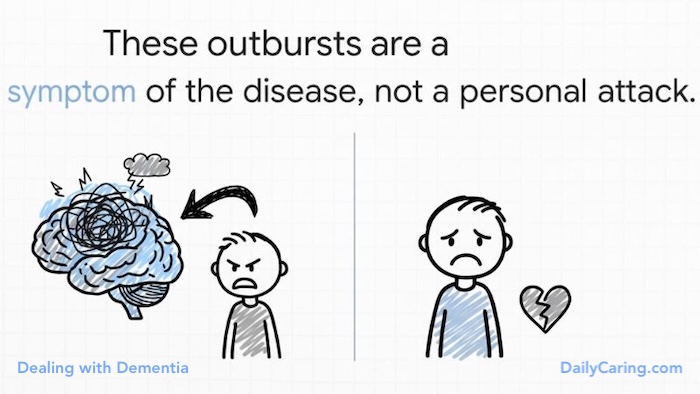
When a loved one living with Alzheimer’s or dementia suddenly lashes out physically, the experience can be heart-wrenching and frightening for any caregiver. It’s easy to feel like you’re doing something wrong or that the person you love has disappeared, but these outbursts are a symptom of the disease, not a personal attack.
By reframing aggression as a form of communication for “unmet needs,” whether that is pain, fear, or overstimulation, you can move from a place of reaction to one of proactive support. This guide provides practical strategies to help you identify triggers, de-escalate tense moments, and maintain a safe environment for everyone involved.
Why Physical Aggression in Dementia Happens: Moving Beyond “Bad Behavior”
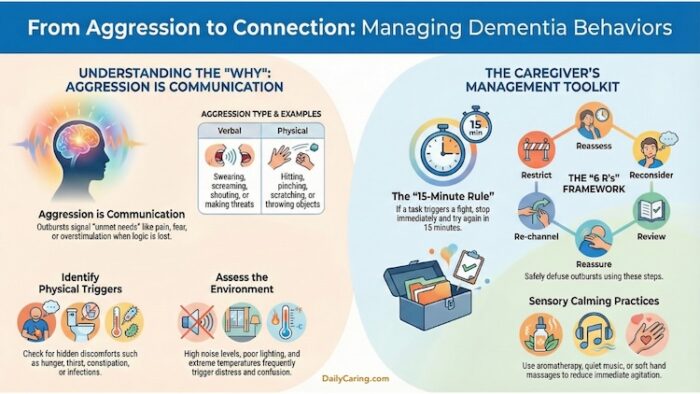
When a loved one lashes out physically; hitting, scratching, or biting, it is rarely an act of malice. In the later stages of Alzheimer’s, the brain loses the ability to process logic and self-control. Instead, aggression becomes a form of “unmet need” communication. They aren't trying to hurt you; they are trying to tell you they are scared, in pain, or overwhelmed.
How to Manage Physical Aggression in Dementia
1. Proactive Prevention (The ABC Method)
The best way to manage aggression is to stop it before it starts.
- The ABC Method: Track the Antecedent (what happened before), the Behavior (the lashing out), and the Consequence (what happened after). Using a written log helps identify triggers like loud noises, bathing, or specific times of day.
- Routine is Safety: Stick to household routines strictly. Predictability reduces the “startle response” that often leads to combativeness.
- Environmental Cues: Ensure they are comfortable – check for hunger, thirst, or a soiled sanitary product.

2. De-Escalation in the Heat of the Moment
If an episode begins, your primary goal is to lower the “emotional temperature.”
- Don't Rationalize: You cannot argue with dementia. Logic will only escalate their frustration.
- The “15-Minute Rule”: If a task like dressing triggers a fight, stop immediately. Walk away (if they are safe) and try again in 15 minutes. The short-term memory loss associated with the disease can often work in your favor here.
- Validate, Don't Correct: Use calm body language and a low voice. Even if they are shouting nonsense, responding with “I can see you're upset, and I'm here to help” is more effective than “Stop hitting me.”
3. When to Seek Professional Help
Your safety is paramount. If episodes become weekly or you feel at physical risk, it is time to consult a doctor about medication or transition to a memory care facility.
| Scenario | Strategy Type | Recommended Action |
|---|---|---|
| Triggered by Tasks (e.g., Bathing) | Prevention | Pause for 15 minutes. Change the environment with music or warmer towels. |
| Mid-Episode Aggression | Reaction | Step back. Do not restrain. Use a calm, low-pitched voice and avoid eye-contact dominance. |
| Physical Danger | Safety | Leave the room immediately. Call for help if the person is at risk of falling or self-harm. |
| Frequent/Routine Outbursts | Clinical | Consult a geriatrician. Evaluate if medication or a new living situation is needed. |
INFOGRAPHIC: Managing Aggressive Dementia Behavior
Final Thoughts on Physical Aggression in Dementia
Caring for someone who exhibits physical aggression is one of the most demanding roles a caregiver can take on. While implementing a predictable routine and using calm body language can significantly reduce the frequency of outbursts, it is vital to remember that you do not have to carry this burden alone.
Your safety and health are just as important as the care you provide. If you ever feel at physical risk or find the behavior has become unmanageable, don’t hesitate to consult a doctor about medication or explore a transition to a specialized memory care facility.
With the right tools and a strong support system, you can navigate these difficult moments with compassion and keep your focus on the connection that remains.
Recommended for you:
- 7 Ways to Reduce and Prepare for Aggressive Dementia Behaviors
- 14 Ways of Dealing with Aggressive Behavior in Dementia
- 6 Things to Try Before Using Antipsychotic Medications for Dementia Behaviors
About the Author

Chris is a seasoned healthcare executive and entrepreneur from the Pacific Northwest. He strongly advocates for older adults and the caregivers who serve them. Chris has personal experience caring for his father, who had dementia. Chris is a technology enthusiast and an avid outdoorsman; if he's not in his office, he can usually be found on a golf course or fly-fishing out west somewhere.



[…] Heights home care team at Inspired Home Care, can help. When facing a violent outburst, keep the tips below in […]
[…] Heights home care team at Inspired Home Care, can help. When facing a violent outburst, keep the tips below in […]
Please stop referring to aggression and behaviours in Dementia, they are emotional responses. Antipsychotics and institutionalisation, should only be advocated in extreme situations as with any other chronic terminal disease. In the articles I have read on this site, no where do you talk about the possible triggers and the need for these to be assessed fully ie UTI, Constipation, Pain, too Hot, too Cold, unfamiliar environment/people/places, noise, too bright, too dark the list goes on. There may be up to 100 triggers which when properly assessed and solutions found may negate the need for antipsychotics and institutionalisation.
It’s very true that these types of responses can be triggered by a wide variety of physical or emotional triggers. This article explains exactly the point that you bring up: many dementia behaviors can be a response to emotional or physical needs or pain. Medication is only recommended as a last resort, after trying a variety of other suggestions for finding and addressing other potential issues.
In addition, we’ve got dozens of articles about these topics to help caregivers eliminate, reduce, or manage these issues so the person with dementia will be more comfortable, have better quality of life, and won’t be forced to to express their needs in ways that are tough for caregivers to handle. We always recommend finding non-drug solutions whenever possible and offer as many helpful, practical suggestions as we can.
But we also acknowledge the reality that there will be some situations where careful use of behavioral medication can bring relief to someone with dementia who is experiencing very upsetting hallucinations, delusions, or other issues affecting quality of life that can’t be adequately managed any other way.
Here are just some of our articles that address points you’ve brought up:
— Understanding and Managing Dementia Behaviors: A Comprehensive Guide https://dailycaring.com/understanding-and-managing-dementia-behaviors-a-comprehensive-guide/
— Dealing with Difficult Alzheimer’s and Dementia Symptoms https://dailycaring.com/dealing-with-difficult-alzheimers-dementia-symptoms/
— 6 Things to Try Before Using Antipsychotic Medications for Dementia Behaviors https://dailycaring.com/6-things-to-try-before-using-antipsychotic-medications-for-dementia-behaviors/
— Reduce Dementia Agitation with a Calm Environment: 5 Helpful Tips https://dailycaring.com/reduce-dementia-agitation-with-a-calm-environment-5-helpful-tips/
— 10 Non-drug Ways to Manage Lewy Body Dementia Symptoms https://dailycaring.com/10-non-drug-ways-to-manage-lewy-body-dementia-symptoms/
— 10 Ways to Respond to Dementia Hallucinations in Seniors https://dailycaring.com/10-ways-to-respond-to-dementia-hallucinations-in-seniors/
— 6 Nonverbal Dementia Communication Techniques Make Caregiving Easier https://dailycaring.com/6-nonverbal-dementia-communication-techniques-make-caregiving-easier/
— How Do You Calm Down Someone with Dementia? 4 Expert Tips [Video] https://dailycaring.com/how-do-you-calm-down-someone-with-dementia-4-expert-tips-video/
— How to Communicate Better With Someone Who Has Alzheimer’s https://dailycaring.com/how-to-communicate-better-with-someone-who-has-alzheimers/
— 4 Steps to Calm Stress and Distress in Dementia to Make Care Tasks Easier [Video] https://dailycaring.com/4-steps-to-calm-stress-and-distress-in-dementia-to-make-care-tasks-easier-video/
— 7 Ways to Reduce and Prepare for Aggressive Dementia Behaviors https://dailycaring.com/7-ways-to-reduce-and-prepare-for-aggressive-dementia-behaviors/
— 14 Ways of Dealing with Aggressive Behavior in Dementia https://dailycaring.com/14-ways-of-dealing-with-aggressive-behavior-in-dementia/
— Is It Alzheimer’s or a Urinary Tract Infection? https://dailycaring.com/alzheimers-or-urinary-tract-infection/
For more, we’ve got an extensive section of articles specifically about top Alzheimer’s and dementia issues:
— Alzheimer’s & Dementia https://dailycaring.com/category/health-conditions/alzheimers-dementia/
— Alzheimer’s & Dementia Communication Tips https://dailycaring.com/tag/alzheimers-dementia-communication/
— Alzheimer’s & Dementia Challenging Behaviors https://dailycaring.com/tag/challenging-dementia-behaviors/