











You're running on empty, and the guilt about feeling that way is almost as heavy as the exhaustion itself. After three decades of sitting with caregivers just like you, I can tell you this with absolute certainty: burnout isn't a sign that you're failing – it's a sign that you've been giving everything you've got until there's nothing left.
And the hardest truth I've had to learn, and to teach, is that running on empty doesn't help anyone. Not you, and not the person you're caring for.
What is Caregiver Burnout?
Caregiver burnout is when you feel completely exhausted – physically, emotionally, and mentally. Your attitude has also shifted, and now you’re feeling negative and uncaring.
You might also feel:
- Fatigue
- Stress
- Anxiety
- Depression
- Guilty about spending time on yourself
Why Caregiver Burnout Is Such a Big Problem
When you’re burned out, it’s a considerable challenge to care for yourself, not to mention your older adult. Your body is beaten down, so you’re more likely to get colds or flu, have severe health conditions, or even an increased risk of death.
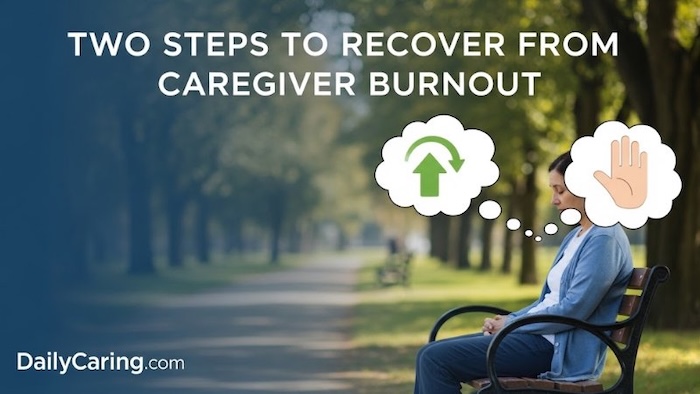
2 Steps to Recovering From Caregiver Burnout
Don’t worry, you’re not doomed to an early death. This is something you can fix.
1. Adjust your mindset
Part of what pushed you to this burnout point was the mindset that caregiving should consume your life. And that means cutting out anything that’s not necessary because you’re already so busy.
The irony is that regularly resting, relaxing, and recharging your batteries will help you be a better caregiver. You’ll have more patience, think more clearly, and approach things with a more positive attitude.
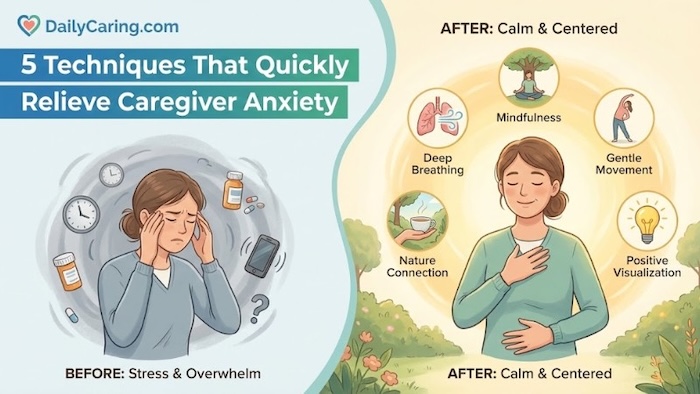
Here are some ways to adjust your thinking and manage stress:
- Try practicing gratitude. Sounds cheesy, but it works.
- Find out how to become more resilient.
- Use a handy app to manage stress.
- Get perspective from others at a caregiver support group.
2. Find ways to give yourself time off
It’s great to realize that you need some time off. Now it’s time to find ways to make it happen regularly.
Here are some ways to find help so you can take regular breaks:
- Put together a caregiving team.
- Find out how to get more support from family.
- Use respite care to take a break.
- Take advantage of local volunteer companions.
- Enroll your loved one in an adult day program.
The Bottom Line About Caregiver Burnout
Caregiver burnout is a serious problem that needs your immediate attention. It’s something that can be improved with a few simple changes to help balance your life.
There’s no such thing as a perfect life, but maintaining some balance is critical to keeping your overall health on track and preventing future burnout.
You might also like:
— 6 Ways to Stop Judging Yourself as a Caregiver
— Caregiver Stress: Are You in Denial?
— How to Be OK with Getting Caregiving Help
About the Author

Connie is the founder of DailyCaring.com and was a hands-on caregiver for her grandmother for 20 years. (Grandma made it to 101 years old!) She knows how challenging, overwhelming, and all-consuming caring for an older adult can be. She also understands the importance of support, especially in the form of practical solutions, valuable resources, and self-care tips.