













We’ve all said it. “I’m fine, I’ve got it under control.” Even as the third cup of coffee barely touches the fog of exhaustion, we tell ourselves that we can, and should, handle everything alone.
In 2026, caregiving is more demanding than ever. With 78% of caregivers reporting weekly burnout, the pressure to “do it all” has reached a breaking point.
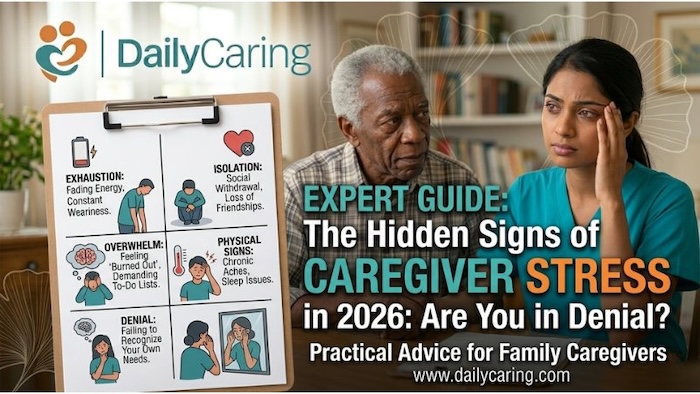
But for many caregivers, the greatest risk isn't the stress itself; it's the denial that the stress is winning. Denying that you're stressed out and/or that you need help is the quickest path to “Identity Loss” and physical deterioration.
Why Do Caregivers Deny Being Stressed-Out?
Denial that we're stressed-out isn't a lack of intelligence; it’s a survival tactic. We use it to protect ourselves from the overwhelming reality of a loved one's diagnosis or the weight of being in the sandwich generation. But while denial shields your heart, it breaks your body.
Resilience vs. Denial: Where Do You Stand?
| Healthy Resilience | Stress Denial |
|---|---|
| Acknowledging that a task is hard. | Saying “It’s not that bad” while crying in the car. |
| Asking a [caregiving team](http://dailycaring.com/get-caregiving-help-from-team/) for a break. | Believing no one else can do it “right.” |
| Prioritizing 15 minutes of quiet time. | Feeling guilty for even thinking about yourself. |
Source: Caregiver Action Network (2026)
What Exactly is Caregiver Stress?
Before we look at the warning signs, it’s important to define the “enemy.” Caregiver stress is the physical, emotional, and mental exhaustion that results from the relentless responsibility of caring for a loved one. It’s rarely caused by a single bad day; instead, it is a chronic state of “alert fatigue.”
As a caregiver, you are essentially a first responder who never goes off shift. You are managing medical complexities, physical labor, and emotional crises – all while your own needs for rest, nutrition, and social connection are pushed to the back burner.
In 2026, this is often compounded by “decision fatigue” from navigating modern healthcare tech and the constant pressure of caring for loved ones (parents and children alike). It is the feeling of being completely poured out with no one there to refill your cup.
5 Modern Clues You’re in Denial About Caregiver Stress
The “old” signs still apply, but 2026 has introduced new ways stress manifests:
1. The Digital “Check-Out”
If you find yourself mindlessly scrolling for hours because you are too exhausted to engage with real life, yet you tell others you are “too busy” for a phone call, you're probably stressed out.
This is not a harmless way to unwind. It is a symptom of profound emotional depletion. Recent survey data show that 78% of family caregivers experience weekly burnout, and this digital retreat is the brain's defense mechanism against further emotional output.
You are choosing the screen because it demands nothing of you, effectively ghosting your own life while pretending you are just managing a tight schedule.
2. The Resentment Loop
You feel a sharp spike of anger when your loved one asks for a glass of water, followed immediately by crushing guilt. This is a sign of caregiver burnout appearing through the cracks of denial.
Approximately 70% of family caregivers report intense feelings of guilt, and it is usually triggered by this exact resentment loop. The resentment stems from invisible labor and the shift of caregiving from a choice to a mandatory expectation.
When you judge yourself for having a normal human reaction to an unsustainable workload, you suppress the anger and fuel the denial.
3. Ignoring Your Own Health Issues
You’re ignoring your own mounting health issues, like high blood pressure, chronic back pain, or insomnia – because “there’s no time to be sick.”
Data from Blue Cross Blue Shield reveals that caregivers experience a 26% greater negative impact on their overall health than non-caregivers. You are essentially operating on a high wire without a net.
Fully half of caregivers report significant sleep disruptions each week. Delaying your own medical care does not make you a hero. It makes you a liability waiting for a catastrophic medical event.
4. Social Shrinkage – Lack of Engagement with Friends
If your world has become a circle of two, and you haven't spoken to a friend about something other than caregiving in a month, you are in a denial-induced isolation.
Do not underestimate the lethality of this choice. According to the National Institute on Aging, the physical toll of prolonged social isolation and loneliness is the exact equivalent of smoking 15 cigarettes a day. You are actively destroying your cardiovascular and neurological health while convincing yourself that nobody else has time for your problems
5. Refusing a Helping Hand From Friends or Family
When friends offer help, you reflexively say “No, we're fine,” even though you haven't slept more than four hours in a week.
Refusing help is a behavioral manifestation of caregiver guilt and arrogance. You have convinced yourself that no one else can perform the care tasks correctly. Operating on severe sleep deprivation guarantees cognitive errors and puts your loved one in direct physical danger.
Rejecting respite care is not proof of your dedication. It is proof that you have lost perspective on what sustainable care requires.
VIDEO: Caregiver Stress: How to Cope and Survive
What is Respite Care, and Where Can You Find Local Services?
Respite care provides a temporary break for family caregivers, so they can catch their breath. Caregivers can schedule respite care breaks for a few hours, a few days, or even weeks. Respite care can happen at home, in an adult day care center, or even in a healthcare facility.
Respite care can be a godsend for a primary caregiver and is genuinely underutilized by the very people who need it most.
There are a number of organizations offering respite care services in the U.S. If you need respite care services, you can visit the ARCH National Respite Network and Resource Center (U.S.) to see what resources are available in your area. (ARCH stands for Access to Respite Care and Help.)
The 2026 Caregiver Burnout Audit
If you answer “Yes” to more than two of these, it's time to reach out for support.
- ✔ Do you feel “numb” or on autopilot for most of the day?
- ✔ Has your sleep quality declined even when you have time to rest?
- ✔ Do you feel a sense of “Identity Loss”—like you are only a caregiver and nothing else?
- ✔ Are you avoiding medical appointments for yourself to prioritize theirs?
The Bottom Line: Breaking the Cycle
Breaking out of caregiver stress denial isn't a failure; it’s an act of leadership. By being honest with yourself, you aren't just saving your own health – you're ensuring your loved one has a caregiver who is actually present, not just a ghost going through the motions.
It's time to adjust your attitude about caregiving and build a sustainable plan. Whether that's in-home respite, joining a digital support community, or simply setting a “no-phone” hour for your own sanity, the first step is admitting that the current pace is impossible.
Frequently Asked Questions About Caregiver Stress Denial
Is caregiver guilt the same as caregiver stress?
Caregiver stress refers to the physical and mental exhaustion of the role. Caregiver guilt is a specific emotional symptom that often drives the denial of that stress, convincing caregivers they must do more.
What are the physical symptoms of caregiver burnout?
Physical symptoms frequently include chronic insomnia, weight fluctuations, high blood pressure, and chronic pain, often exacerbated by delaying personal medical care.
How do I stop being resentful as a caregiver?
Resentment typically ends when denial ends. Acknowledging the unsustainability of the workload and actively utilizing respite care and firm boundaries are required to eliminate resentment.
You might also like:
— What Does Caregiver Stress Have to Do with Navy SEALs?
— 3 Common Myths about Caregiver Guilt
— What Is a Caregiver Support Group Like?
About the Author

Chris is a seasoned healthcare executive and entrepreneur from the Pacific Northwest. He strongly advocates for older adults and the caregivers who serve them. Chris has personal experience caring for his father, who had dementia. Chris is a technology enthusiast and an avid outdoorsman; if he's not in his office, he can usually be found on a golf course or fly-fishing out west somewhere.

Caregiving is known as a career that is rewarding and at the same time fulfilling. There are many challenges associated with being a caregiver, making it one of the toughest jobs. Although caregiving can have many rewards, it can still cause you much stress— emotional, mental, and physical stress.
Very true, it can be both stressful and rewarding.
I don t think/care if I’m in denial My Mom is more important to me;I lost my Dad 7+yrs on my birthday 10/25//2009;my mom & dad sacrificed their lives for me ;so I ve got to do the same thing for my Mom!! The saying goes; U only have 1 set of parents ;so they bring U into this (Uncaring ;cold/cruel world) ;they can also take U out of this world ;also!!
It’s wonderful that you’re dedicated to caring for your mom. However that doesn’t mean that you won’t feel stress or any other negative emotions. These are completely normal parts of caregiving. The point is to notice you’re feeling this way so you can get more support. You’ll never be stress-free as a caregiver, but you can reduce the amount of stress or reduce its effect on you.
Some very good practical choices to cover needs of older people & people with various forms of Dementia.
Thank- you
Thank you, we’re so glad our articles are helpful!