












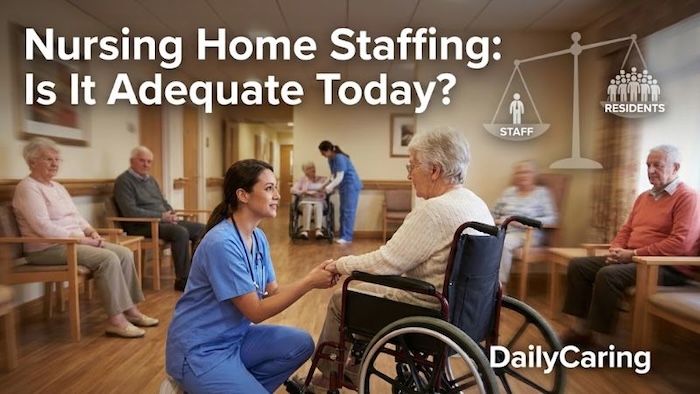
Well-staffed nursing homes (also known as skilled nursing facilities) provide significantly better care than those that are consistently short-staffed. If your loved one needs a high level of care, the number of residents per nurse, aka the nursing home staffing ratio, is the single best predictor of their safety and well-being.
When only a handful of nurses or aides are caring for dozens of residents, it is physically impossible for each person to receive help when they need it most, leading to falls, bedsores, and missed medications.
Unfortunately, asking a facility's administration about its nursing home staffing ratios often yields a “best-case scenario” answer that doesn't reflect reality on weekends or night shifts.
The 2026 Nursing Home Staffing Reality: What Families Need to Know
In a major regulatory shift, the federal government repealed the minimum staffing mandate in late 2025. This means the previously proposed standard of 3.48 hours of care per resident day is no longer a federal requirement.
Because there is no longer a federal “floor” for staffing, the responsibility for vetting a facility's safety has shifted back to families. According to the latest research from the Kaiser Family Foundation (KFF), the staffing landscape remains a serious concern:
- Average Care is Declining: Residents now receive an average of 3.85 hours of nursing care per day – a 7% drop over the last decade.
- Widespread Deficiencies: Over 27% of facilities were recently cited for serious deficiencies that caused actual harm or placed residents in immediate jeopardy.
- The Staffing Gap: Before the mandate was rescinded, only 19% of U.S. nursing homes met the recommended federal standards for RNs and aides.
This data makes it clear: you cannot assume a facility is safe just because it is open. It is more critical than ever to verify a facility’s specific numbers using the tools below before moving a loved one in.
Find the Facts: Nursing Home Staffing Lookup Tools
Since there is no longer a federal mandate ensuring a minimum number of care hours, you need to verify the “real” numbers yourself. Don't rely on the brochure; use these authoritative 2026 data tools to see how a facility actually performs, especially on nights and weekends when staffing often drops.
1. Medicare Care Compare: This is the gold standard for current facility data. Use the “Staffing” tab to see total nursing hours per resident day. As of February 2026, CMS has updated how it displays complaint data, making it easier to see if staffing shortages have directly led to safety citations.
2. NursingHome411 Staffing Data: Managed by the Long Term Care Community Coalition (LTCCC), this tool is essential for 2026. It provides granular, searchable reports that break down RN, LPN, and CNA hours. It's the best place to check if a facility is meeting the clinical recommendations (like the 4.10+ total hours target) even without a federal requirement.
3. U.S. News Nursing Home Rankings: Their updated 2026 analysis is more critical than ever. It now includes 11 different staffing dimensions, specifically weighting Registered Nurse (RN) hours more heavily because high RN presence is the best predictor of resident safety and medical stability.
4. KFF (Kaiser Family Foundation): Use KFF’s most recent 2025/2026 analysis to see how your state compares to others. With care hours declining by 7% nationally over the last decade, KFF's data helps you understand the broader context of the staffing crisis in your specific region.
Quick Tip: When using these tools, pay special attention to “Weekend Staffing” and “Staff Turnover.” A facility might have a 5-star rating overall but a 2-star rating for staffing. This is a major red flag that care could be compromised to save on skilled labor costs.
Benchmarks: What is a “Safe” Ratio of Nursing Home Staff to Residents?
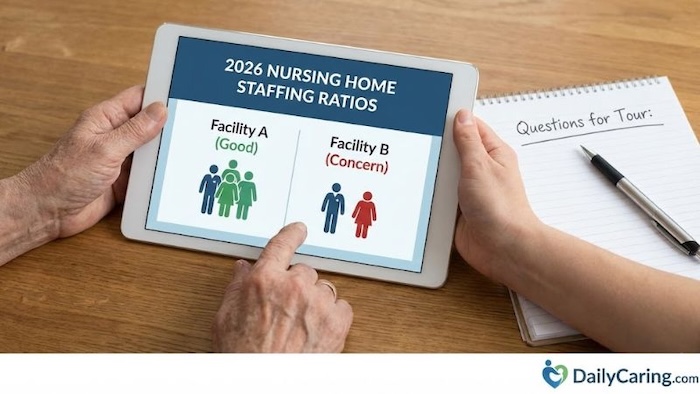
While federal minimums have been rescinded, clinical experts still use specific benchmarks to define safe care. Use the table below to compare your local facility against these professional recommendations.
| Staff Category | 2026 National Avg | Expert Safe Target |
|---|---|---|
| Registered Nurse (RN) | ~0.65 HPRD | 0.75+ Hours |
| Nurse Aide (CNA) | ~2.20 HPRD | 2.80+ Hours |
| Total Nursing Care | ~3.70 HPRD | 4.10+ Hours |
*HPRD = Hours Per Resident Day. Data reflects current 2026 CMS reporting trends and clinical recommendations.
BONUS: Nursing Home Staffing “Interview Sheet”
This “Nursing Home Staffing Interview Sheet” is designed to cut through marketing-speak and get to the operational realities of a facility. By asking for specific data points, you signal to the Admissions Director that you are an informed advocate.
When you tour a facility, don't just ask, “Is your staffing adequate?” Instead, bring these five specific questions to your meeting with the Admissions Director or Director of Nursing.
5 Questions to Ask the Admissions Director
The Red Flag: If they only give you a “facility-wide average,” they may be hiding a shortage on the specific floor where your loved one will live.
The Red Flag: High turnover is a major indicator of poor care. If it’s over 50%, the facility likely struggles with burnout and inconsistent care.
The Red Flag: Experts recommend at least 0.75 hours of Registered Nurse (RN) time per resident. High RN presence is the best predictor of medical stability.
The Red Flag: Temporary staff don't know the residents' histories. A high reliance on agency staff often leads to missed signals in patient health.
The Red Flag: If the answer is “everyone just chips in,” it usually means the existing staff is overworked and prone to making medication errors.
Final Advice About Nursing Home Staffing Ratios: Trust Your Eyes
While data from tools like Medicare Care Compare and U.S. News Nursing Home Rankings is invaluable, nothing replaces your own observation. During your visit, look at the call lights. Are they blinking for more than a few minutes? Are residents sitting in hallways alone?
Even with the recent repeal of federal staffing mandates, the best facilities still aim for the clinical gold standard of 4.1 total care hours per resident day. If a facility can’t prove they are hitting those nursing home staffing numbers, it’s a sign to keep looking.
Next Steps: Use KHN’s simple look-up tool to find nursing home staffing levels in your area
Recommended for you:
- Handy Checklist and Tips on How to Find a Good Assisted Living Facility
- 3 Reasons to Stop Feeling Guilty About Putting Mom in Assisted Living
- Nursing Home Complaints? The Ombudsman Is on Your Side
About the Author

Chris is a seasoned healthcare executive and entrepreneur from the Pacific Northwest. He strongly advocates for older adults and the caregivers who serve them. Chris has personal experience caring for his father, who had dementia. Chris is a technology enthusiast and an avid outdoorsman; if he's not in his office, he can usually be found on a golf course or fly-fishing out west somewhere.