











Legal issues in caregiving are no longer just about wills and physical property. In 2026, caregivers are navigating a complex world of digital asset estate planning and sophisticated AI-driven financial threats.
According to the 2025 Caregiving in the U.S. Report, unpaid caregiving is now valued at over $1.1 trillion annually, yet many families remain legally unprotected.
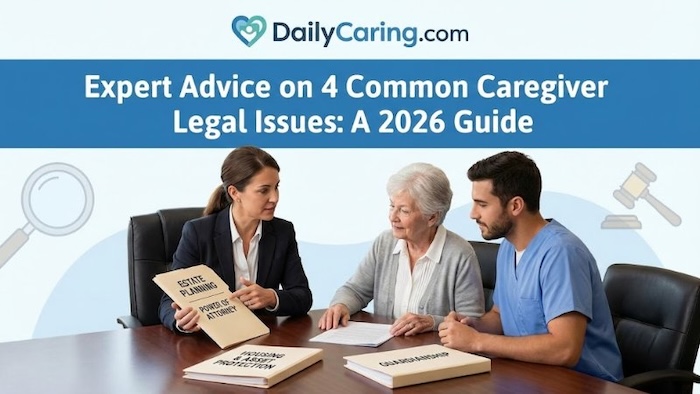
Handling these “legal landmines” early can save your family from a court battle. Here is expert guidance on the four most common legal issues caregivers face today.
- Prevent Scams: Use a 30-second “Family Safe Word” to defeat AI voice-cloning fraud.
- Update Authority: Ensure your Power of Attorney includes specific Digital Asset clauses.
- Stop Exploitation: Monitor for unauthorized app-based spending or “new friend” isolation.
- Resolve Conflict: Use elder law mediation to settle sibling disputes without a courtroom.
4 Most Common Caregiver Legal Issues for 2026
1. Financial Exploitation by In-Home Help or “New Friends”
As your loved one requires more support, they become more vulnerable to theft. In 2026, this isn't just about missing jewelry; it's about unauthorized access to banking apps and digital wallets.
- The Warning Signs: Sudden changes in spending habits, new “best friends” who isolate the senior, or missing devices (phones/tablets).
- The Legal Move: If you suspect financial exploitation of seniors, contact local law enforcement immediately. A specialized elder law attorney can help you file for an emergency restraining order or help freeze the senior’s credit to prevent further damage.
2. Sibling Conflict Over Care & Living Situations
Disagreements often arise when one child provides the bulk of the care while others disagree on the living arrangement. In 2026, many states have expanded Medicaid's home care support, making “aging in place” more viable—but only if everyone is on board.
- The Solution: Instead of litigation, consider elder law mediation. A mediator acts as a neutral third party to help siblings reach a consensus on care and finances without destroying family ties.
- Pro Tip: If a parent is moving in with you, use a formal Personal Care Agreement to outline responsibilities and any financial compensation.
3. Managing Digital Assets and Digital Power of Attorney
A traditional Power of Attorney (POA) may not give you the authority to access a senior's email, social media, or cryptocurrency accounts.
The 2026 Reality: If you cannot access an incapacitated parent’s email, you may not be able to reset passwords for utility bills or medical portals.
Action Plan: Ensure your senior has a Digital Power of Attorney. This specific document (or a clause in a modern DPOA) grants you legal access to their “digital estate.” Ensure you have the 5 important legal documents for caregivers updated to reflect these 2026 digital standards.
4. Defense Against AI Voice Clone and Deepfake Scams
Scammers now use AI to clone your voice and call your parents, claiming you are in legal trouble and need money immediately. These “grandparent scams” have become chillingly realistic.
- The Legal Defense: Establish a “Family Safe Word” that only you and your senior know.
- If Targeted: Hang up immediately and call the family member back on their known number. Report the attempt to the FBI’s Internet Crime Complaint Center (IC3). Reporting these incidents helps build a legal case against international scam syndicates.
2026 Caregiver Legal Quick-Reference Table
Use the following table as a fast-action guide to the most common legal threats facing caregivers in 2026. Whether you are dealing with tech-based fraud or internal family friction, these recommended actions are designed to protect your older adult’s assets and your legal standing as their advocate.
| Caregiving Legal Challenge | Key Warning Sign | Recommended 2026 Action |
|---|---|---|
| AI Imposter Scams | Urgent calls from “family” requesting crypto or wire transfers. | Report to FTC & Use Family Safe-Word. |
| Digital Asset Access | Locked out of senior’s online banking or bill-pay portals. | Update POA with specific Digital Asset Clauses. |
| Sibling Disputes | Conflict over facility placement or “Aging in Place.” | Advocate Together & Hire an Elder Mediator. |
| Financial Abuse | New companions asking for signatures or passwords. | Consult a member of NAELA for a legal audit. |
Protecting Seniors from AI Voice Cloning Scams
In 2026, one of the most frightening legal and financial threats is the “Grandparent Scam” powered by artificial intelligence. Scammers only need a 30-second clip of your voice from social media to create a perfect clone that can call your loved ones and beg for money.
To prevent a legal and financial nightmare, every caregiving family should implement a “low-tech” solution to this high-tech problem.
Essential Defense: How to Set Up a Family Safe Word
- 1. Pick a “Digital-Proof” Word: Choose a word or short phrase that isn't shared on social media. Avoid pet names, birthdays, or hobbies that a scammer could find online.
- 2. Keep it Simple: Ensure it is a word your senior can easily recall, even in a moment of panic. Think “Blueberry” or “Green Tractor.”
- 3. Establish the Protocol: Tell your senior: “If anyone calls claiming to be me and asks for money, passwords, or a wire transfer, ask for the safe word. If they don't know it, hang up instantly.”
Final Thoughts: The Value of Proactive Planning
Navigating the legal complexities of caregiving in 2026 requires a mix of traditional documentation and modern tech-savviness. While addressing issues like AI fraud or digital estates can feel overwhelming, being proactive is your best defense.
By setting up these protections now (before a crisis occurs), you aren't just protecting your loved one’s assets; you’re preserving your family’s peace of mind and your own ability to provide care without legal interference.
Don't wait for a red flag to appear. Start the conversation with your family today, update your digital authorizations, and establish your “safe word” protocol. A little preparation now ensures that you can focus on what matters most: the well-being of the person you love.
You might also like:
— 5 Important Legal Documents for Caregivers
— How an Elder Law Attorney Can Help Seniors and Caregivers
— How to Find an Elder Law Attorney You Can Trust
About the Author

Chris is a seasoned healthcare executive and entrepreneur from the Pacific Northwest. He strongly advocates for older adults and the caregivers who serve them. Chris has personal experience caring for his father, who had dementia. Chris is a technology enthusiast and an avid outdoorsman; if he's not in his office, he can usually be found on a golf course or fly-fishing out west somewhere.