












If you're a caregiver, you probably know this feeling all too well: that heavy, sinking sensation that you're not doing enough, not doing it right, or that you're somehow failing the person you love most.
You cancel a lunch with a friend to handle a crisis and feel guilty for wanting a life. You lose your patience after a long day and feel guilty for not being endlessly cheerful. You consider respite care and feel guilty for needing a break. This relentless, draining emotion is caregiver guilt, and it often stems from two pervasive and damaging myths that trap us in a cycle of self-blame.
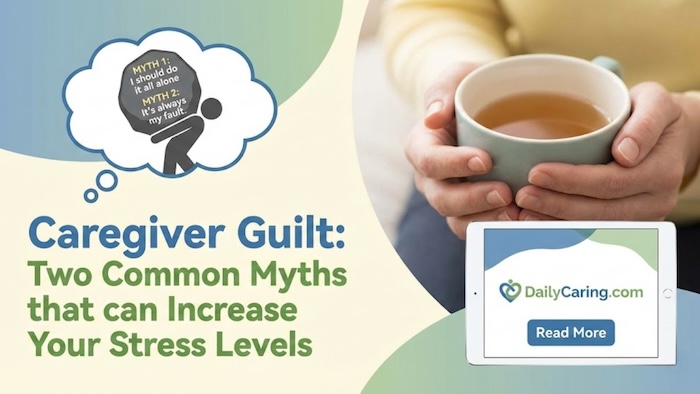
It's time to break free. Let's unpack these myths, expose their falsehoods, and reclaim the compassion—for yourself—that you so freely give to others.
Don't let undeserved caregiver guilt add to your stress
There are many common misconceptions about what caregivers should do or how they should feel that can lead to unwarranted guilt.
Unfortunately, these misguided beliefs and unrealistic expectations about caregiving can also hurt you by causing burnout, compassion fatigue, or severe health conditions caused by chronic stress.
Caregiver guilt may also lead you to take on unrealistic responsibilities, avoid seeking the help you need and deserve, or be overly hard on yourself.
All of this only adds to your stress, makes you feel worse, and makes an already tough situation even more challenging.
To help you recognize when you’re feeling guilt that isn’t deserved, we share two common myths about what caregivers “should” do and explain the truth behind these incorrect assumptions.
Myth: If you don’t provide full-time, hands-on care, you’re not doing your job as a caregiver
Popular belief
You can only call yourself a caregiver if you consistently help your older adult with tasks such as bathing, dressing, and eating.
If you aren’t doing full-time care, you’re not doing enough.
Truth
That’s absolutely false! There are many roles a caregiver can take on.
Everything you do for your older adult is essential and makes a difference in their lives.
For example, you might spend hours every week managing your dad’s finances, visit their assisted living community every other day, or actively manage their hired caregiver helper.
Or you might be working closely with a geriatric care manager to ensure your mom, who lives across the country, receives the best possible care.
Some caregivers can accompany their older adult to medical appointments and advocate on their behalf. Many regularly buy groceries, deliver meals, do household chores, or go for extended visits.
If you didn’t take on those responsibilities, your older adult would suffer from the lack of help and companionship.
Being a critical part of their support system makes you an excellent caregiver.
Myth: You should be able to do everything by yourself and shouldn’t need help from anyone
Popular belief
One person should take responsibility for everything their older adult needs and handle it on their own. If they can’t, it’s because they’re not doing a good job.
Truth
No caregiver should be made to feel they must do everything alone.
Caregiving requires a team. It doesn’t matter whether your caregiving team consists of family, friends, hired professionals, or care programs.
Trying to do everything entirely on your own often causes chronic stress that can lead to burnout and serious illness.
Final Thoughts About Caregiver Guilt
Caregiver guilt is a heavy, unnecessary burden to carry on a journey that's already demanding enough. By recognizing and rejecting the two common myths (that you must be perfect and that your needs don't matter), you take a decisive step toward sustainable care.
Genuine compassion isn't a one-way street that ends with your loved one; it must include you. Permitting yourself to be human, to set boundaries, and to prioritize your own well-being isn't selfish – it's essential. It's what allows you to show up as a healthier, more patient, and more resilient caregiver for the long haul.
Let go of the guilt trap, embrace self-compassion, and remember: you are doing the best you can in an incredibly tough role, and that is always enough.
Recommended for you:
- 4 Ways to Reduce Stress from Caregiver Emotions
- 6 Reasons Dementia Caregivers Avoid Taking Breaks
- How to Cope with Compassion Fatigue: 8 Tips for Caregivers
About the Author

Connie is the founder of DailyCaring.com and was a hands-on caregiver for her grandmother for 20 years. (Grandma made it to 101 years old!) She knows how challenging, overwhelming, and all-consuming caring for an older adult can be. She also understands the importance of support, especially in the form of practical solutions, valuable resources, and self-care tips.