













If you’re caring for someone with dementia, you know that the late afternoon and evening can bring unique challenges. One moment, your loved one might be calm, and the next, they’re restless, anxious, or even agitated as the sun begins to dip – a pattern we in the care community call “sundowning.”

It’s exhausting, confusing, and can leave you feeling helpless, wondering what shifted and how to bring peace back into your home. But here’s what I’ve learned in my years as a caregiver and teacher: sundowning isn’t something you just have to “get through.” By understanding it as a genuine symptom of the disease, not a choice, you can start to build a toolkit of gentle, proactive strategies that soothe both of you.
I’d like to share eight practical tips from experts to help you create calm and consistency, so you can navigate those difficult hours with more confidence and compassion.
Coping with Sundowning Caused by Dementia
Many seniors with Alzheimer’s or dementia get increasingly agitated or anxious in the evening. They may become aggressive, delusional, paranoid, or wander.
This behavior pattern is called “sundowning” because it usually starts in the late afternoon or early evening and may last into the night. It can be very disruptive and difficult for caregivers to manage and negatively affects your older adult’s quality of life.
8 Tips for Dealing with Dementia Sundowning and Sleep Issues
The Alzheimer’s Association has created a helpful infographic with 8 expert tips to reduce sundowning and sleep issues.
These steps help manage and reduce dementia-related sundowning symptoms by keeping seniors on a regular schedule, creating a calm, soothing environment, and identifying triggers.
1. Create a Comfortable and Safe Sleep Environment
A soothing bedroom is the first step toward a restful night. Ensure the room is at a comfortable temperature and use nightlights to prevent falls or confusion if your loved one wakes up. Installing door and window sensors can also provide peace of mind by alerting you if they begin to wander during the night.
2. Plan More Active Days
Excessive daytime napping often leads to nighttime restlessness and a flipped sleep cycle. To encourage better rest, schedule stimulating activities—like doctor appointments, outings, or light exercise—in the morning or early afternoon. Try to avoid strenuous activity within four hours of bedtime so the body has time to wind down.
3. Keep the Home Well-Lit in the Evening
Shadows and dark corners can trigger paranoia and agitation as the sun sets. As evening approaches, increase indoor lighting to minimize unfamiliar or frightening surroundings. Bright, consistent light helps maintain a sense of security and reduces visual confusion.
4. Maintain a Consistent Schedule
Predictability is incredibly grounding for someone living with cognitive decline. Adhering to a regular routine for meals, waking up, and going to bed helps regulate the body’s internal clock. This consistency makes it easier for your loved one to transition into “sleep mode” each night.
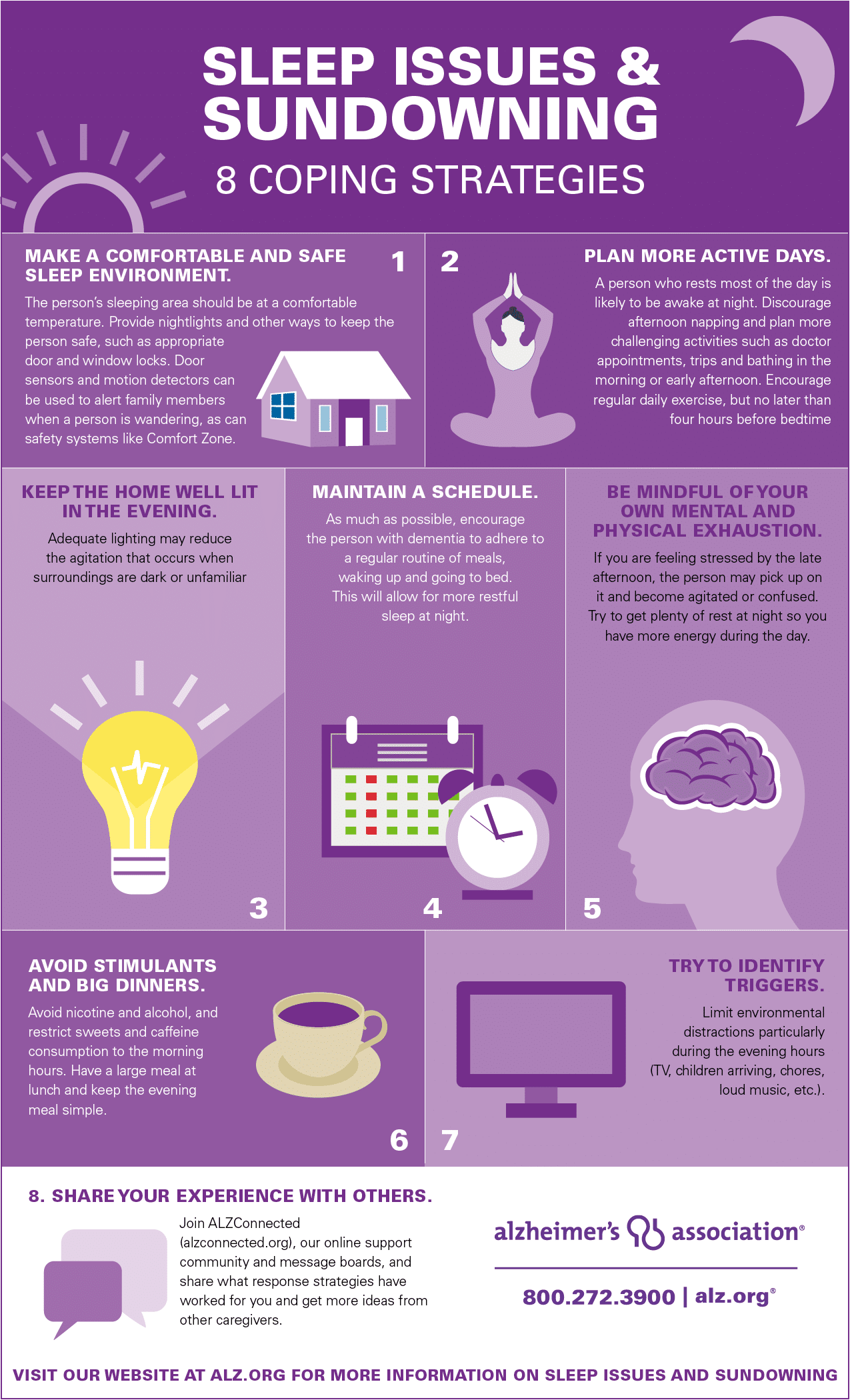
5. Be Mindful of Your Own Exhaustion
Your energy significantly impacts the person you are caring for. If you are feeling stressed or physically drained by late afternoon, your loved one may pick up on that tension and become agitated themselves. Prioritizing your own rest ensures you have the emotional bandwidth to handle difficult evening hours calmly.
6. Identify and Track Triggers
Sundowning behaviors are often a response to specific discomforts rather than a random outburst. Keep a log to see if certain foods, noisy environments, or even caffeine and sugar late in the day correlate with increased restlessness. Identifying these triggers allows you to modify the environment before the agitation starts.
7. Minimize Noise and Distractions
A chaotic environment can quickly overwhelm a person with dementia, especially at the end of the day. During the evening, try to reduce background noise from the television or loud conversations. Replacing harsh sounds with soft, relaxing music or white noise can help foster a much calmer atmosphere.
8. Talk to The Doctor
If sundowning behaviors become unmanageable or safety becomes a concern, it is time to consult a professional. A medical evaluation can rule out underlying issues, such as UTIs or physical pain, that might be worsening the symptoms. Your doctor can also review medications to ensure they aren't contributing to nighttime wakefulness.
Final Thoughts on Dementia Sundowning
At the end of the day, remember that you’re not alone in this, and you’re not failing if some evenings are harder than others. Sundowning is unpredictable, and what works like a charm one night might not the next – that’s the nature of dementia.
The goal isn’t perfection; it’s about finding small ways to reduce stress for both you and your loved one, one step at a time. Be gentle with yourself as you try these strategies, and notice the small victories, like a moment of connection during a quiet task or a night with fewer disruptions.
You are providing loving, skilled care, and by learning and adapting, you’re making a profound difference in your loved one’s quality of life (and your own).
You might also like:
— Dressing Someone with Alzheimer’s: 9 Expert Tips [Infographic]
— 3 Ways to Respond When Someone with Alzheimer’s Says I Want to Go Home
— Why Experts Recommend Lying to Someone with Dementia
About the Author

Connie is the founder of DailyCaring.com and was a hands-on caregiver for her grandmother for 20 years. (Grandma made it to 101 years old!) She knows how challenging, overwhelming, and all-consuming caring for an older adult can be. She also understands the importance of support, especially in the form of practical solutions, valuable resources, and self-care tips.



Prevention is always better than cure. Practice good sleeping patterns and healthy lifestyle, and I’m sure you’re life will be more fit and healthy.
Thanks Sue Anne! It’s true that a healthy lifestyle helps improve quality of life.