













Imagine this: your vibrant, independent parent needs a short-term nursing home stay for rehabilitation after a surgery. While it’s a temporary step toward healing, the transition can feel daunting – for them and for you.
They’re stepping into an unfamiliar environment, and you might feel anxious about how to best support their comfort and spirit during this chapter. The good news? A short-term stay doesn’t have to be a sterile, passive interval. With thoughtful intention, this period can become a bridge of continued connection, dignity, and active recovery.
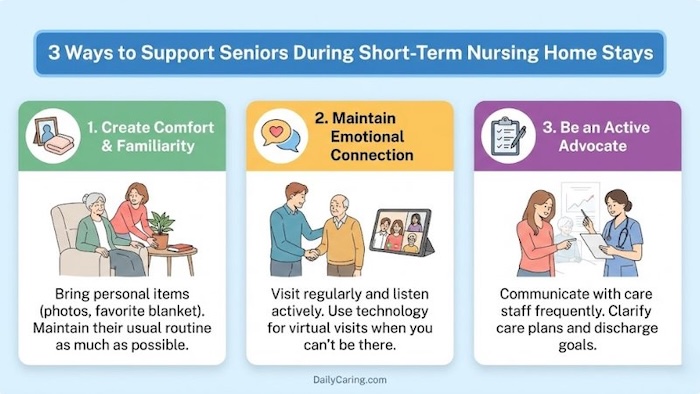
Let’s explore three powerful, practical ways you can transform this temporary stay, ensuring your loved one feels supported, seen, and uplifted every step of the way.
Seniors Need Extra Support During Recovery
After a hospital stay, seniors are often released to a skilled nursing facility (aka nursing home) to continue their recovery.
For many older adults, being in a nursing home is scary and disorienting, no matter how short the stay. That’s why they’ll need extra support from you, family, and friends.
The encouragement, company, and positive feelings from the additional support can even help speed up their recovery.
We share 3 ways to support your older adult during a nursing home stay to help them feel better, heal faster, and get home sooner.
3 Ways to Support Seniors During a Short-Term Nursing Home Stay
1. Make their room more home-like
Bringing a little bit of home to their room can help seniors feel more comfortable. But don’t bring expensive or irreplaceable items – they might get lost or disappear.
Some ideas:
- A family photo
- A clock and calendar to keep track of time and dates
- A few books or magazines
- A cozy blanket
- Moist wipes for comfortable toileting
- Moisturizer and lip balm
- Non-skid slippers like these for women or these for men
- Toiletry and personal care items they use frequently
- Comfortable clothes
- An inexpensive radio or tape player
2. Keep them company
It’s important to visit as often as you can. You’ll be able to spot any problems and advocate for better care. They’ll also feel safer and are less likely to become disoriented when people they trust are around.
If other family members and friends are available, work out a schedule so you can spread out the visits and maximize the time your older adult has company.
Some activities to enjoy during a visit include:
- Eating a meal together (you can bring your own).
- Listening to their favorite music.
- Reading aloud from books or the newspaper.
- Working on a puzzle or crossword.
- Telling them about what you, your close family, and friends have been doing lately so they won’t feel left out.
- Bringing a computer to watch a favorite show from a DVD or online.
- Making plans to do something they enjoy when they’re ready to leave the facility – gives them something to look forward to!
- Giving them a gentle massage.
- Sitting quietly together, perhaps holding hands or gently stroking their arm.
3. Help them get exercise and practice therapy exercises
Getting more exercise and therapy helps with recovery. Of course, the priority is to keep your older adult safe from further injury and not overdo it.
If possible, go to your older adult’s physical, occupational, or speech therapy sessions. Watch and take notes on what the therapist asks them to work on. Ask the therapist if there are exercises you can help them do outside of the sessions.
When your older adult isn’t too tired, ask them to practice some therapy exercises or suggest a walk around the building. With you to keep them steady and safe, they’ll be able to increase their activity levels.
Final Thoughts About Supporting Seniors During Short-Term Nursing Home Stays
A short-term nursing home stay, while temporary, is a significant life event for your aging loved one. By proactively personalizing their space, advocating for their holistic well-being, and maintaining the rhythm of your cherished connection, you do more than just visit; you become an essential partner in their journey back home.
These actions send a powerful, unspoken message: “You are not just a patient here; you are my loved one, and your comfort and spirit matter.” As this chapter closes and they prepare to return home, they’ll carry with them not just the gains of therapy, but the reinforced knowledge that they are deeply cared for, reminding us all that even the briefest seasons of care are woven with threads of love and dignity.
Recommended for you:
- Nursing Home Complaints? The Ombudsman Is on Your Side
- 10 Fun Things to Do with Someone in a Nursing Home or Assisted Living
- This Hospital Discharge Checklist Prepares Seniors for Successful Recovery
About the Author

Connie is the founder of DailyCaring.com and was a hands-on caregiver for her grandmother for 20 years. (Grandma made it to 101 years old!) She knows how challenging, overwhelming, and all-consuming caring for an older adult can be. She also understands the importance of support, especially in the form of practical solutions, valuable resources, and self-care tips.



Bringing some things from home is a great idea. There is this one blanket that my mother has had forever, and she loves it. I’m hoping that will help her feel more comfortable. She has lots of little knick knacks around the house that she’ll want to bring. Thanks for all the great advice for transitioning to a nursing home.