













If you are feeling overwhelmed by your caregiving duties, you are far from alone. Caregiving in 2026 is complex, fast-paced, and often deeply exhausting.
According to a recent AARP report on family caregiving, over 63 million Americans are currently providing unpaid care for a loved one. The sheer volume of work, combined with the challenges of navigating modern healthcare systems, has pushed many to the brink. In fact, current caregiver burnout statistics reveal that 78% of caregivers report burnout on a weekly or even daily basis.

To put today's caregiving landscape into perspective:
The 2026 Caregiver Reality in Numbers
| Metric | Current Data |
|---|---|
| Total U.S. Family Caregivers | 63 Million |
| Experiencing Feelings of Burnout | 78% |
| Providing 40+ Hours of Care/Week | Nearly 25% |
| Unpaid Economic Value | $873.5 Billion |
Sources: AARP & A Place for Mom Research Data
Because the burden is heavier than ever, generic advice doesn't always cut it. Here are 10 highly effective stress-relief tips for caregivers, designed for the modern world.
10 Stress-Relief Tips for Caregivers Designed for 2026
1. Practice “Micro-Respite”
You likely don’t have time for a week-long vacation or even an hour-long massage. Instead, focus on micro-respite: 60-second nervous system resets sprinkled throughout your day.
Whether it's doing a quick box-breathing exercise while waiting for a prescription or simply stepping outside to feel the sun on your face, these tiny moments prevent daily stress from compounding into chronic burnout.
2. Leverage AI to Reduce Your Mental Load
Managing caregiver stress isn't just about relaxing; it's about reducing your workload. Use AI assistants to lighten your mental load. You can ask AI tools to instantly generate a week of diabetic-friendly meal plans, draft a complex email to a doctor, or create a medication schedule spreadsheet. Let technology do the heavy lifting of the organization.
3. Set Firm Digital Boundaries
Modern caregivers are bombarded with notifications – from telehealth apps, smart pillboxes, and family group chats. This constant pinging causes “alarm fatigue,” keeping your body in a state of high alert. Set specific hours to mute non-emergency notifications and give your brain a true break.
4. Utilize Specialized Mental Health Apps
When anxiety spikes, having a tool in your pocket can be a lifesaver. Instead of doomscrolling on social media during a tough moment, open a dedicated app designed to lower your heart rate and distract your mind. For instance, the Virtual Hope Box app offers simple puzzles, relaxation exercises, and coping cards tailored for high-stress situations.
5. Move Your Body to Protect Your Heart
When you are exhausted, exercise sounds like a chore. But physical movement physically burns off the cortisol (stress hormone) flooding your system. You don't need a gym membership; a brisk 15-minute walk around the block works wonders.
Furthermore, staying active protects your cardiovascular health, which is crucial, as chronic stress increases your risk of conditions that may require navigating Medicare coverage for heart disease.
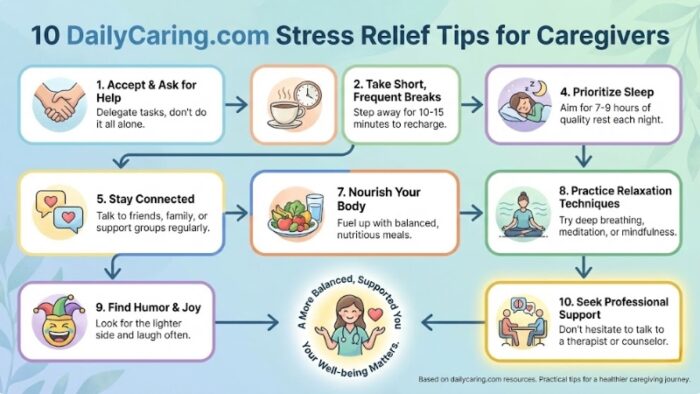
INFOGRAPHIC: Modern Stress-Relief Tips for Caregivers
6. Release the Burden of “Caregiver Guilt”
Guilt is the heaviest emotion a caregiver carries. Am I doing enough? Should I have noticed that symptom sooner? If you are transitioning a loved one to a higher level of care, the guilt can be paralyzing.
It is vital to recognize when your capabilities have reached their limit. Forgive yourself and explore the reasons to stop feeling guilty about moving a parent to assisted living – it is often the safest and most loving choice.
7. Prioritize Your Sleep Architecture
Sleep isn't a luxury; it is biological maintenance. Caregiving often disrupts sleep through middle-of-the-night emergencies or racing thoughts. If your older adult's wakefulness is keeping you up, you cannot pour from an empty cup.
Look into strategies to address sleep challenges for older adults so that both of you can get the restorative sleep needed to face the next day.
8. Embrace the “Good Enough” Standard
Perfectionism is the enemy of caregiver survival. The house might not be spotless, the laundry might sit in a basket for three days, and dinner might be a frozen meal. That is okay. Lowering your standards for non-essential tasks immediately relieves a massive amount of internal pressure.
9. Build a “Micro-Support” Ecosystem
“Reach out for help” is common advice, but it’s hard when you don't know what to ask for. Build a micro-support ecosystem by giving people highly specific, tiny tasks. Don't say, “I need help.” Say, “Could you pick up milk on your way home?” or “Can you sit with Mom for 20 minutes on Tuesday while I shower?” People want to help; they just need clear instructions on how to help with aging parents.
10. Fiercely Protect Your Non-Caregiver Identity
You are a caregiver, but that is not all you are. Losing your sense of self is a major contributor to caregiver depression. Even if it is only for 10 minutes a day, engage in something that has absolutely nothing to do with caregiving.
Read a sci-fi novel, listen to a true-crime podcast, or sketch in a notebook. Guarding your personal identity is one of the most powerful forms of stress relief.
Daily Caregiver Survival Checklist
✅ Your Daily Caregiver Survival Checklist
You don't need to do it all. Try to check off just three of these today to protect your energy.
- ⬜ Breathe: I did a 60-second nervous system reset (like box breathing).
- ⬜ Unplug: I muted non-essential digital notifications for at least 1 hour.
- ⬜ Move: I took a brisk 15-minute walk to burn off excess cortisol.
- ⬜ Delegate: I asked for one highly specific “micro-favor” from a friend or family member.
- ⬜ Disconnect: I spent 10 minutes doing something that has nothing to do with caregiving.
Final Thoughts: Give Yourself Some Grace
Caregiving in 2026 is an immense, multifaceted challenge, and no single list of tips will magically erase the stress of caring for a loved one. However, integrating even one or two of these modern strategies (whether it's setting firm digital boundaries, offloading a scheduling task to AI, or simply taking a 60-second micro-respite) can create crucial breathing room in your day.
Remember, you don't have to be a perfect caregiver; you just need to be a supported one. Start small: pick just one tip from this list to implement today, and give yourself the grace to accept that “good enough” truly is enough.
Recommended for you:
— Stress Relief for Caregivers: Free App Helps You Relax in 2 Minutes
— How to Relieve Caregiver Stress: 4 Tips from Navy SEALs
— 3 Ways to Manage Caregiver Stress and Prevent Burnout
About the Author

Chris is a seasoned healthcare executive and entrepreneur from the Pacific Northwest. He strongly advocates for older adults and the caregivers who serve them. Chris has personal experience caring for his father, who had dementia. Chris is a technology enthusiast and an avid outdoorsman; if he's not in his office, he can usually be found on a golf course or fly-fishing out west somewhere.