













Navigating the complex journey of caregiving for an aging loved one can feel overwhelming, leaving families unsure where to turn. In these challenging moments, a geriatric care manager can provide invaluable expertise and support.
This article explores five situations in which investing in a geriatric care manager is not only worthwhile but also transformative. These experts act as knowledgeable guides, helping solve complex problems, reduce family stress, and ultimately improve your senior family member's quality of life.
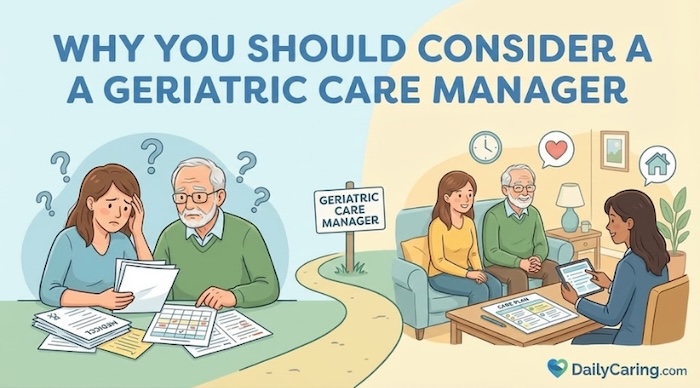
Experts Like Geriatric Care Managers Help Families Solve Caregiving Challenges
Caring for an older adult can be overwhelming, confusing, and incredibly stressful.
For help and relief, consider hiring an aging care expert. They’re typically called geriatric care managers (GCMs) or aging life care professionals.
Their experience and knowledge about senior care issues and local resources can be invaluable when you’ve run into a difficult or complex situation with your older adult.
Even if you don’t need one full-time, a few hours of consultation could make a world of difference in solving a tricky problem.
We share 5 situations where hiring a geriatric care manager can help address tough problems and improve care for your older adult.
What is a Geriatric Care Manager?
A geriatric care manager (or aging life care professional) is an experienced professional who aims to improve your loved one's quality of life, and reduce family stress for you and your family.
They can help you navigate the senior care system, advise you on caregiving decisions, connect you with helpful resources, supervise your older adult’s care, and help resolve family issues.
5 Situations Where Hiring a Geriatric Care Manager Makes Sense
1. You need help solving a complex behavior issue
When older adults develop serious behavioral issues (for example, in dementia), like constant verbal abuse or physical combativeness, it can be challenging to pinpoint the actual cause of the problem.
Unless you have an experienced geriatrician (geriatric doctor) who’s committed to figuring it out, you may need a GCM to connect you with the right specialists who can improve the situation.
2. You need help solving problems in a senior living community
Caring for an older adult often complicates issues. Sometimes, you run into a brick wall trying to solve them.
When that happens, hiring a geriatric care manager can be a big help.
For example, your mom lives in an assisted living community, and you feel that she needs more care than the regular staff provides. However, they won’t let you hire a private aide for her.
You’ve negotiated and argued with the administrator until you’re blue in the face, but aren’t getting anywhere.
A geriatric care manager understands how these communities really work, what the relevant state laws are, and can negotiate on your behalf.
Because they’re industry insiders, they’re more likely to reach a solution that’s in your older adult’s best interests.
3. Your loved one refuses to talk with you about their health
Many seniors don’t want to burden adult children with problems or worries.
If you suspect that your older adult is not telling you about things that affect their health or well-being, you could hire a geriatric care manager to check on them.
Some people are more likely to share their concerns with an expert outside the family.
4. You live far away from your loved one
It’s more challenging to closely manage your older adult’s care when you don’t live near them.
Sometimes, there’s no substitute for having someone there in person to make sure they’re well cared for.
When it’s not possible for you to visit frequently, a GCM could supervise their care, alert you to any issues, and work with you when decisions are needed.
5. You’re really not sure what to do
At some point in your loved one's care, you and your family might feel completely lost and unsure.
If you’re stuck and don’t know what to do, a geriatric care manager can help you understand the available options, trade-offs, and costs.
Final Thoughts on the Benefits of Geriatric Care Managers
While not every caregiving journey requires one, a geriatric care manager becomes an essential ally when facing complex behavioral issues, disputes in senior living, communication barriers, long-distance care, or simply feeling lost.
A geriatric care manager's specialized knowledge and objective perspective offer a clear path forward through otherwise daunting challenges. Even a short consultation can make a significant difference, providing families with the clarity and support needed to make confident decisions.
Ultimately, enlisting their help is a strategic step toward ensuring your loved one receives the best possible care while preserving your own well-being and peace of mind.
Next Steps: Use ALCA's online tool to find a geriatric care manager in your area
Recommended for you:
- Improve Seniors’ Doctor Visits with 3 Communication Tips
- 12 Top Books for Caregiver Advice and Support
About the Author

Connie is the founder of DailyCaring.com and was a hands-on caregiver for her grandmother for 20 years. (Grandma made it to 101 years old!) She knows how challenging, overwhelming, and all-consuming caring for an older adult can be. She also understands the importance of support, especially in the form of practical solutions, valuable resources, and self-care tips.



If you have the discretionary funds to hire a specialists, geriatric care managers, in home aides, etc. there is really no end to the help you can get. However, if you don’t have the discretionary funds to pay for all the “help,” you are sunk.
There are a lot of people who are “too wealthy” for Medicaid (which covers skilled nursing care for the indigent –those with little to no assets) and those who have planned and budgeted for this stage of life and have the money to pay for care.
Most boomer kids I know (who are in their late 60’s or early 70’s and have just retired,) did not save and budget to pay for their parent’s expensive care which could last well into the 90’s. I have two parents in this situation right now. I just retired at age 68. The parents had a long and carefree retirement in their second home in FL. They never had parents to support or care for. Now they are in their 90’s and I’m looking at going back to work at age 69 to pay for their care, since they did not save or plan for that.
I’m sorry to hear about this challenging situation. Services like a geriatric care manager aren’t always necessary for good care.
But if there are complex issues, sometimes hiring a specialist for a few hours can save money in the long run. Similarly, consulting with an elder law attorney can help people plan ahead to properly qualify for Medicaid in their state.
Here are a few articles that may be helpful:
— How Medicaid Spend Down Helps Seniors Qualify for Long Term Care Benefits https://dailycaring.com/how-medicaid-spend-down-helps-seniors-qualify-for-long-term-care-benefits/
— Benefits Programs Help Pay for Caregiving Expenses https://dailycaring.com/financial-help-caregiving-expenses/
— 8 Ways to Lower the Cost of In Home Care for Seniors https://dailycaring.com/8-ways-to-lower-the-cost-of-in-home-care-for-seniors/
#2 could also be addressed by the state ombudsman for no charge.
That’s a great point, thank you for sharing! Based on feedback from our audience, it seems that help provided by their local ombudsmen can really vary. Some work hard and are able to resolve problems and others don’t help much at all or side with the assisted living community. For those who aren’t getting anywhere using an ombudsman, a care manager could be another option to explore.
For those interested, here’s more info on ombudsmen and how to find one in your local area — https://dailycaring.com/nursing-home-complaints-the-ombudsman-is-on-your-side/