













Helping a loved one with dementia during mealtimes can be deeply challenging and emotional. When they lose interest in food, it often feels like a battle of wills, but shifting the focus to their environment and changing needs can make a world of difference.
Drawing from the latest caregiving insights for 2026, here is an engaging, updated guide to help you navigate mealtimes with compassion and effectiveness.
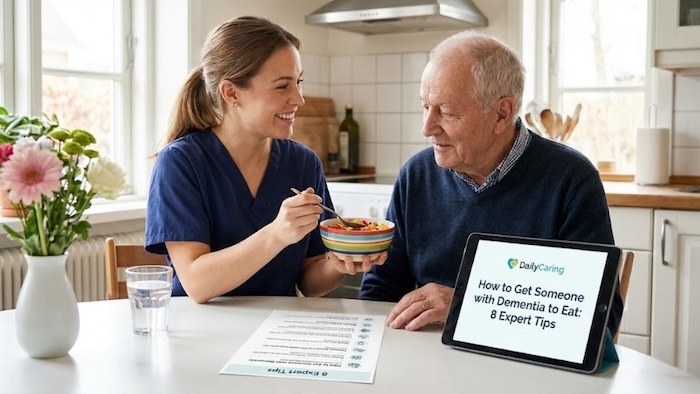
Why Seniors with Dementia Won’t Eat
What can you do when an aging parent or loved one loses interest in eating?
For seniors with Alzheimer’s or dementia, this could be caused by a variety of factors, including loss of taste or smell, distractions, too many food choices, or having trouble with utensils.
Of course, you’re trying to make sure they eat enough to maintain their health. This can make mealtime frustrating or unpleasant for both you and your care recipient.
Tips to Make Mealtimes Easier for Seniors with Dementia
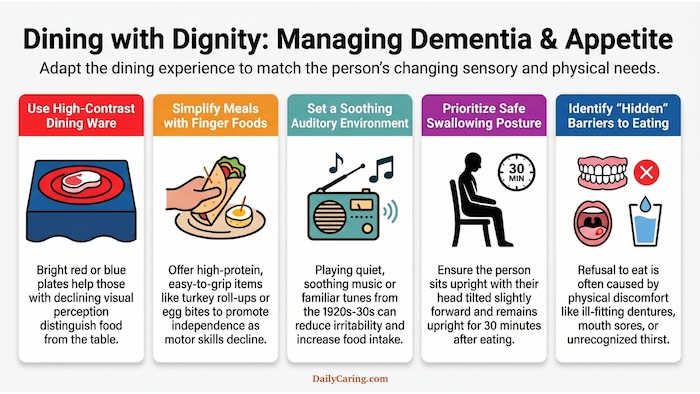
Create a Distraction-Free Dining Environment
Distractions are the enemy of a successful meal. Modern studies emphasize that a calm, quiet setting helps the brain focus on eating.
- Reduce the Noise: Turn off the TV and radio. Background noise can be overwhelming and confusing.
- Clear the Clutter: Remove unnecessary items such as salt shakers, centerpieces, and decorative placemats.
- Use High Contrast: Many people with dementia lose the ability to distinguish between colors. Use a brightly colored plate (like red or blue) that contrasts sharply with the food and the table to make the meal “pop.”
Simplify the Dining Experience
Too many choices can lead to “decision paralysis.” By streamlining the meal, you reduce frustration.
- Serve One Food at a Time: Instead of a full plate, offer one item (such as the main protein) and move to the next only after they’ve finished.
- Embrace Finger Foods: As fine motor skills decline, using utensils becomes difficult. Offer nutritious finger foods like steamed broccoli florets, chicken strips, or small sandwiches to promote independence.
Focus on “High-Value” Nutrition
When appetite is low, every bite needs to be packed with nutrients. This “food-first” approach ensures they stay nourished without needing large portions.
- Fortify Favorite Foods: Stir protein powder, heavy cream, or butter into mashed potatoes, soups, and oatmeal.
- Follow the MIND Diet: Incorporate brain-healthy foods like leafy greens, berries, and nuts. Recent 2025 studies confirm that the MIND diet can still offer cognitive benefits even when started later in life.
- Leverage Smoothies and Shakes: If chewing is a chore, a nutrient-dense smoothie with avocado, Greek yogurt, and fruit is much easier to manage.
Address Physical and Medical Barriers
Sometimes a refusal to eat is actually a sign of physical discomfort that your loved one cannot communicate.
- Check Dental Health: Ensure dentures are comfortable and look for any mouth sores or tooth pain.
- Monitor Temperature: Dementia can impair the ability to sense heat. Always test the food temperature yourself before serving to prevent burns.
- Watch for Underlying Issues: A sudden drop in appetite is a frequent early indicator of a UTI or constipation.
Pro Tip: Make mealtimes social! Research from Ohio State University suggests that eating with your loved one rather than just watching them can trigger their natural instinct to mimic your actions and eat more.
INFOGRAPHIC: Overcoming Eating Challenges with Dementia
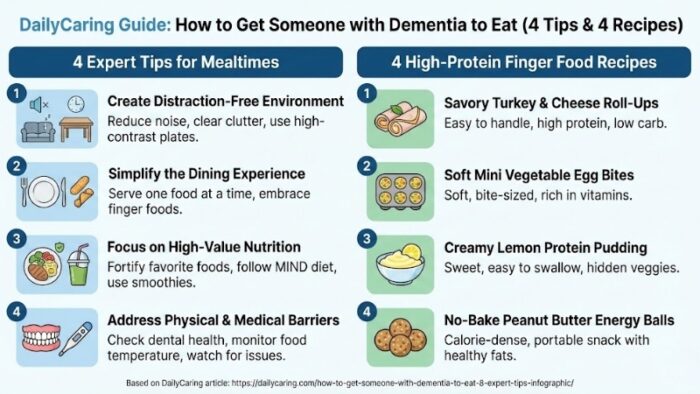
4 Easy-to-Prepare Finger Food Recipes that are High in Protein
High-protein finger foods are excellent for seniors with dementia because they encourage independence and provide the calories needed to maintain muscle mass.
Here are four specific, easy-to-prepare recipes and ideas that are perfect for mealtime or snacking:
1. Savory Turkey and Cheese Roll-Ups
These are essentially sandwiches without the bread, making them easier to handle and lower in carbohydrates.
- How to Prepare: Lay a slice of deli turkey breast flat. Top it with a slice of cheddar or Swiss cheese and a thin strip of cucumber or a pickle for a bit of crunch.
- Why it works: Each wrap provides about 6.5 grams of protein and is naturally easy to grip.
2. Soft Mini Vegetable Egg Bites
Mini quiches or “egg bites” are soft, easy to chew, and can be made in batches for the whole week.
- How to Prepare: Whisk eggs with cheese and finely grated vegetables (like spinach or zucchini). Pour the mixture into a miniature muffin tin and bake until set.
- Why it works: They are bite-sized, high in vitamins D and B12, and provide about 6 grams of protein per egg used.
3. Creamy Lemon Protein Pudding
For those who prefer sweet flavors, this pudding hides a full serving of vegetables and is very easy to swallow.
- How to Prepare: In a food processor, blend 1 cup of Greek yogurt, 1 skinned and sliced zucchini, 3 tbsp of lemon juice, and a bit of sweetener (like brown sugar or honey) until perfectly smooth.
- Why it works: One serving contains about 13 grams of protein and is ideal for seniors who struggle to chew.
4. No-Bake Peanut Butter Energy Balls
These are a calorie-dense, “one-bite” snack that can be stored in the fridge for a quick pick-me-up.
- How to Prepare: Mix peanut butter with rolled oats, then drizzle with honey or maple syrup. Roll into golf ball-sized rounds and chill.
- Why it works: Peanut butter is a great source of healthy fats and protein, which help keep seniors full longer.
Adaptive Eating Utensils Can Support Independence for Those with Dementia or Parkinson's
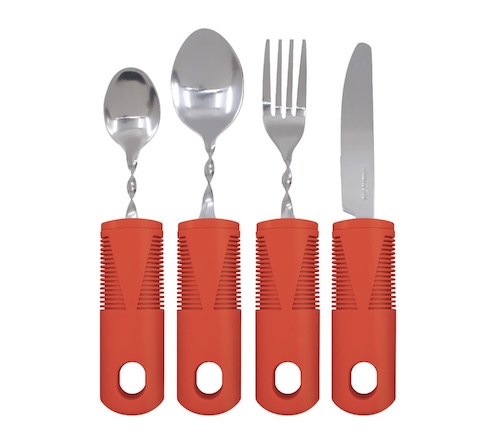
Using the right tools can make the transition back to self-feeding much smoother. For example, the Equate Adaptive Utensils Set features large, non-slip handles and red accents, which research shows can help stimulate appetite in people with Alzheimer's.
Final Thoughts on Getting Someone with Dementia to Eat
Supporting a loved one with dementia through mealtimes is a journey of patience, creativity, and deep compassion. While the primary goal is often just to ensure they get enough nutrition, the heart of these strategies lies in preserving their dignity and helping them feel successful at the table.
There will be days when even the most carefully prepared finger foods are rejected, and that’s okay. By staying flexible, checking for physical discomfort, and focusing on a calm, high-contrast environment, you are providing more than just calories; you are providing comfort.
Remember to celebrate the small wins, take it one bite at a time, and know that your presence and care at the table are the most important ingredients of all.
Frequently Asked Questions
What is the MIND diet?
Why do seniors with dementia lose their appetite?
How can I encourage someone with dementia to eat more?
Disclaimer: The nutrition and caregiving information provided in this article is for educational and informational purposes only and does not constitute medical advice. Dietary changes, including the implementation of specialized diets like the MIND diet, should always be managed in consultation with a qualified physician, registered dietitian, or licensed healthcare provider. Never disregard professional medical advice or delay seeking it because of something you have read on this website.
Recommended for you:
- Hand Tremors: Adaptive Utensils and Eating Aids
- Dressing Someone with Alzheimer’s: 9 Expert Tips
- 12 Engaging Activities for Seniors with Dementia: Reduce Agitation and Boost Mood
About the Author

Chris is a seasoned healthcare executive and entrepreneur from the Pacific Northwest. He strongly advocates for older adults and the caregivers who serve them. Chris has personal experience caring for his father, who had dementia. Chris is a technology enthusiast and an avid outdoorsman; if he's not in his office, he can usually be found on a golf course or fly-fishing out west somewhere.