











It’s often said that it takes a village to raise a child, but the same is profoundly true for caring for an older adult. If you feel like you're carrying the weight of the world on your shoulders, it’s time to stop trying to be a solo hero.
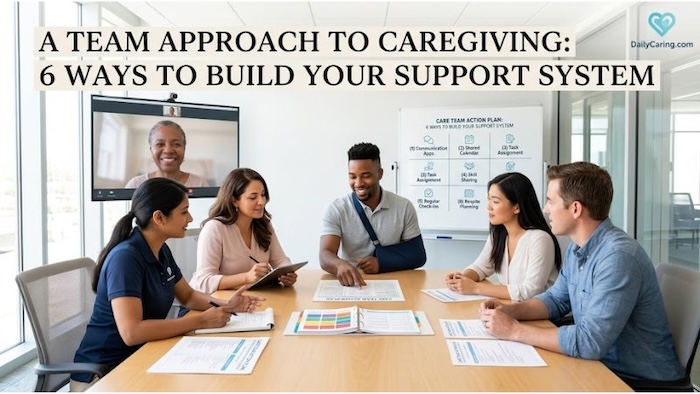
Building a caregiving support system isn't just about “getting help”—it’s about creating a sustainable structure that protects your health while providing the best care for your loved one. Here is how to transition from a one-person show to a high-functioning caregiving team.
1. Recruit Your Inner Circle
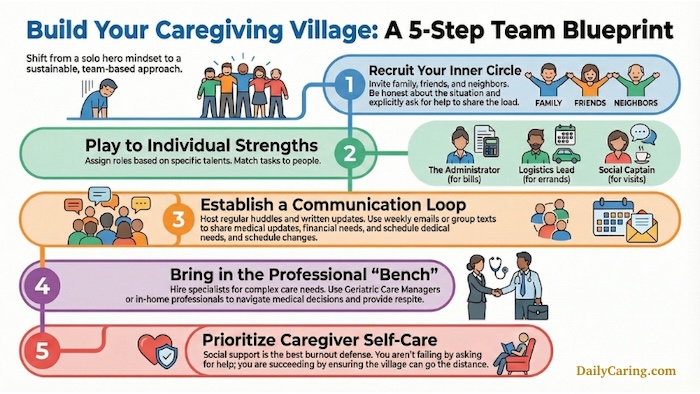
The first step in building a family caregiving team is identifying who can help. People often want to pitch in but don't know how to ask or where they fit. Send a clear invitation to family and friends. Be honest about the current situation and explain that you are looking to share the load.
2. Play to Individual Strengths
Not everyone is suited for hands-on medical care, and that’s okay. Sharing caregiving duties with family works best when you match tasks to talents. Use this “Role Map” to visualize how your team can divide and conquer:
3. Formalize Your Family Caregiving Plan
Ambiguity is the enemy of teamwork. Once you have your recruits, create a literal list of daily, weekly, and monthly tasks. This prevents the “I thought you were doing it” syndrome. If you find your team is still struggling with the emotional weight, review these 3 essential caregiver stress relief tips to help everyone stay grounded.
4. Host Regular “Huddles”
A successful caregiving team requires communication. Whether it’s a quick Sunday night Zoom call or a group text thread, regular check-ins allow the team to pivot when needs change. If you're unsure how to facilitate these talks, observing a caregiver support group meeting can be a great source of inspiration for structuring your own family discussions.
VIDEO: Building A Caregiving Support Team
5. Don't Ignore the Professional Bench
Sometimes, dividing caregiving responsibilities among family isn't enough. There are moments when you need a professional “specialist” on your team. This might mean hiring a geriatric care manager to navigate complex medical decisions or exploring paid family caregiver roles to help offset the costs of care.
6. Focus on the Ultimate Goal
At the end of the day, your team exists for one reason: to keep your older adult healthy and happy while ensuring the caregivers stay whole, too. According to the Mayo Clinic, social support is one of the single most effective ways to combat caregiver burnout.
You aren't failing by asking for help; you are succeeding by building a village that can go the distance.
Final Thoughts On Using a Team Approach for Caregiver Help
Moving from solo caregiving to a team-based approach is often the single most important step you can take for your own well-being. By formalizing your caregiving support system, you aren't just offloading tasks; you’re ensuring your loved one receives consistent, high-quality care while protecting yourself from burnout.
If you're ready to start organizing your new team, using a caregiver notebook template can help keep everyone on the same page and reduce the “mental load” of management.
It takes courage to admit you can’t do it all, but the result is a stronger, more resilient village. Start small, delegate one task this week, and experience how much lighter the journey feels when you aren't walking it alone.
Caregiver Responsibility Notice
The information provided in this post is for educational and informational purposes only and does not constitute legal, healthcare, or financial advice. We recommend consulting with a qualified professional or medical provider before making significant changes to a care plan.
Recommended for you:
- A Caregiver Notebook Template Makes Caregiving Easier
- Keeping Aging Parents at Home: 5 Top Caregiving Tips
- Find Humor in Caregiving to Ease Tension and Boost Mood
About the Author

Amie Clark is a senior care expert with over 25 years of experience in aging services, caregiving, and senior housing. She combines her professional expertise and personal caregiving insight to help families navigate aging, long-term care, and end-of-life decisions with clarity and compassion.