













For many older adults, rising expenses and fixed incomes create a stressful debt burden. However, seniors have unique legal protections that often make traditional debt “solutions” unnecessary or even harmful. Before taking action, it is critical to understand what is legally at risk and what is not.

Understanding the Landscape of Senior Debt
Debt in retirement often looks different from how it did during your working years. Whether it’s from medical bills, carrying a mortgage later in life, or using credit cards to bridge the gap during inflation, the pressure to “pay what you owe” can be overwhelming.
However, because most retirement income is legally protected, your debt-handling strategy should focus on preserving your quality of life rather than solely satisfying creditors. The following options range from simple protective measures to more complex financial moves, each with its own set of risks and benefits to weigh.
Know Your Rights: The “Judgment-Proof” Protection
Before you pay a single dollar toward old credit card debt or medical bills, understand that Social Security, VA benefits, and most pensions are legally protected from debt collectors.
If these benefits are your primary source of income, you may be what is known as “judgment-proof”—meaning creditors cannot legally seize this money even if they win a lawsuit against you.
Always prioritize your basic needs—housing, food, and healthcare—before paying unsecured debts.
1. Understanding Your “Judgment-Proof” Status
Before exploring consolidation, seniors must know the most important rule of retirement debt: Social Security, VA benefits, and most pensions are legally protected from debt collectors. In many cases, if your only income is from these sources, you may be “judgment-proof.” This means that while a creditor can sue you, they cannot legally seize your income to pay the debt. You should always prioritize your health, housing, and food over paying off old, unsecured credit card debt.
2. The Trap of Payday Loan Consolidation
- The Original Idea: Using a consolidation program to manage high-interest payday loans.
- The Reality Check: As consumer advocates note (see comment below), using a new loan (even a “consolidation” loan) to pay off debt can be a trap. Payday loans carry predatory interest rates, and taking on new debt to pay old debt often compounds the problem.
- A Better Path: Instead of consolidating, look into local non-profit credit counseling or specialized legal aid that helps seniors challenge predatory loans without taking on new debt.
3. Balance Transfer Cards and Credit Realities
- The Original Idea: Move high-interest debt to a 0% APR credit card to save on interest and pay down the principal faster.
- The Reality Check: Most seniors struggling with significant debt will not have the high credit score required to qualify for these promotional cards. Furthermore, opening new credit lines late in life can distract from the more important goal of protecting the assets you already have.
- A Better Path: Focus on Debt Management Plans (DMPs) through a reputable, non-profit agency. These programs negotiate lower interest rates directly with your current creditors without requiring you to apply for new credit or a new loan.
4. Reverse Mortgages: Protecting Your Nest Egg
- The Original Idea: Use home equity through a reverse mortgage to pay off immediate, pressing debts.
- The Reality Check: Your home is your “nest egg.” Taking out a reverse mortgage to pay off unsecured debt (like credit cards)—which collectors often can't legally seize anyway—is a high-risk trade-off. You are essentially liquidating your home’s value to pay a debt that may not have been legally enforceable against your protected income.
- A Better Path: Consider a reverse mortgage only for essential living expenses or home repairs that allow you to “age in place.” It should be a tool for your survival and comfort, not a gift to unsecured creditors.
5. Considering Bankruptcy: The Ultimate Reset
When debt becomes truly overwhelming and “judgment-proof” status isn't enough to stop the stress, bankruptcy (Chapter 7 or 13) remains a powerful tool.
- The Protection: Its biggest advantage is the Automatic Stay, which legally bars collectors from contacting you, suing you, or taking any further collection action immediately upon filing.
- Asset Safety: Because retirement accounts and a certain amount of home equity are generally exempt from bankruptcy, many seniors can wipe out their debt while keeping their nest egg intact.
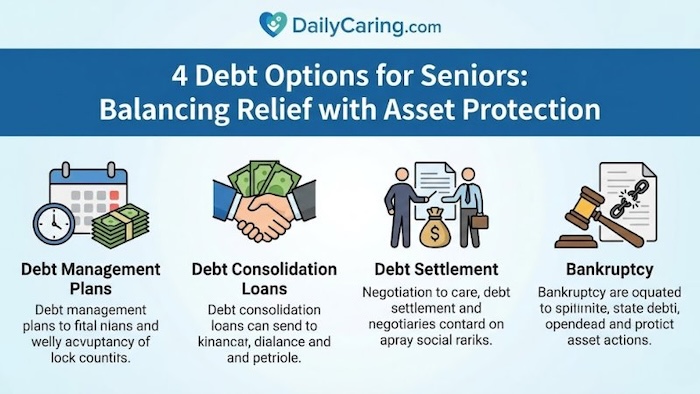
Safe Alternatives to Consider Before Liquidating Assets
Safe Alternatives: Government & Non-Profit Assistance
Before taking on new debt or liquidating assets, explore programs designed to lower your monthly cost of living. These resources can provide a “safety net” without the risks associated with loans:
- BenefitsCheckUp: A free tool from the National Council on Aging (NCOA) to find programs that help pay for food, medicine, and utilities.
- Low Income Home Energy Assistance Program (LIHEAP): Helps seniors manage the costs associated with home energy bills and energy-related repairs.
- SNAP (Supplemental Nutrition Assistance Program): Provides monthly funds for groceries, freeing up cash for other essential bills.
Lowering your expenses is often more effective than “forgiving” debt through high-risk financial products.
Frequently Asked Questions About Senior Debt
Being judgment-proof means that your primary income sources, such as Social Security, VA benefits, and most pensions, are legally protected from private debt collectors. Even if a creditor sues you and wins, they cannot legally garnish these protected funds to pay unsecured debts.
Generally, no. Federal law protects Social Security benefits from garnishment by regular private creditors for unsecured debts like credit cards or medical bills. These funds remain protected as long as they can be clearly identified in your bank account.
Using a reverse mortgage to pay off unsecured credit card debt is a high-risk trade-off. Your home equity is a vital asset for aging in place. Liquidating it to pay off debts that collectors often cannot legally collect from your protected retirement income unnecessarily jeopardizes your financial security.
Final Thoughts About Debt Options for Seniors
Managing debt in your later years is about strategic protection. You don't have to spend your “sleepless nights” worrying about collectors who may have no legal right to your Social Security check. Always consult with a consumer rights attorney or a non-profit financial counselor before tapping into protected assets, such as your home or retirement fund.
Recommended for you:
- Financial Help for Seniors: 2,500+ Federal, State, & Private Benefits Programs
- Seniors in Financial Trouble: 5 Ways to Help
- 4 Financial Assistance Programs for Seniors and Family Caregivers
About the Author

Chris is a seasoned healthcare executive and entrepreneur from the Pacific Northwest. He strongly advocates for older adults and the caregivers who serve them. Chris has personal experience caring for his father, who had dementia. Chris is a technology enthusiast and an avid outdoorsman; if he's not in his office, he can usually be found on a golf course or fly-fishing out west somewhere.


Sorry, but this is very bad advice for seniors struggling with debt. Why wouldn’t the author let seniors know the most important thing they need to know? Is that their Social Security and other retirement income protected by federal and state laws? This money can’t be taken from them and is available for their needs, and doesn’t need to be used to pay off old debt? Why would a senior use a payday loan with its horrendous interest to pay a debt with much lower interest? Since when can a senior struggling with debt qualify for a “balance transfer credit card”? Debt Settlement companies, with rare exception, will never tell a senior that their income is protected and doesn’t need to be used to pay old debt. Equity in a home for a senior is their nest egg. Why would they get a reverse mortgage and use that money to pay off old debts they don’t have to pay anyway?
Excellent comment, and great advice Eric. This article was a legacy article that needed a bit of work (as you mention). I rewrote the article (with an editor) – Inspired by your comment. Thank you so much for your thoughts.