











Caregiver burnout is multidimensional. Not only is it taxing on emotional health, but it can also negatively impact mental, social, financial, and even physical health.
Luckily, as more families opt for aging in place at home, there are many products now designed to support home caregiving and make life easier and more comfortable for everyone.

Here, we will share three ways home modifications can help address common challenges caregivers face – all while improving the safety and independence of those you care for.
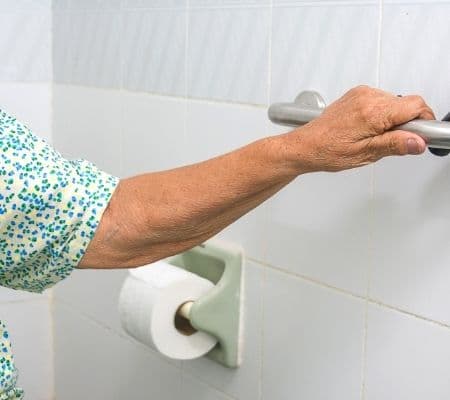
Handy grab bar
1. Improve safety with transfers
Some of the most challenging times in a caregiver’s day are when an older adult needs help to move around.
In healthcare terminology, this is called a transfer.
A transfer is when you help the person you care for get up, sit, or move in or out of an environment, such as a bed or bath.
This could include times when you need to assist your older adult to safely:
- Sit up in bed and take medication
- Move to and from the toilet or shower into a wheelchair
- Get in or out of a car
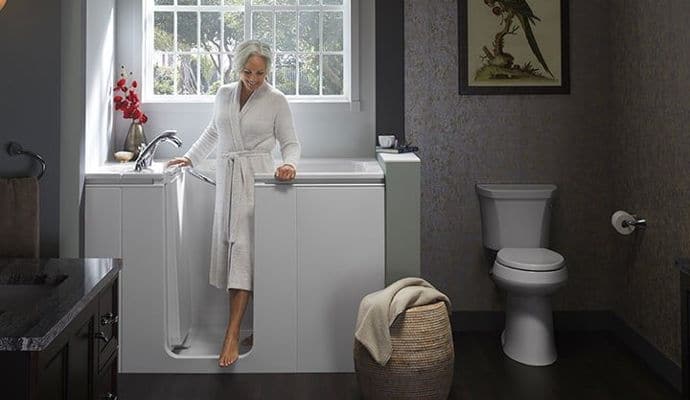
Regardless of the type of transfer, a variety of home modifications can make this vital task easier and safer.
For example, transfers are often physically exhausting and could cause injury. Depending on the person's height and weight, it's important to identify solutions that reduce the risk of muscle strain or falls during transfers.
Common home modifications that can help minimize the risk of injury with transfers include:
- Bed ladder assistants
- Toilet paper grab bars
- Swivel seat cushions
- Transfer tub benches
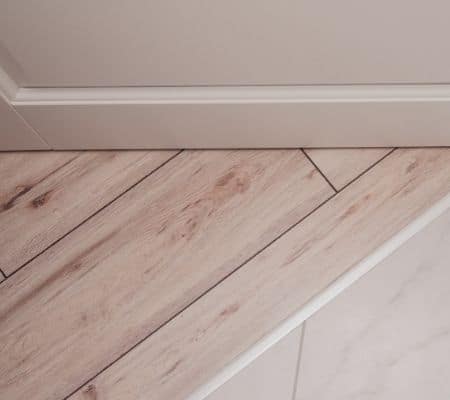
Low threshold at the doorway
2. Get greater peace of mind
Caregivers often have a gnawing worry that they may not be able to prevent every accident or injury from happening to their older adult.
This worry can be mentally and emotionally draining, making you feel “on call” every moment of every day.
And it’s not uncommon for caregivers to worry that their own stress or fatigue could increase the chances of an accident happening.
Another benefit of home modifications is that they can significantly improve an older adult’s safety during daily activities.
This gives caregivers greater peace of mind, which can be a fantastic stress reliever.
You may worry that the person you care for could:
- Wander out of the home at night
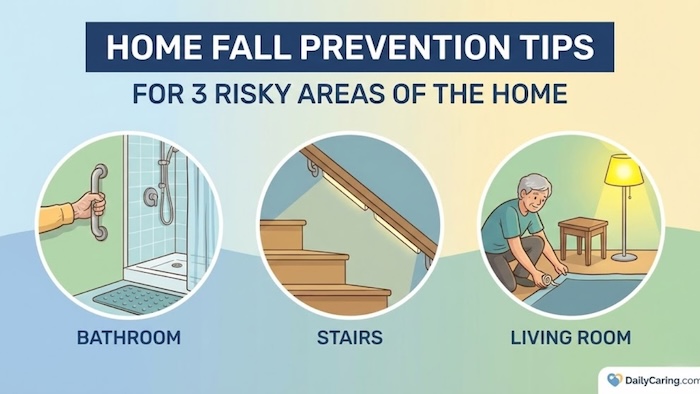
- Fall or trip down the stairs
- Unsafely try to get out of bed
- Slip in the shower or bath
A great way to reduce the anxiety about and chances of an accident like these happening is to proactively take as many precautions as you can in the home.
By implementing simple home modifications, you can provide an additional safety guard for those moments when you’re unable to hold their weight or catch someone before they fall.
There are also home modifications designed for specific needs or conditions.
For example, a caregiver taking care of someone with Parkinson’s may be concerned about the risk of falling or tripping due to what’s known as a “freezing” or “shuffling gait.”
In this situation, effective ways to minimize the risk of falling and provide additional peace of mind include wearing non-slip socks, using double-sided rug tape to prevent throw rugs from shifting, or removing uneven door thresholds.
Click here and use promo code SAFETY to schedule a free one-on-one session with a licensed home safety expert. They’ll work with you to create a personalized home safety plan with tailored product recommendations
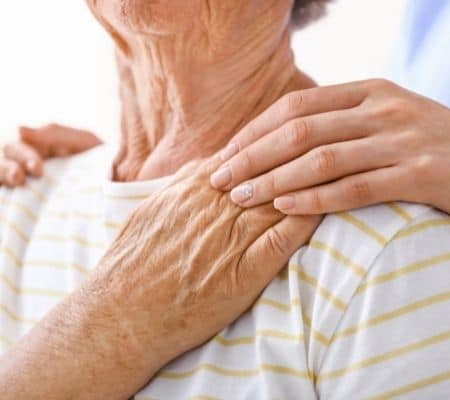
3. Increase independence for improved quality of life
Home modifications also help those you care for by increasing their level of independence in daily life.
Whether you add motion sensor lighting, grab bars, or another helpful household aid, the goal is always to improve their overall level of independence.
When an older adult can experience greater independence, it benefits them and their family caregivers. In fact, one study found that basic home modifications can reduce weekly care hours by nearly 42%.
This reduction in care needs can be life-changing for those caring for a loved one full-time while balancing a career, other family responsibilities, managing personal finances, and maintaining their own well-being.
There are many simple ways to increase independence and reduce the need for caregiver assistance.
Some common and cost-effective options include:
- Accessible utensils that make eating easier
- Velcro clothing, also called adaptive clothing
- Motion sensor lighting for better visibility, automatically
- Adjustable bed bases to make getting in and out of bed easier and safer
- Lower body dressing kits to improve independence
Ultimately, a wide variety of products can be tailored to an older adult’s specific needs, budget, and style.
Depending on specific needs, some or all of the home modifications recommended in this article could significantly improve independence, safety, and well-being.
For help choosing the most effective products, call Jukebox Health at (888)-292-2771.
Their expert client care team is happy to arrange a complimentary one-on-one appointment with a licensed home safety expert. They’ll make sure you find the most effective and necessary solutions.
Next Steps: Click here to schedule a free 1:1 session with a licensed home safety expert with promo code: SAFETY
By Daniel Elliot (OTR/L, Aging-in-Place Specialist), a Guest Contributor at Jukebox Health
About Jukebox Health: This content is a sample from Jukebox Health’s blog. Jukebox Health makes aging in place a common-sense and cost-effective option for older adults and their families. With the help of licensed home safety experts and a nationwide network of trusted installers, they provide a tailored solution to improving home safety and reducing fall risk.
Jukebox Health sponsored this article. For more information, see How We Make Money.
About the Author

Connie is the founder of DailyCaring.com and was a hands-on caregiver for her grandmother for 20 years. (Grandma made it to 101 years old!) She knows how challenging, overwhelming, and all-consuming caring for an older adult can be. She also understands the importance of support, especially in the form of practical solutions, valuable resources, and self-care tips.