













That “use it or lose it” mantra isn't just for the gym; it’s the cornerstone of modern brain health. For years, we’ve heard that keeping our minds busy might ward off memory loss, but recent science has finally moved beyond theory.
Landmark studies from institutions like Columbia and Duke Universities are showing that something as simple as a morning crossword puzzle might actually be more effective at protecting the aging brain than expensive, high-tech “brain training” software.
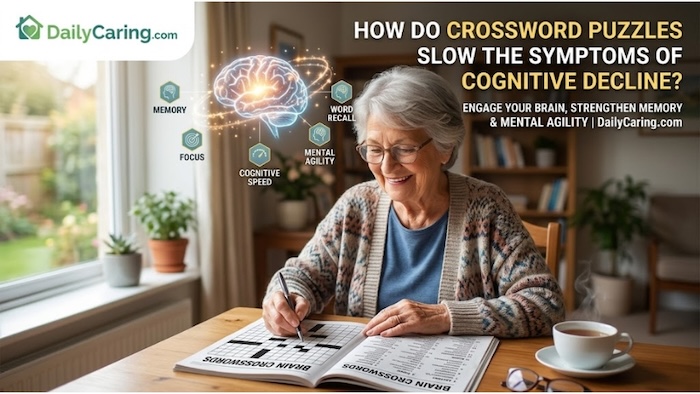
Whether you're looking to support a loved one with mild cognitive impairment (MCI) or simply want to keep your own mind sharp, understanding how these activities build cognitive reserve is key.
By challenging our brains to learn new words and retrieve deep-seated memories, we aren't just passing the time; we’re physically protecting our brain structure against the devastating symptoms of cognitive decline.
Improved Memory and Processing
Research indicates that older adults with mild cognitive impairment (MCI) who engage in high levels of cognitively stimulating activities show better memory, working memory, attention, and processing speed than those who engage less frequently.
Furthermore, individuals who frequently engage in these activities consistently exhibit higher overall cognitive function levels and are able to maintain those levels more effectively over time
Preservation of Brain Structure and Function
Specific activities, such as crossword puzzles, have shown remarkable clinical benefits for those with impairment.
A 78-week study involving MCI patients found that those who regularly completed crossword puzzles experienced less decline in both cognitive and functional abilities than those who played other computerized cognitive games.
Additionally, MRI scans from the study revealed that the crossword participants experienced less brain shrinkage, with preserved hippocampal volume and cortical thickness, indicating reduced brain atrophy.
VIDEO: The Connection Between Crosswords and Brain Health
Brain Health is an Ecosystem that Requires a Holistic Approach
Before we focus on a single aspect of protecting brain health through word games like crossword puzzles, it's important that we acknowledge that crossword puzzles and other brain games are just part of the “risk mitigation” equation.
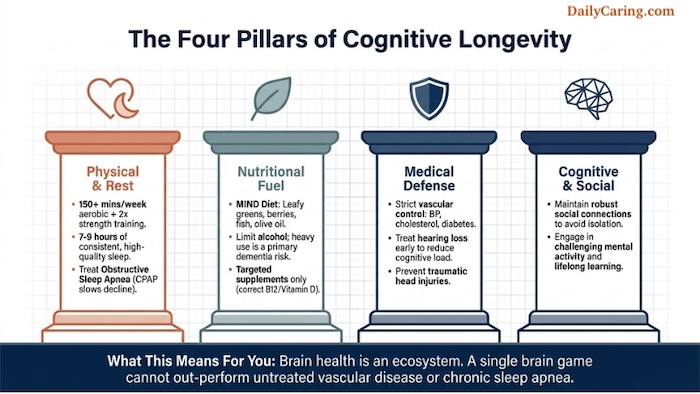
The other pillars of brain health deserve just as much attention if we're truly interested in minimizing the risk and/or progression of brain diseases like dementia. Plenty of modern research indicates the importance of sleep and nutrition on brain health.
Also, fascinating research indicates that people put themselves at (cognitive) risk when they don't practice proper dental care or ignore hearing issues. The lesson here is that it's all connected. It's an ecosystem.
Underlying Mechanisms of How Crossword Puzzles Can Improve Brain Health
Experts suggest that these cognitive benefits arise because activities like crossword puzzles require significant cognitive effort and continually encourage the brain to learn new information, such as looking up new words and definitions.
These tasks engage a variety of cognitive abilities simultaneously, including retrieval memory, verbal knowledge, executive function, attention, and processing speed.
How Do Crossword Puzzles Compare to Games Like Wordle?
When comparing crossword puzzles to games like Wordle, experts generally suggest that crosswords offer superior cognitive benefits because they require greater effort.
The primary advantage of crossword puzzles is that they encourage continuous learning. Because players often have to look up new words and definitions to complete a puzzle, they constantly acquire new information, a process that is highly beneficial for brain growth.
“The more the brain is exercised the better it will be able to function. And the better the quality of the brain exercise the more effective the result is likely to be.” – Dr. Emer MacSweeney, CEO and consultant neuroradiologist at Cognition Health
What About Sudoku?
In contrast, games like Wordle or Sudoku often involve repeating the same or similar processes rather than acquiring new knowledge. While Wordle requires strategic thinking, the cognitive challenge it provides actually decreases once a player figures out a reliable strategy.
However, this does not mean that Wordle lacks value. Any mentally stimulating task can have a positive effect, and playing games like Wordle is still considered much better for your brain than doing no cognitive exercises at all.
Comparison Table: Crossword Puzzles vs Digital Games
| Feature | Crossword Puzzles | Digital Brain Games |
|---|---|---|
| Learning Type | Continuous (new words/facts) | Repetitive (pattern recognition) |
| Brain Structure | Shown to reduce brain shrinkage | Limited evidence on atrophy |
| Cognitive Skills | Vocabulary, Retrieval, Focus | Reaction time, Processing speed |
Final Thoughts About Crossword Puzzles and Brain Health
Beyond word puzzles, most experts recommend a multifaceted approach to brain health, including regular aerobic exercise, a nutrient-rich MIND diet, and the management of vascular risks like high blood pressure.
To make sure you're “exercising” your brain daily, consider making crossword puzzles or other word game puzzles part of your morning ritual. It's a great way to stimulate those neurons and get ready for your day!
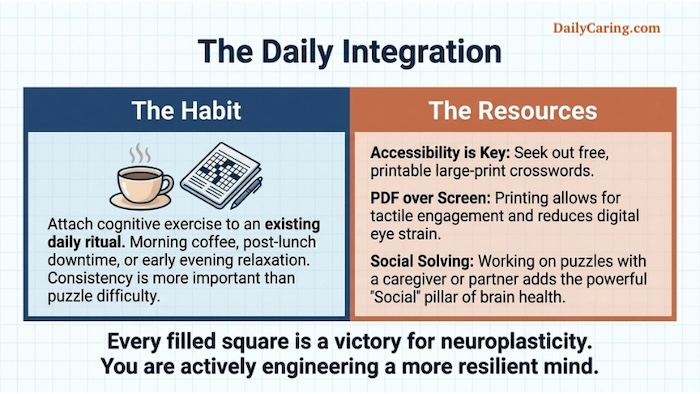
While no single activity can prevent dementia, staying socially active and engaging in mental challenges at least three to four times a week can build cognitive reserve that just might minimize your overall risk.
About the Author

Chris is a seasoned healthcare executive and entrepreneur from the Pacific Northwest. He strongly advocates for older adults and the caregivers who serve them. Chris has personal experience caring for his father, who had dementia. Chris is a technology enthusiast and an avid outdoorsman; if he's not in his office, he can usually be found on a golf course or fly-fishing out west somewhere.