













For many caregivers, the kitchen table eventually transforms from a place of connection into a site of profound emotional exhaustion. The heavy burden of another failed meal, the clink of unused silverware against the dinner plate, and the sight of a loved one wandering away from a once-favorite meal can feel like a gut punch.

But as a former dementia caregiver for my father, I can tell you that this “battle of wills” is rarely about stubbornness. Instead, it is the result of the brain’s failing ability to process hunger signals, recognize objects, and coordinate the complex mechanics of eating.
By shifting our perspective from forced nutrition to sensory-supported experiences, we can protect the dignity of our loved ones while easing the burden on caregivers.
Strategies That Support a Positive Dining Experience for Someone with Dementia
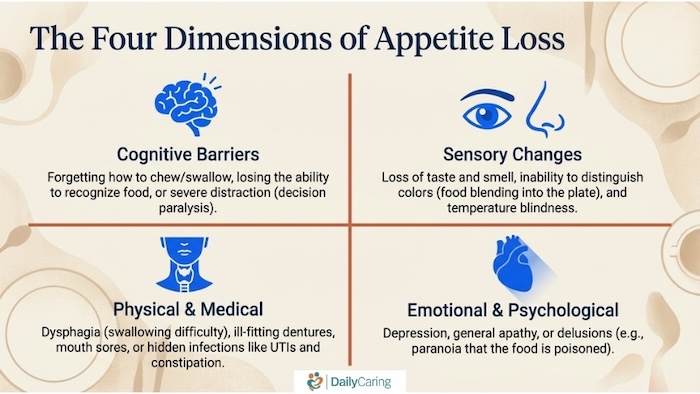
1. High-Contrast Dining: Defeating “Decision Paralysis”
Visual perception often withers as dementia progresses, making it difficult for your loved one to distinguish between objects of similar colors.
If you serve mashed potatoes on a white plate atop a light-colored tablecloth, the food effectively becomes invisible. This visual contrast issue leads to “decision paralysis”, a state of cognitive overload where the brain simply stops trying to navigate the plate.
The solution is the “High Contrast” strategy. Research suggests that using a brightly colored plate (specifically red or blue) makes the meal “pop” against the background. This simple environmental shift doesn't just brighten the plate-up, it stimulates one's appetite.
By making the food easier to see, we reduce the cognitive load of eating, allowing our loved ones to feed themselves with a sense of success rather than confusion.
2. The 1930s Soundtrack: How Vintage Melodies Can Calm the Room
The auditory environment is just as influential as the visual one when it comes to people with dementia. While the jarring noise of a television can cause agitation, the right music acts as a powerful therapeutic anchor.
Studies have shown that soothing music or familiar Swedish tunes from the 1920s and 1930s can reduce “fear-panic” and irritability during meals.
Fascinatingly, research indicates a “staff effect” as well: when music is played, caregivers and staff often become more attentive and relaxed, leading them to serve larger portions and provide better support.
“The results of the study suggest that dinner music, particularly soothing music, can reduce irritability, fear-panic and depressed mood and can stimulate demented patients in a nursing-home ward into eating more.” – Hans Ragneskog (et al), Scandinavian Journal of Caring Sciences, 1996
3. Dignity in Every Bite: Finger Foods and the Hydration Factor
When fine motor skills decline, a fork or spoon can become a source of intense frustration. Switching to high-protein finger foods removes the “utensil barrier” and empowers the individual to maintain their independence.
You may want to talk to a physician about vitamin supplements if your loved one can tolerate them (and, of course, if warranted).
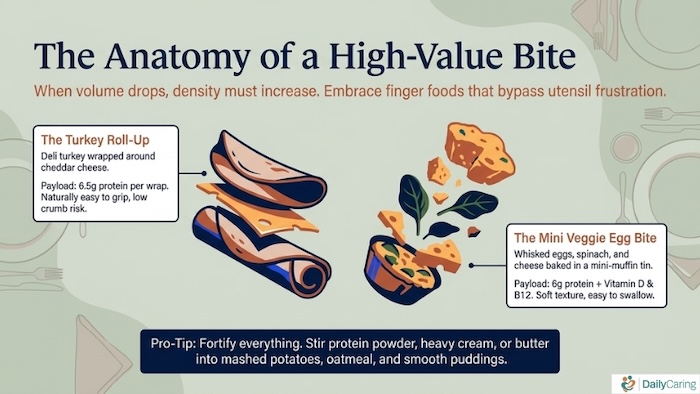
Practical High-Protein Options:
- Turkey and Cheese Roll-ups: Deli turkey wrapped around cheese and a thin cucumber strip.
- Mini Vegetable Egg Bites: Whisked eggs with cheese and finely grated zucchini baked in muffin tins.
- Creamy Lemon Protein Pudding: For those with a sweet tooth or chewing difficulties, blend 1 cup of Greek yogurt, 1 skinned/sliced zucchini, lemon juice, and a touch of honey until smooth.
- Peanut Butter Energy Balls: A calorie-dense mix of peanut butter and rolled oats.
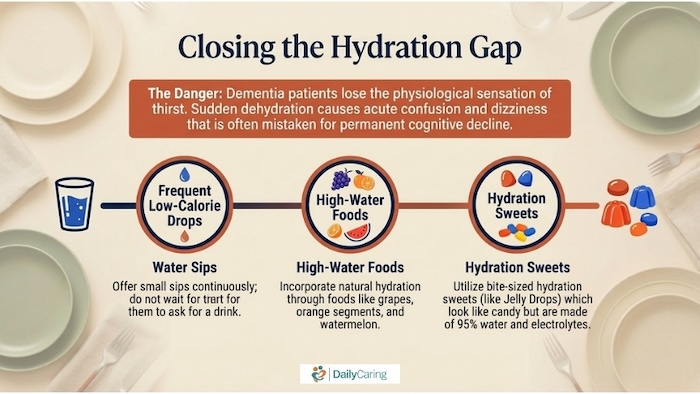
Remember the Importance of Hydration:
It is also vital to monitor hydration. In dementia, thirst is often mistaken for hunger, and even mild dehydration can cause “abrupt confusion,” dizziness, and a sudden drop in appetite.
4. Scent as a Brain Trigger: Aromatherapy Works in the Kitchen
When verbal prompts like “it’s time for lunch” are no longer understood, the olfactory system offers a direct line to the brain's appetite center.
Scent bypasses the brain's damaged areas responsible for logic and taps into primal instincts. The aroma of freshly baked bread or roasting vegetables can signal the body to prepare for digestion long before a plate is set down, creating a natural, instinctual transition to the table.
5. The “Social Mirroring” Effect: Re-learning How to Eat Through Observation
Caregiving is often task-oriented, but we must remember that humans are social eaters. Plenty of research highlights the power of “social mirroring.” When you sit down and eat with your loved one rather than simply supervising them, you trigger their natural instinct to mimic your actions.
This isn't just about the company; it is a way for the person to “re-learn” or “remember” the mechanics of eating by observing you. Social connection is a fundamental human trait that reduces agitation, a common cause of food refusal.
VIDEO: When Someone With Dementia Refuses to Eat
6. Silent Barriers: Identifying the “Hidden” Causes of Refusal
Sometimes, a refusal to eat has nothing to do with the menu. A sudden drop in appetite is frequently an early warning signal for medical issues the individual cannot communicate, such as a Urinary Tract Infection (UTI), constipation, mouth sores, or poorly fitting dentures.
One of the most critical barriers to one's appetite is dysphagia (difficulty swallowing). To support safety and dignity, ensure that your loved one is seated upright with their head slightly tilted forward.
They should remain upright for at least 20 to 30 minutes after the meal to prevent aspiration.
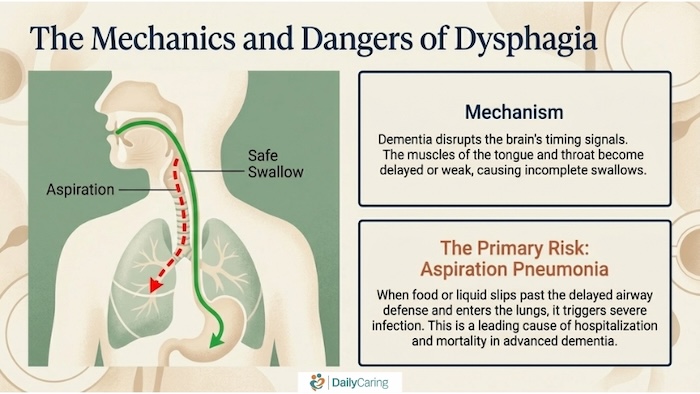
Early Warning Signals for Dysphagia:
- Coughing, choking, or clearing the throat during or after meals.
- A “wet” or gurgly sounding voice.
- “Pocketing” food in the cheeks for long periods.
- Taking an unusually long time to finish small portions.
7. Honoring the Natural Decline in the Later Stages of Dementia: Comfort Over Calories
In the advanced stages of dementia, the body’s relationship with food changes fundamentally. It is a painful but natural reality that as the body begins to shut down, energy needs decrease, and the digestive system slows.
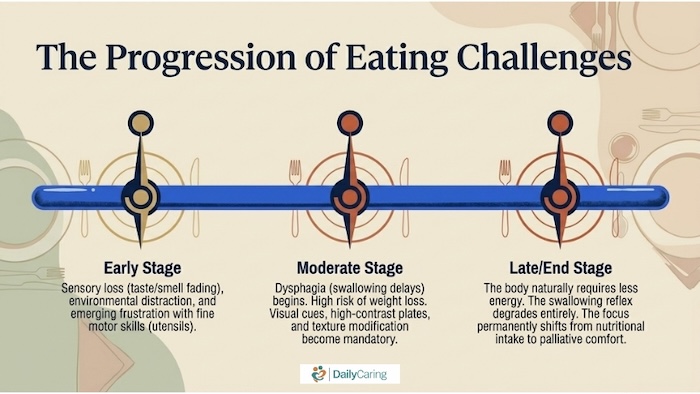
During these late stages, forcing nutrition can cause physical distress. The focus must shift from calories to palliative comfort (moistening the mouth and providing a peaceful environment).
Conclusion: Moving Toward Mealtime Peace
Mealtimes are not just a clinical requirement for calories; they are an opportunity to provide comfort and dignity, especially to those suffering with dementia.
By adjusting the environment with high-contrast colors, soothing melodies, and inviting aromas, we can transform the dining room from a place of confusion into a sanctuary of support and comfort.
Frequently Asked Questions
Why do people with advanced dementia refuse to eat?
How can you stimulate an appetite in someone with dementia?
What are the best finger foods for dementia patients who struggle with utensils?
Is weight loss inevitable in the final stages of dementia?
Disclaimer: The caregiving, nutritional, and medical insights provided in this article are for educational and informational purposes only and do not substitute for professional medical advice, diagnosis, or treatment. Eating challenges and symptoms of swallowing difficulty (dysphagia) can present serious health hazards; always consult a licensed physician, speech-language pathologist, or registered dietitian before introducing major changes to an individual's diet or mealtime routine. Never disregard professional medical directives or delay seeking medical attention due to content read on this website.
About the Author

Chris is a seasoned healthcare executive and entrepreneur from the Pacific Northwest. He strongly advocates for older adults and the caregivers who serve them. Chris has personal experience caring for his father, who had dementia. Chris is a technology enthusiast and an avid outdoorsman; if he's not in his office, he can usually be found on a golf course or fly-fishing out west somewhere.