











A fall can be a frightening and disorienting event for an older adult, signaling a potential loss of independence and safety. For caregivers and family members, the moments after a fall are critical, filled with urgent questions about what to do, what to check, and how to prevent it from happening again.
This essential guide walks you through the calm, systematic steps to take immediately after a fall occurs. By understanding the right actions to assess the situation, provide appropriate care, and document crucial details, you can transform a moment of crisis into an opportunity for proactive health management and future prevention.
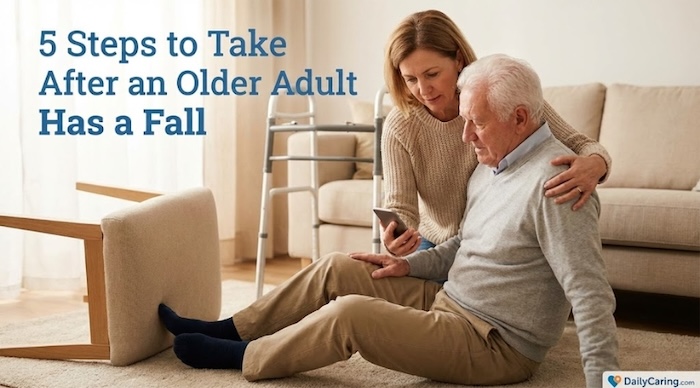
If your loved one has recently taken a fall, you’re probably worried about what to do next. TheKey (formerly Home Care Assistance) shares five steps to reduce the risk of falls.
Prevent Falls in Aging Adults with These Recovery Tips
Every year, about 3 million older adults suffer a fall that’s bad enough to land them in the emergency room.
Falls caused more than 34,000 deaths in 2019 (the most recent statistics available), making it the leading cause of death by injury for people age 65 and older.
Despite these scary statistics, most people don’t think about fall prevention and recovery – until someone they love falls.
If an aging parent or another older adult in your life has recently taken a tumble, you’re probably anxious about what should happen next.
How do you make sure they are OK? What can you do to help them remain safe at home and prevent another fall?
While there aren’t any one-size-fits-all answers, there are several steps you can take to reduce your older adult’s chances of having another accident.
1. Get a medical exam to find the root cause of the fall
One out of five falls causes a serious injury, like a hip fracture or head injury.
While treating injuries is clearly the priority, the next crucial move is to arrange a checkup with your older adult’s primary care doctor or a geriatrician, a physician who specializes in caring for older adults.
“The single most important thing to do when an older person falls is [to] determine the root cause,” says Michael Wasserman, MD, a geriatrician, past president of the California Association of Long-Term Care Medicine, and a member of TheKey’s Scientific Advisory Board.
In other words, you need to determine why the person fell to prevent future falls.
Several chronic medical conditions are associated with falls, including arthritis, Parkinson’s disease, diabetes, and neuropathy (nerve damage that typically causes numbness in the legs or feet).
Other factors, such as vision loss, inner-ear problems that can cause vertigo, and orthostatic hypotension (a condition in which a person’s blood pressure drops quickly when they stand) are also common, says Dr. Wasserman.
Anemia, thyroid problems, dehydration, and incontinence – which can lead to frequent, urgent trips to the bathroom – can be problematic, too.
And some older adults suffer from “frailty syndrome,” which refers to the loss of muscle, stamina, and overall fitness that can increase the risk of falling.
Oftentimes, several overlapping issues contribute to an older adult’s tendency to fall, and it’s essential to identify as many as possible, Dr. Wasserman adds.
Your older adult’s doctor should perform a thorough physical exam, including a gait and balance assessment.
Alzheimer’s and other diseases that cause dementia may lead to gait changes or impact balance or motor skills.
The doctor should also evaluate your older adult’s cognitive skills by using an assessment tool such as the Mini-Mental Status Exam. (A trained medical professional should always do assessment tests.)
2. Review medications for possible side effects
Whether or not a medication’s side effect, such as dizziness, directly caused your older adult’s fall, this is a good time to conduct what’s called “a comprehensive medication review” with the help of their primary care doctor or pharmacist.
Polypharmacy, which refers to taking multiple medications, is linked to mobility problems, and 23 percent of older adults take five or more medications per day.
Polypharmacy also increases the risk of adverse drug reactions, which, in turn, can lead to falls.
A comprehensive medication review, an in-depth, in-person or virtual meeting with a doctor or pharmacist, is designed to highlight medication side effects, catch potential drug interactions, and determine whether all the medications your older adult is taking are necessary and/or if dosages need to be adjusted.
Yet, very few older adults ever have such a review. Ask their doctor or pharmacist about scheduling a session for your older adult as soon as possible.
3. Encourage older adults to address their relevant health issues
The exact game plan for preventing falls will vary from person to person. However, here are some proactive steps to take now.
- Ask your older adult’s doctor about adjusting medications to reduce side effects such as dizziness, sleepiness, and sudden changes in blood pressure.
- Encourage your older adult to use a cane, walker, or other supportive aid.
- Have your older adult work with a physical or occupational therapist to improve their balance, muscle strength, and endurance.
- Make sure your older adult’s eyeglasses and hearing aid prescriptions are up to date.
- Consider getting an ankle-foot orthotic device for your older adult. Also called an orthosis, the device is a brace designed to improve balance and stabilize posture.
- Enroll your older adult in a local senior exercise program, such as tai chi or yoga, that emphasizes balance. Research shows that older adults who exercise are less likely to fall.
- Enroll your older adult in a formal fall-prevention program. Search online using the phrase “fall prevention program near me” to find a local program.
- Hire a home care aide, such as a senior companion, so that your older adult doesn’t have to take walks alone.
- Modify an older adult’s home by installing handrails or grab bars to improve mobility and safety.
4. Hire a professional to conduct a home safety evaluation
An estimated 6 out of 10 falls occur at home, so it’s wise to engage an outside expert to conduct a thorough safety evaluation of the residence.
If you decide to do this type of assessment on your own, use a formal checklist – like this one – to guide you.
“The main things we’re looking for are whether there are enough handrails, adequate lighting, and whether there are throw rugs or loose cords that are easy to trip on,” says Beth Popolizio, PT, DPT, a training and development specialist for TheKey.
It’s also essential to minimize clutter (especially on floors and around stairs), use nonslip mats in the bathroom, and install grab bars where necessary, such as near toilets and showers.
You might want to rearrange furniture to make moving around the home easier.
Don’t hesitate to seek help; a team approach may be best.
Research from Johns Hopkins University found that bringing a nurse, an occupational therapist, and a handyman (to help install safety equipment, such as grab bars) into the home improved people’s functional outcomes, notes Dr. Wasserman.
5. Help seniors move past the fear of falling
Falls are scary, and it’s natural to want to avoid having another.
The problem is that some older adults become so fearful of falling that they reduce their activity levels.
“People can get stuck in a fear/avoidance cycle and start to limit their activity,” says Dr. Popolizio. “Over time, that degrades their strength, power, endurance, and functional independence, which increases their risk of subsequent falls.”
To break the fear-of-falling cycle, focus on building your older adult’s confidence and strength.
As mentioned above, enrolling them in a supervised exercise program, such as tai chi or yoga, for older adults can help, as can encouraging them to use assistive tools, such as canes and grab bars.
If the person is extremely fearful, a type of talk therapy called cognitive behavioral therapy (CBT) may help. Research has shown that CBT is effective in reducing the fear of falling and improving balance in older adults.
CBT teaches how to identify and reframe negative thoughts that would otherwise negatively impact behavior.
Ask their doctor for a referral, or use the APA Psychologist Locator to find a therapist near you (ideally one who specializes in aging).
Final Thoughts on Recovering After a Fall
Responding effectively to a fall is about more than just addressing the immediate incident; it's a pivotal step in safeguarding an older adult's long-term well-being and independence. The systematic approach outlined here (from assessment and documentation to follow-up medical care and environmental adjustments) empowers you to turn a frightening event into a catalyst for positive change.
By taking these steps, you not only ensure proper care for the current situation but also actively collaborate with healthcare professionals to build a safer future. Ultimately, your calm and informed response is the best way to help your loved one recover with confidence and reduce the risk of future falls.
Recommended for you:
- Prevent Falls with 5 Warning Signs of Mobility Issues in Seniors
- Prevent Falls in Seniors with This Helpful Conversation Guide
- 8 Things to Have the Doctor Check After an Aging Person Falls
Guest contributor: For over 20 years, TheKey (formerly, Home Care Assistance) has helped clients achieve successful long-term aging at home with comprehensive, concierge-based care. Ensuring the dignity, safety, and independence of our clients, we are committed to changing how the world lives and ages at home. Founded in Silicon Valley as a single location, we now offer service coverage across North America, enabling clients to live on their own terms in their homes.