













Many people struggle to get through the winter season – and not just because bad weather makes everyday tasks difficult. Those “winter blues” could actually be seasonal depression (also called seasonal affective disorder). Vive Health explains what it is, how it affects seniors and caregivers, and four ways to prevent and manage symptoms.
Are the winter months especially challenging for your older adult and you? One or both of you could be affected by Seasonal Affective Disorder (SAD).
It’s a type of major depression that usually affects people during the winter months. It’s more likely to affect people who spend less time outdoors due to severe weather, reduced mobility, or illness.
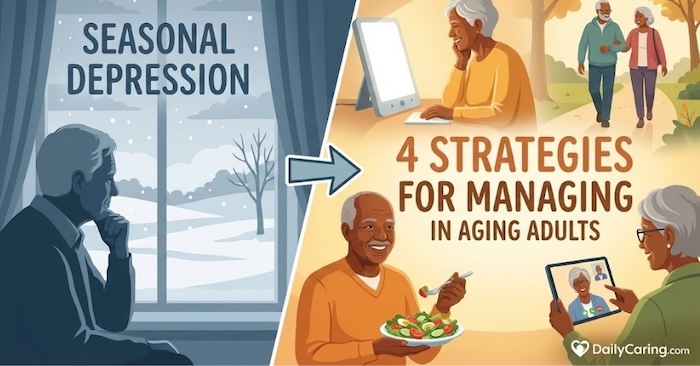
Find out what seasonal affective disorder is, common symptoms, how it affects seniors and caregivers, when to see a doctor, and four ways to prevent and manage symptoms.
What is Seasonal Affective Disorder?
Seasonal affective disorder (SAD), also called seasonal depression, is believed to be brought on by the earlier sunsets and colder weather of winter.
The body’s circadian rhythm (body clock) is influenced by exposure to sunlight at sunrise and sunset.
Scientists believe that reduced sun exposure during shorter winter days can alter brain chemistry, including serotonin and melatonin levels. These biochemical changes can cause symptoms of depression.
SAD typically starts in late fall or early winter and goes away in spring and summer when there’s plenty of sunshine.
Seasonal Affective Disorder Symptoms
Symptoms of seasonal affective disorder can start mild and become more severe as winter progresses.
People with SAD often have symptoms that include:
- Lack of energy, feeling sluggish
- Loss of interest in once-loved activities
- Irritability and agitation
- Increased need for sleep and/or problems with sleep
- Trouble concentrating
- Becoming anti-social, wanting to be alone
- Increase in appetite or weight gain
- Feelings of worthlessness or hopelessness
- Frequent thoughts of death or suicide
How Seasonal Depression Affects Seniors and Caregivers
Many caregivers already experience symptoms of depression due to chronic caregiver stress. Seasonal depression can intensify these symptoms and worsen depression.
Similarly, many older adults who have serious illnesses or require caregiving help also have symptoms of depression. The CDC estimates that 15-20% of adults over 65 experience depression.
When you’re aware of and can recognize the warning signs of SAD in yourself and your older adult, you can take action to prevent more profound depression and improve the quality of life for both of you.
When Should You See a Doctor for Seasonal Affective Disorder
It’s normal to have some days when you feel down, especially as a caregiver or an older adult living with severe health conditions.
But feeling down for days at a time and being unable to get motivated to enjoy activities are signs to see a doctor.
This is especially important if sleep patterns and appetite have changed or if you or your older adult feels hopeless or thinks about suicide.
4 Strategies for Managing Seasonal Affective Disorder Symptoms
1. Know the risk factors for seasonal affective disorder
Being aware of the risk of developing SAD helps you be more proactive and notice symptoms sooner.
SAD is more common in women than in men. And people with a family history or personal experience with depression may also be at increased risk.
Living far from the equator, where there’s naturally less sunlight, increases the risk of SAD. For example, it’s more common to have SAD during winter in New England than in Florida.
Low levels of vitamin D have also been found in people with SAD. Scientists suspect that vitamin D plays an essential part in regulating serotonin levels.
2. Increase light exposure to decrease SAD symptoms
One of the first steps in preventing and managing seasonal affective disorder symptoms is to get more exposure to natural light.
Suggestions for increasing natural light exposure:
- Opening window coverings to allow more sunlight into the home
- Spending the majority of time in the brightest rooms of the home
- Getting outside in the sun every day – that could mean a 10-minute walk or just getting out to the porch or backyard
Light therapy is another effective way to increase light exposure without going outdoors. This is especially helpful for people with mobility issues or when severe weather forces everyone to stay inside for days or weeks.
Doctors often recommend light therapy lamps (like these) to help increase light exposure. Sitting in front of this type of lamp for a set amount of time each day can reduce SAD symptoms.
Before trying light therapy, consult a doctor. People with certain health conditions should be cautious, as the wrong intensity or duration of light may cause problems.
3. Get regular physical activity to ease depression symptoms
Regular exercise and other types of physical activity reduce overall stress and anxiety, which helps to reduce SAD symptoms.
Physical activity also helps tire the body, which improves sleep quality and duration for caregivers and older adults.
Older adults also benefit from simple home exercise routines that help them move more and, as a bonus, build strength and reduce fall risk.
As a caregiver, it can be tough to fit exercise in, especially during the cold winter months. Finding ways to squeeze in small workouts at home is a great way to keep moving – it adds up quickly.
You could try following along with brief yoga videos available for free on YouTube, doing squats and lunges while waiting for the microwave, or using simple home exercise equipment like balance discs and dumbbells.
4. Seek assistance if you or your loved one aren’t getting better
If you are concerned that you or your loved one may have seasonal depression, don’t hesitate to talk to the doctor.
They’ll be able to properly diagnose the cause of your symptoms and make recommendations to help you feel better.
If SAD causes symptoms, they may recommend lifestyle changes to reduce stress, light therapy, appropriate medications, or therapy or counseling.
Final Thoughts on Seasonal Affective Disorder for Caregivers
As the winter months approach, remember that you and your loved one don’t have to endure the season. By proactively seeking light, staying active, and seeking support, you can actively chase away the winter blues. These small, consistent steps add up, transforming a challenging season into a time of warmth, connection, and improved well-being for both of you. Take that first step today—open the curtains, call a friend, or talk to your doctor—and brighten your path forward together.
*This post is for information purposes only. Always consult your physician or healthcare professional if you feel like your seasonal affective disorder symptoms aren’t getting any better despite mitigation efforts.
Recommended for you:
- When Depression and Dementia Collide
- Seated Tai Chi for Seniors: 3 Routines Improve Flexibility and Well-being
- 4 Minute Caregiver Home Workout: Gentle Tabata
Guest contributor: Jessica Hegg is the content manager at ViveHealth.com. Interested in all things related to living a healthy lifestyle, she shares valuable information to help overcome obstacles and improve the quality of life for others.
This article contains some affiliate links. We never link to products or services for the sole purpose of making a commission. For more information, see How We Make Money.
About the Author
Jessica Hegg is a manager at ViveHealth.com. Ms. Hegg was also a full-time caregiver for her Mom who had Primary Progressive MS and Epilepsy. She is a freelance writer with a passion for cooking and lives in Austin, TX with her Mom and her wonderful husband. You can find her personal blog about caregiving tips, ideas, and solutions at Givea.Care.



I have found that Reading my Bible and praying helps me. when I am not feeling quite myself I open my Bible and read it. Because there’s Life in the Word of God, and it will give you life and change the way you feel about life. The word of God gives you Hope. Have Faith in God. He loves us.
It’s wonderful that you’ve found something that boosts your spirits