









Over 80% of older adults intend to age in place, but the harsh reality is that 90% of U.S. homes are completely unequipped to safely house them. Without immediate and deliberate modifications, staying at home transforms from a comfort into a massive liability.
The Staggering Cost of Inaction
The financial argument for modifying a home is undeniable. According to the 2025 CareScout Cost of Care Survey, the national median cost of an assisted living facility has surged to $74,400 annually, while a private room in a nursing home exceeds $129,000. Investing a fraction of that amount into structural safety keeps seniors independent and out of overpriced facilities.
Furthermore, ignoring home hazards virtually guarantees an emergency room visit. The Centers for Disease Control and Prevention reports that one in four Americans aged 65 and older falls each year.
These are not minor stumbles. The average treat-and-release emergency room visit for a senior fall costs nearly $8,900. Falling once doubles the risk of falling again, creating a cycle of injury that forces aging adults out of their homes permanently.
Start with the Bathroom When It Comes to Home Modifications
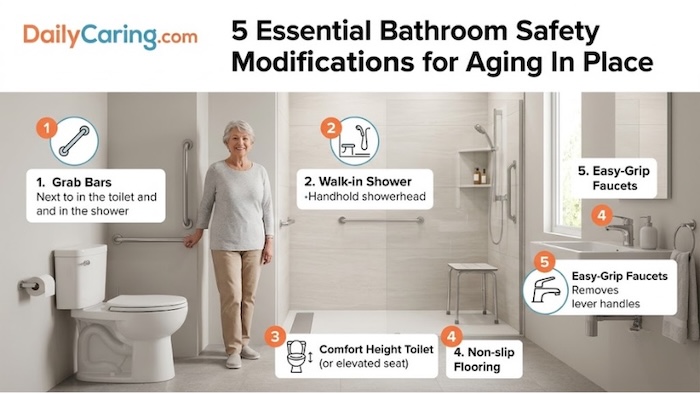
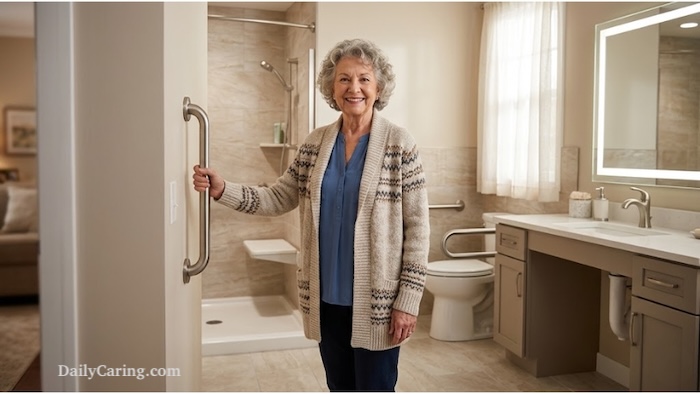
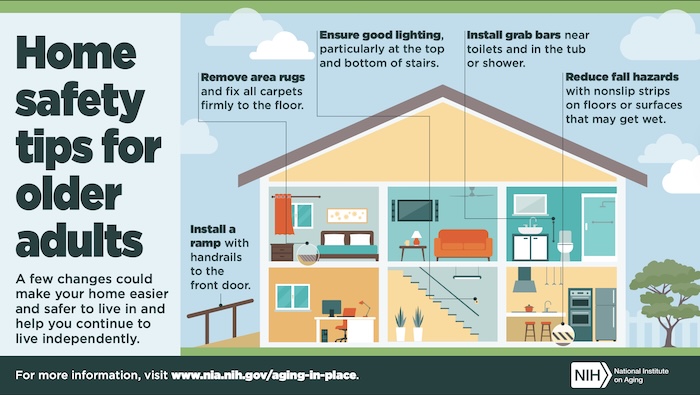
Start with the highest risk zone: the bathroom. Nearly 80% of seniors require modifications like walk-in showers and strategically placed grab bars. Do not rely on suction cup handles, as they fail under full body weight.
Hard-mount all safety equipment directly into the wall studs. Next, eliminate trip hazards by removing throw rugs and installing zero-step entryways where possible.
The Bathroom Standard:
- The “Comfort Height” Standard: Toilets should be replaced or modified to a height of 17 to 19 inches. This “ADA Height” is critical because it reduces strain on your knees and hips, making sitting and standing much safer.
- Hardware Precision: Install grab bars with a diameter of 1.25 to 1.5 inches for a secure grip.
- Water Temperature Settings: Set your water heater to 120 degrees Fahrenheit to prevent accidental scalding.
For a comprehensive breakdown on keeping your environment secure, visit our guide on practical tips for home safety.
High-Visibility Lighting: Eliminate Nighttime Fall Zones
Poor lighting is not an inconvenience; it is a critical environmental hazard. As vision deteriorates with age, standard overhead lighting becomes insufficient, and navigating a dark hallway at 2:00 AM is a guaranteed recipe for a severe injury.
Research analyzing data from the National Health and Aging Trends Study shows that visual impairments, combined with home hazards, significantly increase the risk of catastrophic falls.
You must install motion-sensor pathway lighting along every corridor between the bedroom and the bathroom. Do not rely on manual switches that require fumbling in the dark.
Baseboard-level LED strips that activate when movement is detected provide immediate visual cues without blinding the resident. Furthermore, upgrading to circadian-rhythm lighting has been shown in clinical settings to reduce falls among seniors by over 40%. You must aggressively light the home to compensate for aging eyes.
Kitchen Accessibility: Tearing Down Mobility Barriers
Standard kitchens are built exclusively for able-bodied adults. For a senior with declining mobility or someone utilizing a wheelchair, traditional kitchen layouts are actively hostile. You cannot expect an aging adult with arthritis or balance issues to climb a step stool to reach a top shelf.
You must systematically remove barriers. Install pull-down shelving hardware in upper cabinets so items can be accessed without reaching or straining.
For wheelchair accessibility, you must remove the lower cabinet doors and base structures under the sink and primary prep areas to allow the chair to slide directly underneath. The Americans with Disabilities Act (ADA) guidelines provide exact measurements for reach ranges.
While you are not legally required to comply with ADA codes in a private residence, ignoring their structural math is foolish and will guarantee the kitchen becomes unusable. Swap out all cabinet knobs for D-shaped pulls to accommodate arthritic hands.
Smart Home Integration: Passive and Active Monitoring
Relying solely on physical check-ins is an outdated and dangerous strategy. In 2026, failing to utilize smart home technology borders on negligence. Smart home integration provides a safety net that operates 24/7 without demanding constant human oversight.
Start by installing voice-activated smart thermostats and lighting systems. Aging adults should never have to manually adjust difficult dials or risk a fall just to turn off a light. Voice commands eliminate these micro-hazards.
Perhaps even more importantly, you must integrate modern personal emergency response systems (PERS) or medical alert systems. Do not settle for legacy panic buttons that require the user to press them after a fall.
Modern smart home monitors and wearables utilize AI algorithms to automatically detect falls, unusual behavior patterns, or sudden drops in mobility. If an emergency occurs, these systems instantly bypass the user and alert caregivers or emergency services directly.
To bring yourself up to speed, review the National Institute on Aging's overview of assistive technologies to understand the baseline systems you need to deploy immediately.
VIDEO: Essential Home Modifications for Seniors
High Impact Home Modifications for Seniors
High-Impact Home Modifications
| Modification | Risk Mitigated | Estimated Cost |
|---|---|---|
| Stud-Mounted Grab Bars | Bathroom Falls | $150 to $300 |
| Zero Step Entry Ramp | Tripping at Entry | $500 to $1,500 |
| Lever-Style Door Handles | Arthritis Strain | $30 per door |
| Motion-Sensor Pathway Lighting | Nighttime Visual Impairment Falls | $50 to $150 per corridor |
| Pull-Down Cabinet Shelving | Climbing and Reaching Injuries | $200 to $600 per unit |
| AI Fall Detection Systems | Delayed Emergency Response | $30 to $50 monthly |
About Medicare Coverage: Home Modifications for Seniors
If you are hoping a Medicare policy will bridge the gap and help pay for home modifications for seniors, the data is grim. In 2026, only 6.2% of Medicare Advantage plans offer any partial coverage for actual structural home modifications.
The Final Verdict: Act Before a Crisis Forces Your Hand
Aging in place is not a passive state; it is an active, structural defense strategy. Hoping for the best without making concrete changes virtually guarantees a catastrophic fall and an involuntary transition into a $74,400-a-year facility.
You must view stud-mounted grab bars, motion-sensor lighting, and AI fall detection not as optional home improvement projects, but as non-negotiable medical interventions.
Do not wait for an emergency to dictate your living arrangements. Audit your environment immediately, allocate the necessary private funds, and execute these essential home modifications for seniors before the home itself becomes the greatest threat to your independence.
Frequently Asked Questions: Home Modifications for Seniors
Does Medicare pay for home modifications for seniors?
No. Original Medicare does not pay for the construction, materials, or labor required for structural home modifications. The government classifies grab bars, pull-down shelving, and ramps as home improvements, not durable medical equipment. You must plan to fund these critical updates privately.
What is the most critical room to modify for aging in place?
The bathroom is the highest risk zone for catastrophic falls. You must install stud-mounted grab bars, utilize non-slip flooring, and transition to a zero-step entry shower. Never rely on suction cup handles; they will fail under full body weight.
Are home modifications cheaper than assisted living?
Yes. The national median cost of an assisted living facility is $74,400 annually. Investing a few thousand dollars into motion-sensor lighting, lever-style door handles, and structural accessibility updates is the most cost-effective strategy to maintain your independence and avoid forced institutionalization.
About the Author

Chris is a seasoned healthcare executive and entrepreneur from the Pacific Northwest. He strongly advocates for older adults and the caregivers who serve them. Chris has personal experience caring for his father, who had dementia. Chris is a technology enthusiast and an avid outdoorsman; if he's not in his office, he can usually be found on a golf course or fly-fishing out west somewhere.