











Don't trust “Top 10” lists that rank the best medical alert systems (clinically known as Personal Emergency Response Systems, or PERS) without knowing about lifestyle choices or specific medical challenges.
The best medical alert systems for bedbound seniors are completely different from PERS devices for adults who drive and play golf.
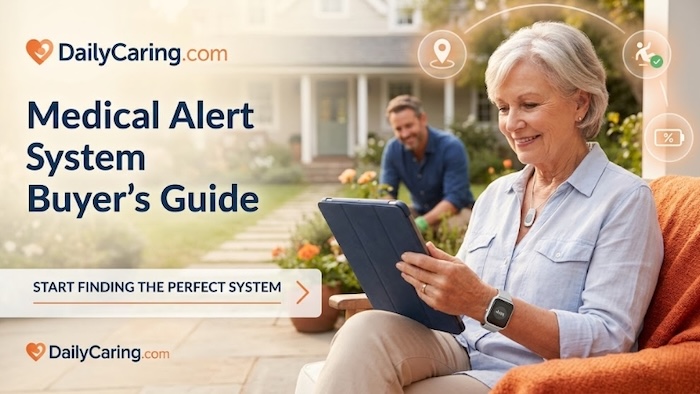
Use the interactive tool below to instantly narrow down the market, or read our data-backed analysis below. We evaluated the top vendors based on raw speed, equipment quality, and pricing transparency.
Find the Perfect System in 60 Seconds
Answer 3 questions to get a personalized recommendation.
1. Where do you or your care recipient spend most of your time?
The 3 Variables You Must Understand Before Buying a Medical Alert System
You are buying a monitoring service, not just a plastic button. If the hardware is cheap but the monitoring center takes 3 minutes to answer, the system is useless.
1. Cellular vs. Landline Connection
Do not buy a landline system unless you live in an extreme rural area with zero cellular coverage. Cellular systems operate on built-in AT&T or Verizon chips. You do not need a personal cell phone plan with these carriers to use them. They are faster, do not rely on your home phone wiring, and work even if your landline goes down.
2. In-Home Range Limits
In-home systems rely on a base station. The absolute maximum range for the best base stations (like Medical Guardian) is 1,400 feet. If an aging adult steps outside that range, the button will not trigger an alert. If your parent is highly active, or if you are managing a diagnosis and need to track wandering behavior, you should buy a GPS-enabled mobile device to ensure their safety outside the house.
3. The Fall Detection Reality Check
Fall detection is heavily marketed, but it is not infallible. It relies on barometric sensors and accelerometers to measure rapid downward velocity. It will consistently catch “hard” falls, but it can routinely miss “sliding” falls where a senior slowly slumps down a wall or out of a chair.
Devices with fall detection will also trigger false alarms if dropped on a table. The CDC reports that 36 million falls are reported among older adults each year, making this feature a critical safety net. We strongly recommend fall detection for anyone with a history of falling, but it does not replace the need to press the button manually when conscious.
Key Features and Add-Ons to Demand in 2026
Beyond the core connection types, the best medical alert systems differentiate themselves through their hardware quality and monitoring center standards. Do not sign a contract until you have verified the following features.
U.S.-Based Monitoring Centers
In an emergency, seconds matter. Your call must route immediately to a TMA Five Diamond Certified monitoring center located within the United States. Offshore call centers often introduce dangerous latency and language barriers during high-stress medical events.
Waterproof vs. Water-Resistant Pendants
The majority of falls occur in the bathroom. Your wearable device must be fully waterproof, typically holding an IPX7 rating, allowing it to be worn safely in the shower or bath. Devices labeled simply “water-resistant” may fail if fully submerged.
Clear Two-Way Talk Functionality
The pendant or smartwatch must have a built-in, high-definition speaker and microphone. This two-way talk functionality allows the dispatcher to speak directly to the user through the device on their wrist or neck, rather than forcing the user to shout across the house to a base station.
Emergency Lockboxes
If EMTs are dispatched and the user cannot reach the door, responders may break the door down, causing thousands of dollars in property damage. You should consider installing a secure key lockbox outside the home (many of the best medical alert system providers sell these as an accessory). You provide the lockbox code to the monitoring center, and they pass it to 911 dispatchers. Combine this with our other strategies for improving overall home safety to fully protect your aging parent.
Spouse Coverage and Secondary Buttons
If two aging adults live in the same home, you do not need to pay for two separate subscriptions. Most top-tier providers offer spouse coverage, allowing you to add a second wearable button to the same base station for a nominal equipment fee.
Here Are 4 Recommendations for Best Medical Alert Systems to Consider in 2026
Introducing Mobile Help Medical Alert Systems
Mobile Help has been around for a long time and is a reputable U.S. based medical alert provider. We have no qualms about recommending them whatsoever.
MobileHelp Classic
Best Budget OptionStarting Price: $25.95/month
Connection: Cellular
In-Home Range: 1,400 feet
Fall Detection: Optional ($11/mo)
Why we recommend it:
Zero upfront equipment fees and no long-term contracts. It is the most reliable, no-nonsense cellular system available for under $20 a month.
Introducing Bay Alarm Medical
We've made many recommendations for the Bay Alarm Medical PERS systems. Another quality U.S. based company.
Bay Alarm Medical SOS Smartwatch
Best Overall PerformerMonthly Price: $39.95/month
Upfront Fee: $199 (Equipment)
Connection: 4G LTE Cellular
Avg. Response: ~10 Seconds
Why we recommend it:
It boasts the fastest emergency response times in 2026 independent testing. The discreet smartwatch design eliminates the stigma of wearing a medical lanyard for active seniors.
Introducing Medical Guardian Medical Alert Systems
We've had Medical Guardian on our list of the best medical alert system providers for many years. Another quality U.S. based provider offering premium medical alert devices in various form factors.
In addition to great devices, you can cancel your Medical Guardian monthly monitoring payments at any time, providing peace of mind in case the medical alert system is no longer needed.
Medical Guardian MGHome Cellular
Best In-Home TechMonthly Price: Starts at $38.95/month
Upfront Fee: $149.95 (Equipment)
In-Home Range: 1,400 feet
Fall Detection: Optional ($10/mo)
Why we recommend it:
Class-leading 1,400-foot range means protection extends to the yard and driveway. Paired with a top-rated caregiver tracking app, it's the premium choice for aging in place.
Introducing the Kanega Medical Alert Watch
The U.S. based Kanega Medical Alert Watch from UnaliWear is an interesting product. We were impressed with all the features (including fall detection), and our only challenge was that it is a larger wearable that might be less comfortable for petite users. The Kanega Medical Alert Watch would be perfect for men (or women) with larger arms and wrists.
Kanega Medical Alert Watch
Best for men with large wristsMonthly Price: $84.95/month
Upfront Fee: $299 (Equipment)
Connection: Verizon LTE & Wi-Fi
Fall Detection: Included
Why we recommend it:
It features a unique quick-swap battery system, meaning it never has to be removed for charging. Its robust design is ideal for larger wrists, and it includes advanced AI RealFall™ technology built right in.
How We Choose the Best Medical Alert Systems
We've worked with all of the major medical alert providers in the North American market and tested equipment from all of the big players. We've attended medical alert system industry working groups and even toured one of the largest medical alert system call centers out in Utah.
We don't recommend all of the medical alert system providers, only the most reputable. These decisions are personal, and they legitimately impact older adults and their families.
Our Medical Alert Selection Criteria
Here's what we look for before recommending a provider to our list of best medical alert system providers:
- Responsible Business Practices
- No long-term contracts.
- No hidden activation fees.
- No major cancellation fees.
- Absolute price transparency.
- Reliable Product Hardware
- Equipment that works.
- Equipment that wears well.
- Equipment replacement policy in case of failure.
- Minimal Call Center Response Times
- Response times in seconds (not minutes)
VIDEO: Choosing the Right Medical Alert System
Making the Final Decision
Ultimately, the best medical alert system is the one your family member will actually wear. Purchasing top-tier technology like the Bay Alarm Medical SOS Smartwatch is a waste of money if the user leaves it on their nightstand because they find it complicated.
Start by taking our interactive quiz at the top of this page to pinpoint the exact features you need, whether that is basic in-home coverage or advanced mobile GPS tracking.
Once you identify your required features and budget limits, use our links to verify the most current pricing directly with the manufacturers before signing any agreements.
Finally, it's always a great idea to find out what your overall contractual obligation is. A little over a decade ago, medical alert providers required buyers to sign-up for multi-year (binding) contracts. Most of the big providers today have done away with that practice.
*Make sure you understand the cancellation policy before ordering any medical alert systems from any of the providers out there.
Frequently Asked Questions
Are medical alert systems covered by Medicare?
Original Medicare (Part A and Part B) does not cover the cost of medical alert systems. However, some Medicare Advantage (Part C) plans offer coverage or partial reimbursement for these devices under their over-the-counter (OTC) benefits or supplemental health perks. You must contact your specific Medicare Advantage provider to verify your coverage limits.
Are there medical alert systems with no monthly fee?
Yes, but they are unmonitored systems. An unmonitored system dials 911 or a pre-programmed family member directly when you press the button. Monitored systems, which route your call to a dedicated 24/7 emergency dispatch center, always require a monthly subscription fee to pay the operators.
Are medical alert systems tax deductible?
Yes, the cost of the equipment and the monitoring fees can be tax deductible under IRS guidelines if the system is prescribed by a doctor to treat a specific medical condition. You can only claim this deduction if your total unreimbursed medical expenses exceed 7.5% of your adjusted gross income (AGI) for the year.
Do you need Wi-Fi for a medical alert system?
No. Modern mobile medical alert systems operate using built-in cellular chips on networks like AT&T or Verizon. Traditional in-home systems operate using a standard landline wall jack. While some advanced systems use Wi-Fi signals to help pinpoint your location faster alongside GPS, an active Wi-Fi network is not required for the system to contact emergency services.
About the Author

Chris is a seasoned healthcare executive and entrepreneur from the Pacific Northwest. He strongly advocates for older adults and the caregivers who serve them. Chris has personal experience caring for his father, who had dementia. Chris is a technology enthusiast and an avid outdoorsman; if he's not in his office, he can usually be found on a golf course or fly-fishing out west somewhere.