













The warning signs caregivers were taught to watch for, like bad spelling, a foreign number, or a prize too good to be true, have quietly stopped working. Here is what actually protects the people you love.
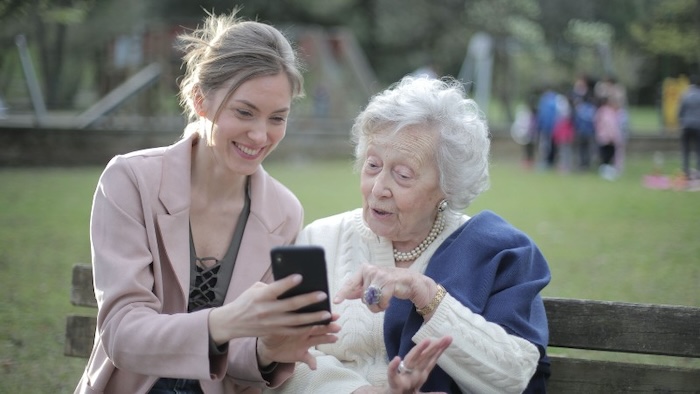
The phone rings a little after nine on a Tuesday night. Your mother picks up, and it is your niece. She is crying, panicked, saying she has been in a car accident, that she needs money wired right now, and please, please don't tell her parents. The voice breaks in all the right places. The story is just plausible enough. And it is completely fake.
Scenes like this are playing out in living rooms across the country, and if you are caring for an aging parent, you are often the first person to hear about it, usually after the money is already gone.
It is one of the hardest parts of caregiving that no one warns you about: the uncomfortable reality that the person you are trying to protect has become the single most targeted and most expensive victim of online fraud in America.
The Advice We All Grew Up With No Longer Works
For a generation, the rules for spotting a scam were simple. Watch for misspellings. Be suspicious of a strange email address or a clumsy greeting. If an offer seemed too good to be true, it was. If a message looked sloppy, you deleted it and moved on.
Those rules are now obsolete. Generative artificial intelligence has rewritten the economics of fraud, turning what used to be crude, mass-produced emails into polished, personal messages that are nearly impossible to tell apart from the real thing.
The text about a missed delivery. The voicemail in a grandchild's voice. The email from “your” bank confirming a charge that was never made. All of it has become dramatically more convincing in the past eighteen months.
The FBI has warned that AI-generated content is now often difficult to identify and urged the public to stop assuming a familiar voice on the line is who it claims to be.
“Marry the personal information of the target with the actual voice of the target's grandchild, thanks to AI voice cloning, and it's like the industrial revolution for criminals.” – KATHY STOKES, DIRECTOR OF FRAUD PREVENTION PROGRAMS, AARP
Why Older Adults Bear the Brunt
Scammers go where the money and the trust are. Older adults are more likely to own their homes, have retirement savings, answer an unknown number, and believe that an institution calling them (whether Medicare, the IRS, or the bank) is exactly who it says it is. That combination makes them the highest-value target a fraudster can find, and the numbers reflect it.
The Escalating Cost of Elder Fraud
Source: FBI 2023 Elder Fraud Report
And those are only the losses we know about. Investigators believe the true totals are far higher because so many older victims never report what happened. Some stay quiet out of embarrassment. Others do not realize they were targeted until weeks later, when a caregiver finally connects the dots.
Warning Your Aging Parents Isn't Enough
Most of us respond to this threat the only way we know how: we warn. We sit our parents down, tell them to be careful, and maybe forward a news story about the latest scam. It feels responsible. The problem is that it rarely works. It is not that older adults aren't paying attention. It's that fear and a list of rules that are no match for a highly engineered message made by AI.
A growing body of cybersecurity research points to the same conclusion: the single most reliable defense against phishing is neither a warning nor software. It is repeated, hands-on exposure to the real thing in a safe setting.
One large industry study found that people who practiced identifying phishing attempts each week for a year were eighty-six percent less likely to click on a real one. The skill of recognizing a scam behaves like any other skill. It is built by doing, and it fades without use.
Corporations have known this for years. Their IT departments run mandatory phishing-practice drills for employees, quietly sending fake scam emails and coaching anyone who clicks. Retirees, the very group losing the most money, were simply never offered the same training. They were left to face the most sophisticated fraud in history with a pamphlet and good intentions.
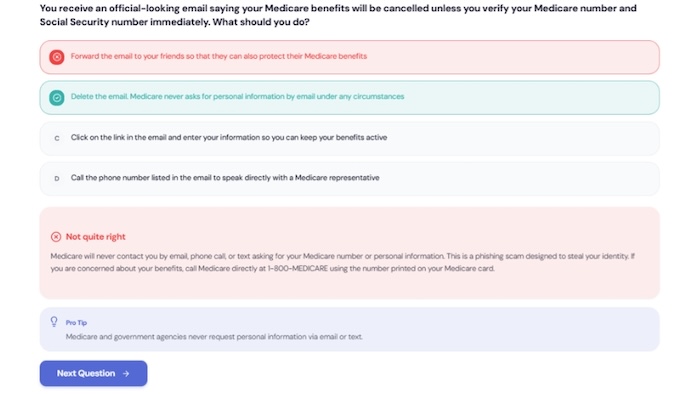
A Practice Tool Built for Families, Not Corporations
That gap is what a new platform called PhishTested set out to close. It takes the same practice-based method long used inside Fortune 500 companies and rebuilds it for households, with adults 50 and older deliberately placed at the center of the design rather than treated as an afterthought.
Instead of a lecture, members work through realistic scenarios drawn from a library of more than three hundred scams across nine categories: the fake delivery text, the phony Medicare email, the romance scam asking for gift cards, the “account compromised” alert. For each one, the reader decides whether to trust, verify, or delete, and the platform explains what gave it away.
Each session takes about five minutes, less time than it takes to make coffee. The type is large, and the language is plain, with no jargon and no app to install.
And because so many of us live a flight away from our parents, a single “For Families” subscription covers everyone in the household: you can choose a quiz aimed at the scams now circulating among your parents' generation and text them a secure link, while a shared readiness dashboard lets you see, at a glance, how everyone is doing without having to ask.
A weekly threat alert, one screen written for humans, keeps the whole family current on whatever is making the rounds that week
SPECIAL OFFER: PHISHTESTED.COM
Give your parents five quiet minutes of practice a week.
The “For Families” plan trains every generation under one subscription. Take a five-minute quiz yourself, or text a secure practice link to a parent or grandparent you worry about. Subscriptions start at $1.99 a month. Visit PhishTested.com →
It is not a silver bullet, and no service is. But the premise underneath it, that the only way to recognize a scam in the moment is to have already seen ones like it, is backed by every credible study on the subject. For caregivers, PhishTested.com offers something rare: a way to help that builds your parent's confidence instead of chipping away at their independence.
What To Do With Your Parents This Week
You do not need to wait for a subscription to start protecting the person you care for. Security experts recommend three habits you can put in place together this week.
- Agree on a family code word. Pick a word only your family knows, and promise each other that any “emergency” call asking for money has to include it. A cloned voice can sound perfect; it cannot know your secret.
- Make “hang up and call back” the default. Coach your parent that any urgent message, whether a delivery problem, a frozen account, or a tax issue, means stopping and calling the company at a number they look up themselves, never the number in the message.
- Set up a trusted contact. Most banks and brokerages allow an account holder to designate a trusted person to be alerted to suspicious activity. It is a five-minute call that can stop a loss before it clears.
- Practice together, not at them. Sit down and walk through a few real scam examples side by side. Turning it into a shared activity removes the shame, and shame is what keeps victims silent.
The scams are not going away. They will keep getting better at sounding like your parents' bank, their grandson, their pharmacist. But the families who learn to see them coming, together, with a little regular practice, almost always do. And as a caregiver, helping the people you love stay a step ahead may be one of the most lasting forms of care you can give
About the Author

Chad Durling is the co-founder of PhishTested.com and the father of two. He works with families across the country to help them recognize the scams now reaching American inboxes and phones each and every day.