













In 2026, the caregiving landscape has undergone a significant shift toward non-drug interventions for managing the behavioral symptoms of Alzheimer’s and dementia. One of the most effective and heartwarming tools in the modern caregiver’s toolkit is the robotic companion pet.
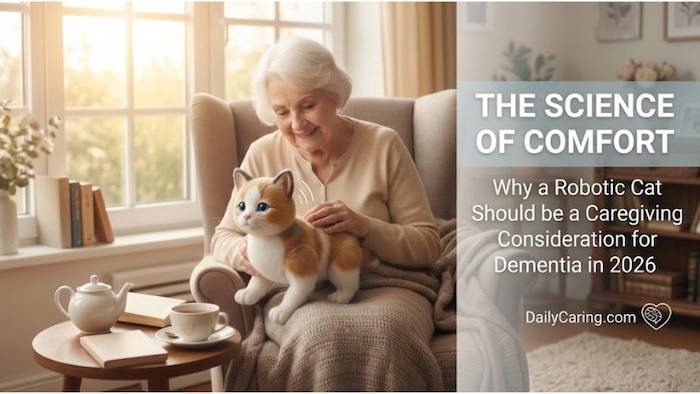
While they may look like high-end stuffed animals, these animatronic companions are sophisticated therapeutic tools. For a senior living with cognitive decline, a robotic cat for dementia provides something words often cannot: unconditional presence, sensory stimulation, and a sense of purpose.
The Evidence: Why These “Pets” are Medically Significant
The shift in how we view these companions is supported by a surge in data from 2025-2026. The New York State Office for the Aging (NYSOFA) has now distributed over 35,000 animatronic pets, with 70% of seniors reporting reduced loneliness and a significant 75% drop in reported pain levels. 🤯
Even more striking is the February 2026 clinical trial from Sarasota Memorial Hospital. Their researchers found that hospitalized seniors with dementia who interacted with a companion pet had shorter hospital stays and were significantly more likely to return home rather than being discharged to a nursing facility.
This echoes NIH-supported findings that dementia companion robots can lower blood pressure and reduce “sundowning” agitation. – I know, amazing right?
Choosing the Right Companion: Stuffed Animal, Robotic Pet, or Live Therapy Companion?
The goal is to find a pet that resonates with your loved one’s personal history. If they were a lifelong “dog person,” a golden pup is ideal; if they find comfort in the vibration of a purr, the cat is a miracle worker. *Special note: If they're into reptiles, you may just have to wait…🦎
💡 Caregiver Pro-Tip: The “Introduction” Phase
When introducing a robotic cat for dementia, try placing it on a chair or sofa near your loved one first, rather than handing it to them directly. Let them “discover” the pet. If they show interest, you can mention, “Look at this sweet kitty, I think she wants some attention,” to encourage natural engagement.
The Classic Question: Is it “Demeaning” to Use a Robotic Pet?
A common concern for most families is whether giving an adult a “toy” is patronizing… In 2026, the consensus among experts is clear: Meeting a person in their current reality is the highest form of respect.
If a robotic cat brings peace to a person who is otherwise agitated, it is a win for their dignity. This is the same logic we use for doll therapy for dementia, which taps into the deep-seated human need to nurture and care.
When we improve an older adult's quality of life, we aren't just “giving them a toy”; we are providing a non-pharmacological bridge to emotional safety.
“I wanted to find a way to engage patients with dementia and give them companionship in the hospital — something beyond sitting in a room focused solely on medical care. Companionship and moments of joy make a measurable difference in recovery.” – Joanna D’Elia, MSN, RN, Nursing Quality Specialist at Sarasota Memorial Hospital.
Strategic Integration: Using the Pet as a Stabilizer
In 2026, experts view robotic pets not just as companions, but as “behavioral stabilizers.” To get the most therapeutic value, caregivers are finding success by integrating the pet into high-friction transition points during the day:
- The Sundowning Bridge: Introduce the pet 30 minutes before “sundowning” typically begins to provide a grounding sensory focus.
- The Mealtime Assistant: For seniors who pace or struggle to sit for meals, having the “cat” in their lap can provide the “weight” and calm needed to stay focused on eating.
- The Medical Liaison: Bringing the companion to doctor appointments or new environments provides a “constant” in an otherwise confusing situation.
As noted in the JMIR scoping review, this is about more than just entertainment; it is enabling technology. By facilitating social interaction and sensory calm that would otherwise be lost, we aren't just filling time—we are restoring a capacity for peace.
Final Thoughts: Moving Toward a Reality of Peace
Ultimately, the goal of dementia care in 2026 is about more than just managing symptoms; it’s about preserving the remaining sparks of connection. Whether it’s the steady vibration of a purr on a lap or a wagging tail during a restless afternoon, these robotic companions offer a vital lifeline of calm in an often confusing world.
By embracing these innovative, non-drug tools, we can trade the frustration of ‘sundowning' for shared moments of comfort. When we prioritize an older adult's emotional safety and improve their quality of life, we aren't just ‘giving them a pet', we are providing them with the dignity of a peaceful, joyful daily reality.
About the Author

Chris is a seasoned healthcare executive and entrepreneur from the Pacific Northwest. He strongly advocates for older adults and the caregivers who serve them. Chris has personal experience caring for his father, who had dementia. Chris is a technology enthusiast and an avid outdoorsman; if he's not in his office, he can usually be found on a golf course or fly-fishing out west somewhere.

My 107 year older grandma fell and broke her hip. While she was recovering in a rehab center she was given the black and white tuxedo cat as a gift. It seriously saved her from loneliness. Family was unable to visit because of COViD. When we talked with her on the phone she loved to talk about her cat. She named it JoJo and it seriously changed her life. She is now home and on hospice but still tells all of her visitors about her cat. It’s the cutest thing. We are so grateful.
It’s wonderful to hear that your grandma’s robotic cat kept her company and brought her so much joy when she wasn’t able to have visitors! Thank you for sharing this lovely story ❤️
My mother bought herself something very similar to these probably close to 10 years ago, before her Dementia set in. Of course, while it looks as good as these in appearance, and some of the actions, these do even more and cost quite a bit more than Mom’s did. Mom LOVES it when I bring her kitty to visit her at the nursing home. She loves on it, talks to it (it talks back and plays), plays with it, pets it, cuddles it… and it attracts a lot of attention from the other nursing home residents. Such a simple joy can bring so much happiness to these residents who, for the most part, live very dreadful lives in the Alzheimer’s units. If you ask me, this is one of the best $100 (appx) investment a caring person can give a loved one or friend who is fighting Dementia / Alzheimer’s. I wish I could afford to buy a few dozen of these for every Alzheimer’s unit in every Nursing home – heck, even buy some for those who don’t suffer from this disease. Nursing home residents are very lonely. Some get no visits from friends or family at all, even on holidays. So sad that they must be living such a dreary life. The simplest things, such as these “cats” can bring so much joy.
#Hasbro #JoyforAll
It wonderful that your mom and the other residents have so much fun with her kitty 🙂 We agree, sometimes the simplest things can bring so much joy 💜