











Purchasing a medical alert system is a straightforward investment in personal safety, but navigating the payment options requires precise information. Many seniors and caregivers assume federal healthcare programs will foot the bill. The reality is more fragmented.
If you are researching how to pay for medical alert systems, your coverage depends entirely on your specific insurance plan, state of residence, and veteran status.
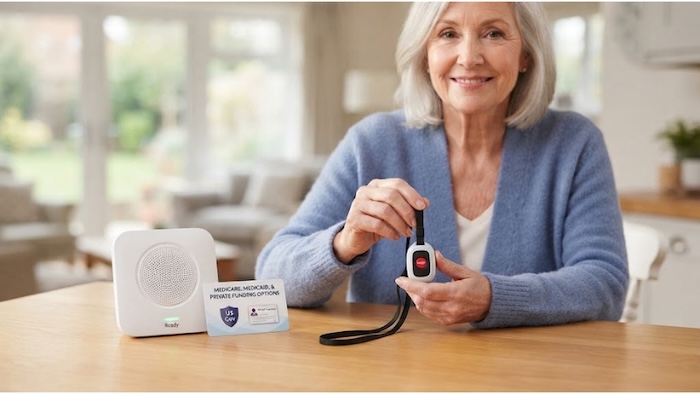
Here is a breakdown of what government and private entities cover regarding personal emergency response systems (PERS).
| Program | Coverage Status | Details |
|---|---|---|
| Original Medicare (Parts A & B) | ❌ No Coverage | Not classified as durable medical equipment. |
| Medicare Advantage (Part C) | ⚠️ Varies | Some private plans offer partial supplemental benefits. |
| Medicaid | ✅ Conditional | Covered in some states via HCBS waivers. |
| Department of Veterans Affairs (VA) | ✅ Eligible | Available for qualifying veterans through care providers. |
Does Medicare Cover Medical Alert Systems?
The short answer for Original Medicare (Parts A and B) is no. The Centers for Medicare & Medicaid Services do not classify medical alert systems as Durable Medical Equipment (DME). Because they are not deemed medically necessary under Original Medicare guidelines, you will pay 100% of the cost out of pocket if this is your only coverage.
Medicare Advantage (Part C) changes the equation. Since private insurance companies administer Part C, they have the flexibility to offer supplemental health benefits. Some Medicare Advantage plans cover partial or full costs for medical alert systems to prevent costly hospital readmissions. You must check your specific Summary of Benefits document or call your provider directly to confirm if your device qualifies.
Medicaid and HCBS Waivers
Medicaid offers more robust coverage, but it is highly conditional. Under Medicaid’s Home and Community-Based Services (HCBS) waivers, many states cover the cost of medical alert systems to help seniors age in place rather than move to a nursing facility.
Because Medicaid is administered at the state level, coverage rules vary. You must apply for the specific waiver program in your state. If approved, Medicaid typically pays the monthly monitoring fee directly to the vendor, but they may restrict which equipment brands you can choose.
VA Benefits for Medical Alert Systems
Veterans have the clearest path to full coverage. The Department of Veterans Affairs (VA) provides medical alert systems to eligible veterans at no cost. You do not buy the system yourself and seek reimbursement; instead, you must request a consult with your VA primary care provider.
If your provider determines a medical alert system is necessary for your safety, they will order it directly from an approved vendor. The VA covers both the equipment and the ongoing monthly monitoring fees.
VIDEO: How to Pay for Medical Alert Systems
Alternative Ways to Pay: FSA/HSA and Grants
If you do not qualify for government assistance, you have alternative avenues to lower your out-of-pocket expenses:
- FSA/HSA Accounts: You can use pre-tax dollars from a Flexible Spending Account (FSA) or Health Savings Account (HSA) to pay for a medical alert system. However, the IRS guidelines require a Letter of Medical Necessity (LMN) from a doctor explicitly stating the device is required to treat or monitor a specific medical condition.
- Area Agencies on Aging (AAAs): Local AAAs frequently receive grants under the Older Americans Act to distribute to seniors in need. Contact your local chapter to ask about emergency response system grants.
- Long-Term Care Insurance: While standard health insurance does not cover PERS devices, comprehensive long-term care insurance policies may reimburse the cost. Check your policy documentation for personal emergency response device allowances.
Frequently Asked Questions About Paying for Medical Alert Systems
Does Original Medicare pay for medical alert systems?
No. Original Medicare (Parts A and B) does not cover personal emergency response systems because they are not classified as durable medical equipment. However, some private Medicare Advantage (Part C) plans offer partial or full coverage as a supplemental benefit to prevent hospital readmissions.
Can veterans get a free medical alert system?
Yes. The Department of Veterans Affairs (VA) provides medical alert systems and covers the ongoing monthly monitoring fees for eligible veterans. You must request a consult with your VA primary care provider, who will order the equipment directly from an approved vendor if deemed necessary for your safety.
Will Medicaid cover the cost of a medical alert system?
Coverage is conditional and varies by state. Many states cover the cost of medical alert systems under Medicaid’s Home and Community-Based Services (HCBS) waivers, which are designed to help seniors age in place safely rather than moving to a nursing facility.
Final Thoughts on How to Pay for Medical Alert Systems
Caregiving is exhausting, and fighting with insurance companies only adds to the burden. Original Medicare abandons caregivers on this front, leaving you to navigate a frustrating maze of private Advantage plans, conditional Medicaid waivers, and VA bureaucracy. Do not wait for a catastrophic fall to figure out your coverage options.
You should do your research before a crisis is at hand. Plenty of folks call their health insurance providers well in advance to ask whether modern medical alert systems are covered under their specific Part C policy or Medicaid waiver.
If your insurance company denies coverage, use an FSA, contact your local Area Agency on Aging, or pay out of pocket. For many folks, a medical alert system is a requirement for aging safely at home. The monthly cost of a medical alert system is negligible compared to the devastating physical and financial toll of an undetected emergency.
About the Author

Chris is a seasoned healthcare executive and entrepreneur from the Pacific Northwest. He strongly advocates for older adults and the caregivers who serve them. Chris has personal experience caring for his father, who had dementia. Chris is a technology enthusiast and an avid outdoorsman; if he's not in his office, he can usually be found on a golf course or fly-fishing out west somewhere.