













A major study published in JAMA Neurology in October 2026 has delivered a stark projection: the number of new dementia cases is projected to double worldwide by 2050.
For family caregivers who are taking care of a loved one with dementia (and those looking ahead at their own cognitive health), these kinds of projections can feel overwhelming given the societal ramifications.

Understanding the driving forces behind these numbers is the first step toward prevention and better care planning, but getting this issue under control will require real (global) leadership and advocacy. Here is a breakdown of what the data actually says, who is at the highest risk, and what you can do about it today.
The Numbers: Why Are Dementia Cases Expected to Double?
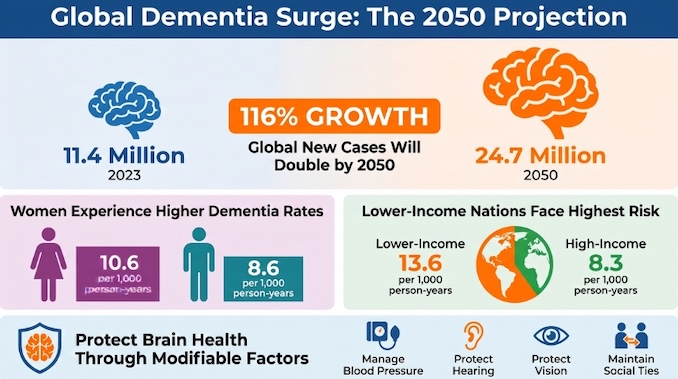
In 2023, there were an estimated 11.4 million new dementia cases globally. By 2050, that number is projected to hit 24.7 million new cases annually — a 116% increase.
This spike is not due to the disease itself becoming more aggressive, but rather to the rapid aging of the global population. Age remains the single biggest risk factor for dementia, and people are living longer than ever before.
According to Dr. Emer MacSweeney, a consultant neuroradiologist, this increase should be viewed as a “wake-up call to accelerate prevention, diagnosis, and treatment” rather than an inevitable consequence of getting older.
Data Source: JAMA Neurology, October 2026.
The Gender Gap: Why Are Women at Higher Risk of Dementia?
The study revealed a significant discrepancy in who develops dementia. The incidence rate for women was 10.6 per 1,000 person-years, compared to just 8.6 for men.
While women generally have longer lifespans, researchers indicate that longevity alone does not explain the entire gap. Sex-specific factors, such as the biological changes during menopause and lifelong estrogen exposure, likely play a substantial role in brain health. This underscores the critical need for women to prioritize cognitive and cardiovascular health well before their senior years.
The Geography of Dementia: The Heart-Brain Connection
The research also highlighted that low- and middle-income countries (LMICs) face a notably higher incidence of dementia (13.6 cases per 1,000 person-years) compared to high-income countries (8.3 cases).
This geographical divide points directly to the heart-brain connection. High-income nations have seen a steady decline in smoking rates, untreated high blood pressure, and high cholesterol over recent decades. Conversely, LMICs are experiencing increases in obesity, stroke, and cardiovascular disease. The takeaway for caregivers is clear: cardiovascular health helps dictate brain health.
Actionable Steps for Caregivers
While we cannot stop the clock, much of our cognitive trajectory is influenced by modifiable risk factors. Medical experts recommend focusing on the “fundamentals” to support long-term brain health:
- Control Blood Pressure & Cholesterol: What damages your blood vessels damages your brain tissue.
- Manage Diabetes: Chronic high blood sugar is a known catalyst for cognitive decline.
- Protect Hearing and Vision: Sensory loss accelerates cognitive decline by reducing brain stimulation and increasing social isolation.
- Maintain Social Connections: Regular social engagement builds cognitive reserve.
VIDEO: New Report Says Dementia Cases Projected to Double by 2050
Frequently Asked Questions About Dementia Projections
Is it inevitable that dementia cases will double by 2050?
Not entirely. While the aging global population guarantees an increase in raw numbers, the trajectory can be altered. Aggressive management of modifiable risk factors—such as blood pressure, diabetes, and cardiovascular health—combined with advancements in medical treatments could significantly improve these projections.
Why do women have a higher risk of developing dementia than men?
Women naturally live longer than men, and age is the greatest risk factor for dementia. However, researchers also believe sex-specific biological factors, particularly hormonal shifts during menopause and cumulative estrogen exposure, contribute heavily to women's higher incidence rates.
What is the link between heart health and dementia?
The brain relies on a vast, healthy network of blood vessels to function. Conditions that damage the cardiovascular system—like high blood pressure, high cholesterol, obesity, and smoking—restrict blood flow to the brain, drastically increasing the risk of vascular dementia and Alzheimer's disease.
Final Thoughts on the Growth Projections for Dementia Cases Worldwide
The projection of 24.7 million annual dementia cases by 2050 is a sobering statistic, but it is not a predetermined future. By understanding the connection between cardiovascular and cognitive health, caregivers and individuals can take immediate, practical steps to mitigate risk.
Focusing on modifiable lifestyle factors like; managing blood pressure, protecting sensory health, and staying socially active, remains some of our most powerful defenses against the rising tide of global cognitive decline, but I'll say it again – We need global leaders to ban together to tackle this epidemic before it's too late.
About the Author

Chris is a seasoned healthcare executive and entrepreneur from the Pacific Northwest. He strongly advocates for older adults and the caregivers who serve them. Chris has personal experience caring for his father, who had dementia. Chris is a technology enthusiast and an avid outdoorsman; if he's not in his office, he can usually be found on a golf course or fly-fishing out west somewhere.