













Weak grips, shaky movements, and cognitive challenges can make mealtimes frustrating and discouraging experiences. But the right tools can make all the difference.
Adaptive utensils and specialized dinnerware are designed to help older adults regain independence at the table, enabling them to eat with confidence and dignity.
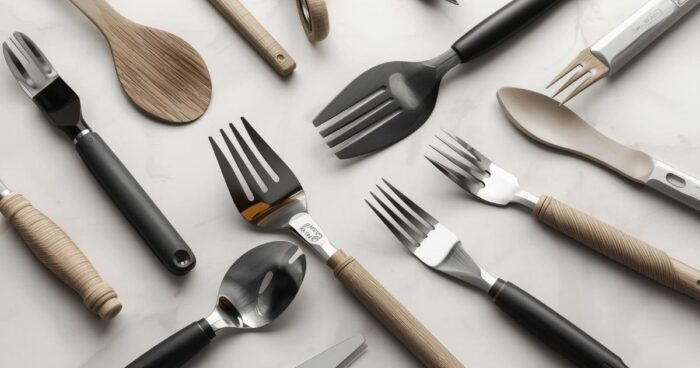
In this article, we’ve curated 11 practical eating aids, from weighted utensils to spill-proof cups, that address specific challenges like tremors, weakness, and coordination issues.
Whether you're a caregiver looking for solutions or a senior seeking more comfortable mealtimes, these innovations can help ensure better nutrition and a more enjoyable dining experience.
Eating Independently Can Be Challenging For Seniors
Older adults living with health conditions like stroke, Alzheimer’s disease, dementia, tremors, arthritis, or neuropathy often have trouble eating independently.
Hand tremors or weakness can make holding utensils and making the necessary hand and arm movements almost impossible.
Because of the difficulty, some seniors may lose their appetite and stop eating.
Adaptive utensils, plates, and cups make eating easier, making mealtime more enjoyable and helping seniors stay well-nourished.
We rounded up 11 helpful adaptive utensils and dinnerware that make eating easier for people with:
- Hand tremors, weakness, or Parkinson’s disease
- Alzheimer’s disease or dementia
- Weakness, arthritis, or hand mobility issues
*DailyCaring may receive commissions for purchases made through links in this article.
4 Adaptive Utensils for Hand Tremors or Parkinson’s Disease
1) $35 Special Supplies Premium Stainless Steel Adaptive Weighted Flatware
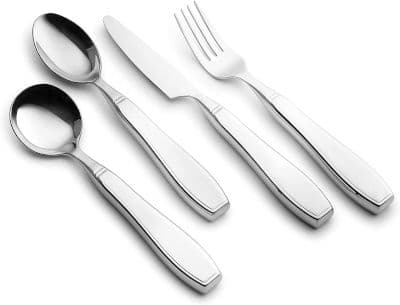
- Features: Discreet appearance; weighted, non-slip, wide handles.
- Helpful for: People with hand tremor, Parkinson's disease, weak grip, or wrist or hand weakness.
2) $10 GripWare Adaptive Plastic Scoop Dish

- Features: Non-skid feet grip the table, and the low front edge and high back edge help scoop food onto the fork.
- Helpful for: Single-handed eating and people with poor eyesight, limited coordination, Parkinson’s, stroke, or tremors.
3) $13 Maddak Ableware Partitioned Scoop Dish with Lid
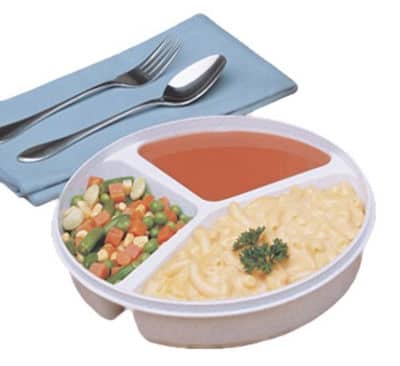
- Features: 3 compartments to separate foods; high sides for easy scooping.
- Helpful for: People with Parkinson’s, stroke, or tremors, or those eating pureed foods.
4) $10 Independence 2-Handle Plastic Mug with 2 Style Lids, Lightweight Drinking Cup

- Features: Double handles, two lid types included, clear plastic, holds warm or cold liquids, and keeps spills to a minimum.
- Helpful for: People with weak grip, hand tremors, who need to drink while in bed, Alzheimer’s, dementia, Parkinson’s, or those recovering from a stroke.
2 dining sets for Alzheimer’s disease or dementia
1) $44 Essential Medical Supply Power of Red Complete Adaptive Dinnerware Setting for Alzheimer's and Dementia with Plate, Bowl, Cup, and Utensil Set
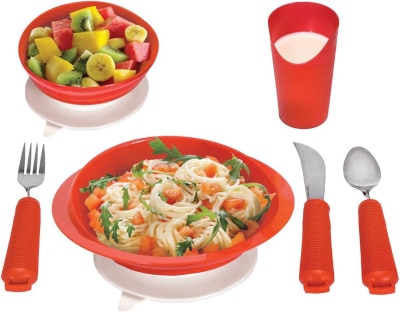
- Features: The plate and bowl have suction-cup bottoms and rimmed sides. The bendable utensils also have built-in handles for an easy grip. Everything is dishwasher safe.
- Helpful for: People with Alzheimer’s or dementia who struggle with eating or have decreased appetite. Red dinnerware is specifically designed to increase appetite in Alzheimer’s patients. In studies, the red color increased food intake of Alzheimer's patients by 24% and liquid intake by 84%.
2) $98 Eatwell Assistive Tableware Set, 8 Piece

- Features: Specially designed tableware that helps increase food and drink intake, maintain dignity and independence during meals, and reduce work for caregivers.
- Helpful for: People with Alzheimer’s or dementia who struggle with eating or have decreased appetite.
5 adaptive utensils for weakness, arthritis, or hand mobility issues
1) $7 Rehabilitation Advantage Easy Grip Rocker Knife with Built-up Handle
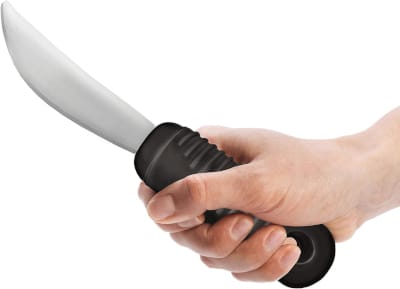
- Features: Designed with smooth edges to prevent accidental cuts; intended to be used with a rocking motion, not a slicing motion.
- Suitable for: One-handed cutting and people who have difficulty cutting food.
2) $19 3 Piece Super Easy Grip Flatware Set – Bendable Built Up Fork, Knife, and Spoon

- Features: Large, easy-grip handles bendable to the left or right.
- Helpful for: People with arthritis, Parkinson’s, neuropathy, or low grip strength.
3) $17 Special Supplies Adaptive Utensils (5-Piece Kitchen Set) Wide, Non-Weighted, Non-Slip Handles
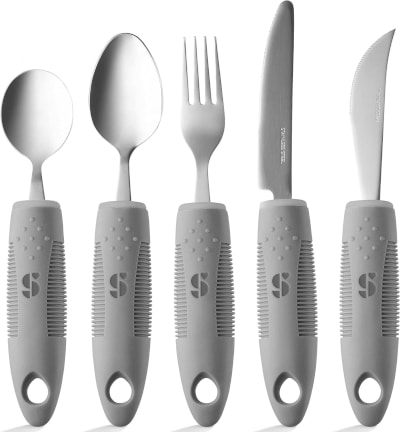
- Features: Wide, easy-grip, non-slip handles; set includes a fork, knife, curved knife, dinner spoon, and soup spoon.
- Helpful for: People with arthritis, Parkinson’s, neuropathy, or low grip strength.
4) $16 EazyHold Universal Grip Cuff (2 Pack)

- Features: Silicone strap cuff helps hold a variety of utensils, tools, and other objects.
- Helpful for: People with arthritis, Parkinson’s, neuropathy, or low grip strength.
5) $12 Vive Foam Tubing Utensil Padding Grips (9 pieces)
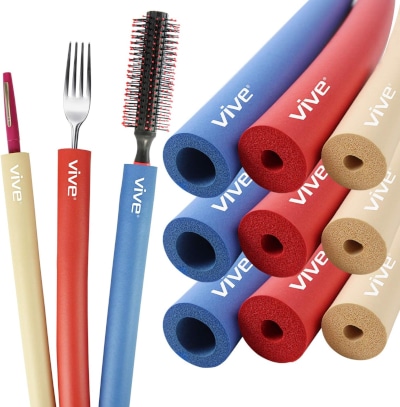
- Features: Provides a wider grip for everyday objects like toothbrushes, pens, hairbrushes, etc., for greater control – cut to desired length
- Helpful for: People with arthritis, Parkinson’s, neuropathy, or low grip strength
Final Thoughts About Adaptive Eating Utensils
Adaptive utensils are more than just clever tools; they are powerful instruments of dignity and independence. By embracing these simple, effective aids, you can turn a daily struggle into a manageable, even enjoyable part of your day.
Adaptive eating utensils help restore confidence at the table, allowing your loved one to focus on the pleasure of a meal and the company around them, rather than the frustration in their hands. It's a small change that can make a monumental difference in quality of life, proving that a bit of support can go a long way in preserving joy and self-reliance.
Recommended for you:
- 10 Reasons Why Seniors Lose Their Appetite
- 8 Useful Bathroom Aids for Seniors Make Everyday Tasks Easier
- Adaptive Shoes for Seniors Improve Safety and Mobility
All prices quoted were checked shortly before publication. Prices and availability change often and might not match what is found online. This article contains affiliate links. If you buy through an affiliate link on our site, we may earn a small commission, at no additional cost to you. For more information, see How We Make Money.
About the Author

Connie is the founder of DailyCaring.com and was a hands-on caregiver for her grandmother for 20 years. (Grandma made it to 101 years old!) She knows how challenging, overwhelming, and all-consuming caring for an older adult can be. She also understands the importance of support, especially in the form of practical solutions, valuable resources, and self-care tips.



Always very helpful emails. I understand dementia better thanks to your informative emails. I can’t thank you enough. Please don’t stop.
Thanks for the kind feedback! We’re so glad our articles and emails are helpful.
Looking for tremor heavy eating utensils a that are plain in design which will not be noticeable when eating out or at a social function.
We found a great utensil set that looks like “regular” utensils, but are weighted to help someone with tremors eat more easily. See them here on Amazon — https://amzn.to/2RFV1W9
I volunteer for a program called Senior Companion and have a client with dementia. I am also involved with Dementia Friendly Duluth (MN) and have forwarded many of your articles to them. Your site has been so much help. The information you share is “right on” and so timely. Please keep up the good work.
Thank you for your kind words. I’m so glad our articles are helpful!
The eating utensils are great, but what about other aids?
We’ve got a number of suggestions for gripping a variety of household objects. This article talks about 10 inexpensive aids to help with everyday tasks — https://dailycaring.com/10-simple-arthritis-aids-help-seniors-with-everyday-tasks/
This article talks about aids to help seniors get dressed more easily — https://dailycaring.com/10-simple-dressing-aids-help-seniors-stay-independent/
Here are two articles about aids that help when traveling by car — https://dailycaring.com/6-simple-auto-aids-for-seniors-make-car-travel-easier/ & https://dailycaring.com/4-advanced-auto-mobility-aids-help-seniors-get-into-cars/
Are there any aids for shaving?
Hi Christine, great question! Here’s an electric razor strap (http://www.caregiverproducts.com/electric-razor-strap.html) and a weighted strap for a disposable razor (http://www.caregiverproducts.com/weighted-cuff-disposable-razor.html).
It may be safer for someone with hand tremors to use an electric razor to minimize the chances of getting nicks and cuts.