











We’ve all been there: the moment when a simple request feels like a mountain, or a repetitive question triggers a flash of frustration you didn't know you had. In the world of caregiving, stress isn't just a side effect; it’s a constant companion.
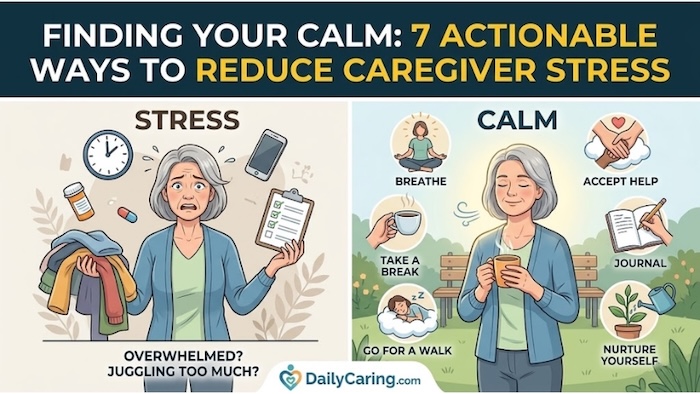
But here’s the truth: you can't pour from an empty cup. Staying calm isn't about being perfect; it’s about having a “toolkit” of strategies to reset your nervous system before you hit the breaking point.
By focusing on tips to stay calm and proactive and on caregiver stress reduction, you can protect your own health while providing the best care for your loved one.
The Science of Why You’re Stressed As a Caregiver
When we are pushed to our limit, our brain's “alarm system” (the amygdala) takes over, triggering a fight-or-flight response.
For caregivers, this often manifests as irritability, brain fog, or chronic anxiety. To reduce caregiver stress, we must intentionally signal to our brain that we are safe. This is where caregivers' coping strategies move from “nice-to-have” to “essential.”
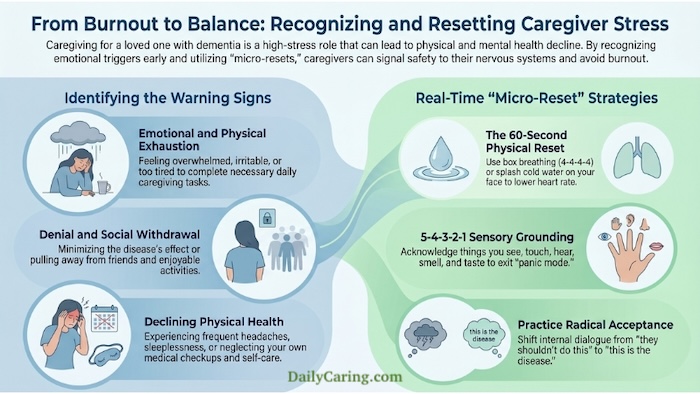
INFOGRAPHIC: Recognizing and Reducing Caregiver Stress
7 Great Ways to Reduce Caregiver Stress
1. The 60-Second “Micro-Reset” Grid
2. Plan Your “Emergency Exit”
The most effective way to stay calm is to decide on your reaction before the trigger happens.
If you know that bathing or mealtime is a high-stress window, pre-set your exit. Your plan might be: “The moment I feel my chest tighten, I will step into the hallway, take three deep breaths, and drink a sip of water.” This small gap between the trigger and your response is where your power lies.
3. Practice “Radical Acceptance”
Much of our daily stress comes from the mental friction of resisting reality. Thinking “They shouldn't be acting this way” only spikes your cortisol. Shifting your internal dialogue to “This is the disease talking, and it is hard for both of us” can instantly lower the emotional “temperature” of a room.
4. Prioritize Sensory Grounding
When you feel caregiver anxiety rising, use the “5-4-3-2-1” technique to ground yourself in the present moment. Acknowledge 5 things you see, 4 you can touch, 3 you hear, 2 you smell, and 1 you can taste. This pulls your brain out of “panic mode” and back into the physical world.
5. Delegate the “Mental Load”
Stress often stems from an overloaded brain, not just an overloaded schedule. Use technology or simple lists to automate reminders for meds, appointments, and bills. Reducing the number of things you have to remember is a primary way to reduce caregiver stress.
For more ideas on managing the load, check out our 15 quick tips for managing caregiver stress.
6. The “Five-Year Rule” for Perspective
In the middle of a crisis, ask yourself: “Will this matter in five years?” Usually, the answer is no. This doesn't make the moment less difficult, but it helps prevent your brain from treating a spilled meal like a permanent catastrophe.
7. Establish a “Shutdown” Ritual
To prevent long-term burnout, you need a clear boundary between “caregiver mode” and “self mode.” Whether it's changing your clothes after your shift or spending 5 minutes with self-compassion tools, give your brain a signal that the workday is over.
VIDEO: The Ultimate Strategies for Reducing Caregiver Stress
Conclusion: Choosing Yourself to Better Care for Them
Ultimately, finding tips to stay calm isn't about achieving a state of perfect, unshakable Zen. It’s about recognizing your own humanity in the middle of a very difficult job.
When you prioritize caregiver stress reduction, you aren't taking anything away from your loved one; you are fortifying the very foundation that allows you to care for them.
Start small. Maybe today’s win is simply taking three deep breaths before responding to a difficult question, or finally setting that “shutdown ritual” tonight. Every micro-reset counts.
You are doing a monumental job, and you deserve to feel as supported and sustained as the person in your care.
Note from DailyCaring: This content is for informational and educational purposes and does not replace professional medical, legal, or financial advice. Because caregiver stress can impact physical health and mental well-being, we encourage you to consult with a healthcare professional regarding specific symptoms or concerns.
Recommended for you:
- 15 Self-Compassion Tools for Taking Care of the Caregiver
- 10 Stress Relief Tips for Caregivers [Infographic]
- 15 Quick Tips for Managing Caregiver Stress
About the Author

Connie is the founder of DailyCaring.com and was a hands-on caregiver for her grandmother for 20 years. (Grandma made it to 101 years old!) She knows how challenging, overwhelming, and all-consuming caring for an older adult can be. She also understands the importance of support, especially in the form of practical solutions, valuable resources, and self-care tips.