













How do you get an elderly person to stop driving? It's a top question among caregivers. If you’ve discovered that your parent or spouse is no longer a safe driver, talking to them about giving up the car keys is one of the most difficult conversations you'll ever have.
If your loved one is no longer safe behind the wheel, they could hurt themselves or other innocent people, even children. It’s better to have these conversations before an accident happens.
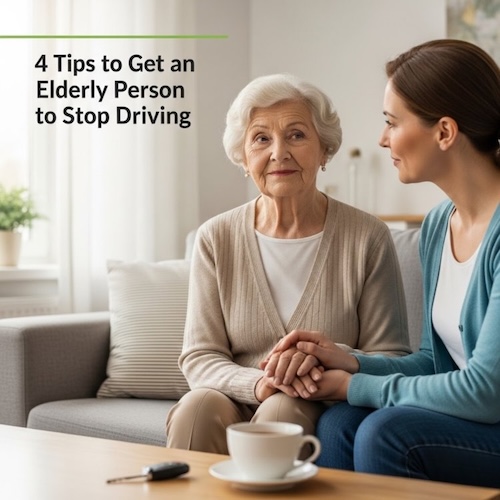
We’ve got 4 tips to make the discussion easier and more successful. Understanding why they’re so resistant to giving up driving will also make a difference when you talk with them.
Why Seniors Resist Giving Up The Car Keys
Many older adults get offended, defensive, or angry when asked to stop driving. That’s because driving is a major symbol of independence and control.
Your loved one is already dealing with loss of control over their health, so asking them to give up driving will be yet another blow to their self-esteem. Plus, being asked to stop driving probably makes your older adult feel trapped, especially if they live in a suburb or are used to having complete freedom.
This conversation will be tough, and you’ll probably feel like the bad guy. Even though you may feel guilty, please know that you’re absolutely doing the right thing. Convincing seniors to stop driving is for their own safety and the general public’s safety. Your loved one will forgive you, but it may take some time. They may never admit it, but deep down, they know this is necessary.
4 Tips to Convince an Older Adult to Stop Driving
1. Discreetly prepare a list of observations about their driving ability
The first step is to make a list of reasons why your loved one is no longer a safe driver. Take a casual ride with them to a familiar location, like the grocery store, and see if you notice key warning signs of unsafe driving. Write down anything that concerns you.
The signs of unsafe driving that you see can become part of the conversation and will help you explain why you’re concerned about their safety. Having it down on paper means that you won’t forget an important point in the heat of the moment.
2. Come up with alternative transportation options
Whether they can drive themselves or not, your older adult will still have places to go and errands to run. Plus, staying connected with friends and being active in the community are essential for preventing the negative effects of social isolation.
Reduce resistance to giving up driving by creating a list of realistic transportation options. Seeing these alternatives on paper will reassure your senior that they’ll still be able to get out and do things.
Some ideas:
- Arrange a ride schedule with family and friends
- Use on-demand ride services like Uber or Lyft
- Take taxis
- Hire a private car service for several hours each week
- Take public transportation
- Get rides from volunteer drivers from senior centers or religious and community service organizations
- Take advantage of free or low-cost ride programs for seniors
3. Approach the subject respectfully and acknowledge that this is difficult for them
When you have the conversation about giving up the keys, the most important thing is to be respectful.
You might start off by saying, “I know this must be a sensitive subject, but we need to talk about your driving.” Then, share a few specific concerns in a kind way. Emphasize that you’re not accusing them of being a bad driver. Instead, focus on their health conditions or other aging-related issues that make their driving unsafe.
4. Be understanding and give them time to accept the changes
Convincing a senior to stop driving means asking them to make a major change. This can significantly affect their quality of life, so it’s understandable that they may get upset.
Give them time to accept the changes and space to work through their feelings. Because it’s such a big adjustment, it may take more than one conversation before they’re ready to give up the car keys.
Final Thoughts on Taking Away the Car Keys
I know that having this conversation feels like one of the hardest things you'll do as a caregiver. You love them, and the last thing you want is to take away something that brings them joy and freedom.
But please, hold onto this truth: you are having this difficult talk because you love them. You’re stepping in to protect them, and everyone else on the road, from a potential tragedy that could haunt your family forever.
It’s okay if they’re angry at first. It’s okay if it takes several conversations, lots of tears, and quiet days afterward. Give them the time and respect they need to mourn this loss of independence, while quietly putting those alternative transportation plans into place.
Eventually, the anger will fade, and a new normal will settle in. And while they may never say the words, a part of them will know you did the right thing. Be gentle with yourself, too; you're carrying a heavy weight by making this call, and that takes immense courage.
You might also like:
— 7 Warning Signs: How to Know When Your Parents Should Stop Driving
— 8 Ways to Stop an Elderly Person From Driving When All Else Fails
— How to Talk with Parents About Aging: Conversation Starters
A version of this article was originally published on Sixty and Me
About the Author

Connie is the founder of DailyCaring.com and was a hands-on caregiver for her grandmother for 20 years. (Grandma made it to 101 years old!) She knows how challenging, overwhelming, and all-consuming caring for an older adult can be. She also understands the importance of support, especially in the form of practical solutions, valuable resources, and self-care tips.



Thanks! I am going through this right now. I have been taking care of my mom’s car for a couple of weeks due to her recent illness She called me up yesterday to tell me she wants her car back because she can drive fine. Most of the signs are there that her driving is questionable, but my mom wants to be in control. I am nervous that she will get in another accident due to cognitive deterioration. Sigh! She is so stubborn at 90 years old.
This is a very tough situation to be in. Perhaps you could start proactively arranging things so she won’t need to drive. Even if it doesn’t eliminate her driving, it would likely decrease it.
Or, if you’re very concerned about her safety and the safety of others on the road, you may need to take steps to prevent her from driving. We’ve got an article here with suggestions – 8 Ways to Stop an Elderly Person From Driving When All Else Fails https://dailycaring.com/8-ways-to-stop-an-elderly-person-from-driving-when-all-else-fails/