












Entrusting the care of a loved one to someone else is one of the most significant and vulnerable decisions a family can make. While most professional caregivers are dedicated and compassionate, finding the right fit is not always guaranteed.
Recognizing the warning signs of an unsuitable caregiver early is crucial to your family member's safety, dignity, and well-being.
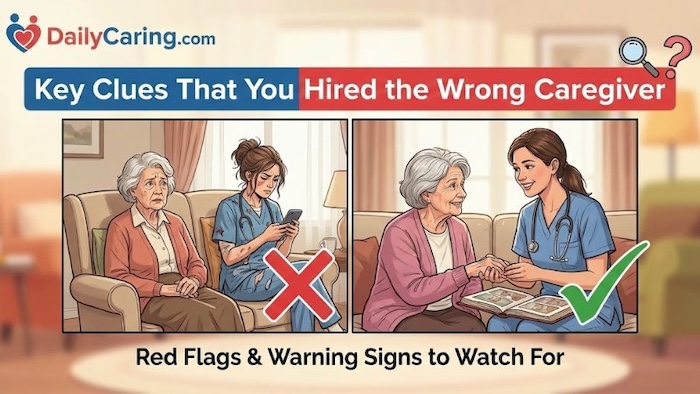
This guide outlines key red flags, from consistent tardiness and poor communication to more serious concerns like neglect or financial irregularities, empowering you to trust your instincts, take informed action, and ensure your loved one receives the respectful, competent care they deserve.
Should You Be Concerned About Your Parents’ Caregiver?
When your parents need more assistance than you can provide, it makes sense to hire a caregiver. Bringing in a professional to do some of the heavy lifting or personal care tasks takes the burden off you and preserves your relationship with your aging parent.
Finding the right caregiver is the first step. Your parent deserves someone who will treat them with respect and kindness while performing the required caregiving tasks. Unfortunately, sometimes, even with all the vetting and interviewing, the caregiver you hire may not be a good fit for your family.
Recognizing the warning signs that your caregiver isn’t right for your family is important to your parent’s well-being. There are several signs to look for. Once you’ve determined someone isn’t a good fit, you’ll need to decide if the problem is fixable or if you need to bring in someone new.
Personality Conflicts Between Caregiver and Parent
Sometimes, personalities just don’t click for whatever reason. If your parent is uncomfortable around his/her caregiver, it may be a sign that they don’t mesh or that something else is going on. Here are some behaviors that may indicate your parent is not comfortable with their caregiver.
1. Things aren’t getting done
Did you hire a caregiver to do specific tasks and notice they’re not getting done? It could be a sign that your parent is not comfortable asking the caregiver for help. You can assist with this by creating a task list to clarify responsibilities.
If you’ve created a task list and things still aren’t getting done, you may need to address it once more with the caregiver. Remember, they work for you, and you should have discussed responsibilities beforehand. If they aren’t doing their job, you’ll need to decide if you want to continue employing them.
2. Your parent is hiding
If your parent is hiding in his/her room instead of spending time around the house, they may feel uncomfortable around their caregiver. It could be that they’re not used to having someone in their house and just don’t know what to do, or that they don’t care for their caregiver and want to keep their distance.
Talk to them to find out the cause, and if it is just about discomfort, have them gradually spend more time in common areas with the caregiver and discuss with the caregiver how they can make your parent feel more comfortable.
3. Constant complaining
This is tough. Most people don’t want someone in their home, doing things that they used to do for themselves. You’ll have to gauge whether the complaints stem from their frustration with having a caregiver or from poor treatment by the caregiver.
Are they complaining that the caregiver doesn’t prepare food they like, or that their caregiver talks down to them or doesn’t interact with them at all? The former is a common complaint; the latter is a sign that the caregiver may not be treating your parent as respectfully as you’d like.
Signs of a Bigger Caregiver Issue
While the issues above can be frustrating, they are usually fixable with a conversation or better direction. Sometimes, you have to look for nonverbal cues for bigger issues.
1. New injuries
If your parents’ home is fall-safe and you’ve made sure there aren’t any medical reasons for increased falls, you may need to explore the possibility that new injuries are a result of their caregiver not keeping a close enough eye on them, or worse.
I had a client who had balance issues, so we were used to bruising and minor injuries. However, when she started getting what looked like finger bruises on her arms, we alerted her family. Sure, the caregiver may have grabbed her quickly to prevent a fall, but the incidents became frequent, leading us to believe the caregiver was too rough when assisting the client.
Trust your gut. If the injuries aren’t easily explained, it could be a sign of elder abuse.
2. Limited access to your parent
Are you having a tough time reaching your parent? If you are long-distance, is your parent always unavailable when you call, or is the caregiver always in the room when you talk on the phone or visit?
If you are concerned that you aren’t able to communicate with your parent, you will need to find out why. Is your parent upset with you over bringing in a caregiver, or is the caregiver trying to keep you apart so that you aren’t aware of what goes on when you aren’t around?
3. The relationship is too close
I had a client who loaned money and her car to her caregiver for five weeks. That is taking the relationship too far. This is a professional relationship. Of course, over time, a caregiver and your parent may care for each other. After all, they spend a lot of time together.
However, if they are getting too close too fast, you should keep an eye out. You don’t want your parents to be emotionally or financially taken advantage of.
Caregivers provide a wonderful service. As a whole, they are kind, caring people who want to help others. Unfortunately, there are occasionally bad apples. Remaining close to your parents and knowing what to watch for can help you catch inappropriate behavior before it gets too far.
You Might Have Hired the Wrong Caregiver! My Final Thoughts
In summary, recognizing that you have hired the wrong caregiver is a critical, often difficult step toward ensuring your loved one's safety and well-being. The signs (from chronic lateness and poor communication to neglect and resistance to feedback) serve as crucial red flags that should not be ignored.
Trusting your instincts and taking prompt, decisive action to address these issues is not a failure, but a necessary act of advocacy.
By parting ways with an unsuitable caregiver, you open the door to finding a compassionate, reliable, and skilled professional who will provide the quality care and respect your family deserves, ultimately restoring peace of mind and creating a safe, supportive environment.
Recommended for you:
- When They Say No: 8 Ways to Introduce In-Home Care for Seniors
- 8 Ways to Lower the Cost of In Home Care for Seniors
- 3 Tips to Help You Choose Between Assisted Living vs In Home Care
Guest contributor: Being a caregiver is both physically and emotionally challenging. Kathy Macaraeg spent nine years working with both caregivers and their aging parents, giving her a unique perspective on their needs and challenges. After working one-on-one with families for nine years, Kathy decided to share her unique perspective with a larger audience through Caregiving Made Easy.
About the Author

Connie is the founder of DailyCaring.com and was a hands-on caregiver for her grandmother for 20 years. (Grandma made it to 101 years old!) She knows how challenging, overwhelming, and all-consuming caring for an older adult can be. She also understands the importance of support, especially in the form of practical solutions, valuable resources, and self-care tips.