













Managing dementia at home often feels like a constant search for ways to slow the progression of symptoms and keep life engaging.
We know that physical activity is good for the heart, but for those living with memory loss, it is also a vital tool for brain health. The right dementia exercise programs can do more than just build physical strength – they can actually help improve cognitive function, reduce depression, and make everyday tasks like feeding and dressing significantly easier.
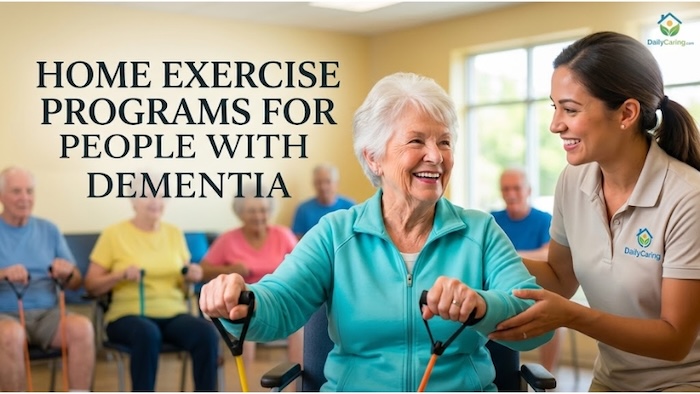
One standout approach is the Love to Move program. Inspired by groundbreaking successes in Japan and Korea, this chair-based routine uses specific coordination techniques to help “re-wire” neural connections, helping seniors stay sharper and more settled in their daily lives.
Dementia Exercise Program Can Improve Cognitive Symptoms
A dementia exercise therapy program that can easily be done at home improves abilities and quality of life in seniors with Alzheimer’s disease or dementia.
Love to Move is a chair-based exercise program designed for seniors with dementia.
It was developed by the British Gymnastics Foundation (BGF) and was inspired by successful programs in Asia.
It has been shown to improve cognitive function, reduce depression, enhance balance, and improve performance on everyday tasks.
We explain what the Love to Move program is and how its exercises improve symptoms of dementia.
We also share the free instruction booklet BGF created to help you do these simple exercises with your older adult.
How the Love to Move Program Helps Seniors with Dementia
Experts in Japan developed chair-based exercise programs to improve the lives of nursing home residents with dementia.
The simple exercises were based on cognitive stimulation, memory arousal, and music.
The results were so positive that the program received full state funding and is now used in every care home nationwide.
The BGF was so inspired by the Japanese program’s success that it worked with the program leaders to design UK-based dementia exercise programs based on those same principles.
BGF’s pilot program showed amazing results in seniors with dementia:
- 71% of participants had noticeable physical improvements
- 86% were socializing more with other residents and staff
- 93% seemed happier and more settled
- 100% were easier to connect with
VIDEO: How Important Is Exercise for People with Dementia?
How Exercise Can Help Improve the Health of Adults with Dementia
The Love to Move program is based on the concept of performing movements simultaneously with the right and left sides of the body.
Basically, it’s like patting your head and rubbing your stomach at the same time.
These exercises require significant concentration.
When practiced, they enhance the ability of the right and left hemispheres of the brain to process information independently.
This increases neural connectivity and improves cognitive performance.
The Love to Move exercise program has improved seniors’ ability to perform everyday tasks such as feeding themselves, engaging in activities, and communicating with family and friends.
Coordination and the ability to sit unassisted in a chair were also improved.
Simple At-Home Exercise Programs for People with Dementia
BGF has created free online video sessions of their dementia exercise program, with instruction from Lead Deliverer Kim Hall.
Start with the first session here and get links to all four sessions here.
They also created a free booklet of 4 essential home exercises from the Love to Move program, so older adults everywhere can benefit.
It includes straightforward instructions, example photos, and special tips from Lead Deliverer Kim Hall on making the exercises easier and more effective.
Print or save the booklet, then complete these exercises with your loved one.
Final Thoughts on Exercise Programs for People with Dementia
Implementing a home exercise program for dementia doesn't require a gym membership or specialized equipment – It just takes a little education and a lot of motivation…
Whether it is a 10-minute session of “mirror movements” or following along with a guided video, the key is consistency and engagement. By challenging the brain to coordinate both sides of the body simultaneously, programs like Love to Move offer a powerful, non-drug way to maintain independence and improve quality of life for longer.
We’ve made it easy to start today with the free instruction booklet and video sessions below—because every small movement is a step toward a better, more connected day for both you and your loved one.
Next Steps: Watch and follow the first online BGF Love to Move session, or print or save the free dementia exercise program booklet
Recommended for you:
- 10 Fun, No-Fail Activities for People with Dementia
- 12 Ideas for Exercise and Physical Activities for Seniors with Dementia
- 4 Reasons Dementia Activities Are Important and 5 Ways to Adapt Everyday Tasks
About the Author

Connie is the founder of DailyCaring.com and was a hands-on caregiver for her grandmother for 20 years. (Grandma made it to 101 years old!) She knows how challenging, overwhelming, and all-consuming caring for an older adult can be. She also understands the importance of support, especially in the form of practical solutions, valuable resources, and self-care tips.


Nice article..keep it up.
Have you posted a video of the exercises to use during our self isolating? It would be a great help for me as a carer.
British Gymnastics Foundation has created free online video sessions of these exercises. Find them all on this page – https://britishgymnasticsfoundation.org/lovetomove/
My mother has dementia and when she gets angry at every one .She gets them often .can you tell me how to help with this problem?
I’m so sorry this is happening.
These articles have suggestions that may help you manage your mother’s anger:
— 9 Ways to Reduce Anger in Dementia https://dailycaring.com/9-ways-to-reduce-anger-in-dementia/
— Understanding and Managing Dementia Behaviors: A Comprehensive Guide https://dailycaring.com/understanding-and-managing-dementia-behaviors-a-comprehensive-guide/
— Untreated Pain in Dementia: Signs, Causes, and Treatments https://dailycaring.com/untreated-pain-in-dementia-signs-causes-and-treatments/
— 14 Ways to Handle Screaming and Crying in Dementia https://dailycaring.com/14-ways-to-handle-screaming-and-crying-in-dementia/