













The decision to care for an aging parent is complex under the best circumstances, but when that parent fails to care for you, it can feel like an emotional minefield. You may be grappling with a deep sense of obligation tangled with old wounds of resentment, anger, or grief. How do you provide care for someone absent, critical, or even abusive?
*As a side note, this may be one of the hardest things to write about, as caregiving can be such an emotionally charged and (usually) fulfilling duty. Doing it for someone who seems undeserving can be a significant internal conflict for many people, and we're very sensitive to that.
This profound and painful conflict is more common than many realize, and there is no single “right” answer. This article does not demand that you erase your past or your feelings. Instead, it offers a compassionate and realistic roadmap for navigating this uniquely challenging situation.
You will find five practical strategies designed to help you establish boundaries, protect your emotional well-being, and define what “care” means for you on your own terms, freeing you from the weight of others' expectations.
Conflicted Relationships Make Caregiving More Difficult
Some parents may have been neglectful, mean, absent, or abusive. When they need care, it can put you in a difficult situation.
If you’re struggling with making decisions about caring for parents who didn’t care for you, it’s essential to know that you’re not alone.
Many adult children have complicated relationships with their aging parents, especially when there’s a history of conflict.
You’re not required to selflessly throw yourself into caring for them – you always have a choice in how to handle the situation.
It might not be easy to make a decision, but remember that you can always change your mind if that choice doesn’t work out.
And remind yourself that you deserve to make choices that protect your own mental and physical health.
We share five ways to handle the situation when there’s a negative or conflicted history between you and your aging parent.
They range from coping while providing care to ensuring they’re taken care of, without being personally involved.
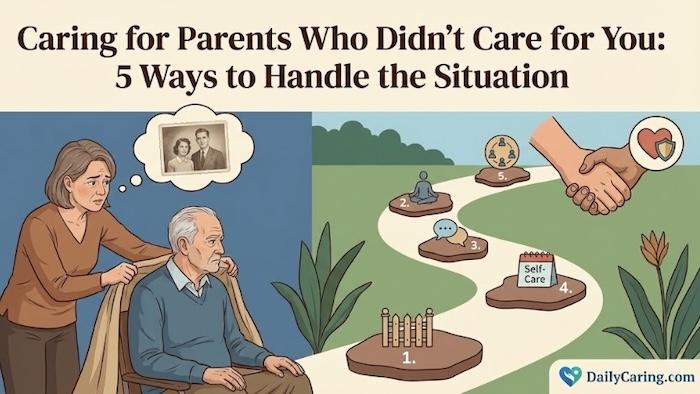
5 Ways to Handle Parents Who Didn’t Care for You
1. Get help working through complicated feelings
Adding a negative or conflicted relationship with your parent on top of the typical stress and emotional conflict that comes with being a caregiver makes it even harder to maintain your emotional well-being.
Talking with a counselor or therapist can help you work through the intense feelings and difficult decisions that come up when you’re caring for parents who didn’t care for you.
They’re experts who help people deal with stress, depression, anxiety, significant life changes, negative thinking, and more.
A counselor or therapist won’t judge you; their advice is unbiased, everything that’s said is confidential, and you can talk about topics you wouldn’t feel comfortable discussing with your spouse, family, or friends.
They can be invaluable if you’re struggling with tough decisions like whether or not to be involved in your parents’ care, how to limit your involvement in their care, or how to set healthy boundaries.
2. Stay involved, but hire a professional to manage their care
When you’re not comfortable stepping away entirely, but also aren’t able to be closely involved in your parents’ care, hiring someone to fill the role may be a good option.
A geriatric care manager is an aging care expert who ensures your parent receives the care they need.
They can handle the day-to-day issues that inevitably come up and be a buffer between you and your parent.
These services can be expensive, but they may be worth it if they provide peace of mind.
3. Get support from others in similar situations
Caregiving is an isolating experience, and it’s natural to feel like you’re the only one in this type of situation.
Joining a caregiver support group can be so helpful because it validates your experiences and gives you the chance to vent.
It’s a relief to know that what you’re going through is normal and that you’re not the only one with these feelings, negative or positive.
Whether you join an in-person or an online support group, chances are high that you’ll meet plenty of other caregivers who have conflicted relationships with their parents.
4. Read books that offer helpful advice
Many caregiving books specifically address caring for parents who didn’t care for you.
Reading these types of books can give you a helpful perspective on your situation and help you find solutions, learn coping skills, and make tough decisions.
Some suggestions:
- Coping With Your Difficult Older Parent: A Guide for Stressed-Out Children, by Grace Lebow
- Children of the Aging Self-Absorbed: A Guide to Coping with Difficult, Narcissistic Parents and Grandparents, by Nina W Brown EdD LPC
- Doing the Right Thing: Taking Care of Your Elderly Parents, Even If They Didn't Take Care of You, by Roberta Satow Ph.D.
- Elder Rage, or Take My Father… Please! How To Survive Caring For Aging Parents, by Jacqueline Marcell
- Taking Care of Parents Who Didn't Take Care of You: Making Peace with Aging Parents, by Eleanor Cade
5. Get a legal guardian appointed so you can step away from the situation
If you need to distance yourself from your parents’ care entirely, one option may be to get a legal guardian appointed for them.
This doesn’t work in all situations, but it is worth investigating.
This will require that your parent can be declared legally “incompetent” – basically, that they’re not capable of making decisions for themselves and need someone else to supervise their health and personal care, housing, and finances.
Your local Adult Protective Services (APS) or Health and Human Services (HHS) agencies should be able to help you get started with this legal process.
Once the state has appointed a legal guardian for your parent, you’ll have peace of mind knowing that someone will be taking care of them.
And, most importantly, you won’t be forced to do something that would have severe negative consequences for your own health and well-being.
VIDEO: Caring for Parents Who Didn't Care for You
Final Thoughts About Caregiving for Parents Who Didn't Care For You
Navigating this journey is not about achieving a perfect, conflict-free relationship or repainting the past. It is about making conscious, empowered choices for your present and future well-being. By establishing firm boundaries, redefining care on your own terms, and actively seeking support, you are not perpetuating a cycle of hurt; you are breaking it.
Whether you choose to provide hands-on care, delegate it to professionals, or limit your involvement to logistical oversight, remember that your primary responsibility is to your own mental and emotional health. Your caregiving role, whatever form it takes, can be an act of profound self-respect.
Let this be the chapter where you choose the path that leads to your own peace, healing, and closure.
Recommended for you:
- 4 Sources of Affordable Counseling Services to Reduce Caregiver Stress
- 12 Top Books for Caregiver Advice and Support
- 7 Ways to Reduce and Manage Mean Dementia Behavior
This article contains affiliate links. We never link to products or services for the sole purpose of making a commission. For more information, see How We Make Money.
About the Author

Connie is the founder of DailyCaring.com and was a hands-on caregiver for her grandmother for 20 years. (Grandma made it to 101 years old!) She knows how challenging, overwhelming, and all-consuming caring for an older adult can be. She also understands the importance of support, especially in the form of practical solutions, valuable resources, and self-care tips.

I also was able to see my parents as a by~product of their own issues from childhood and could step back and take care of them as I would others who may fall victim to abuse or neglect ~ it was very helpful ~ and I also developed this goal that on my tombstone I would want written ~ she made the world a better place than when she was arrived in this world ~ I stopped this cycle with the help you suggested in the above article ~
We’re so glad this article is helpful. It’s wonderful that you were able to take a step back and care for them.