













If you are caring for a loved one with Alzheimer’s, you might often feel like you’re navigating a complex journey without a map. Each day can bring new challenges, leaving you overwhelmed and searching for direction. The good news is you don't have to find your way alone.
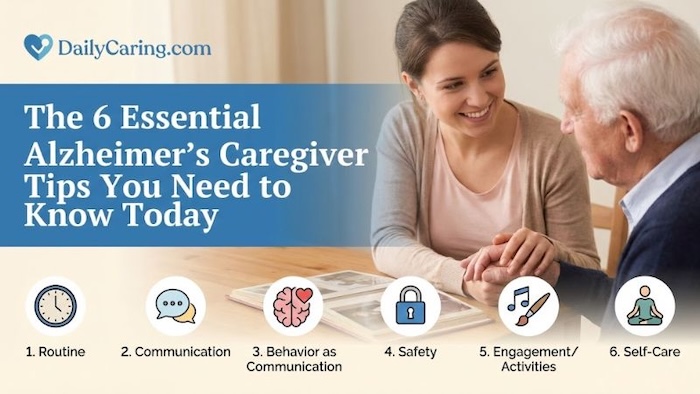
Built on practical experience and essential wisdom, these six foundational tips offer a clear path forward. They provide the tools you need to move from feeling lost to feeling calmer, more confident, and in control, transforming your caregiving experience for both you and your loved one.
Make Life Easier With These Key Alzheimer’s Caregiver Tips
Caring for an older adult with Alzheimer’s or dementia can be a scary challenge. It’s even more overwhelming because you’ve been thrown into this role with no training.
We’ve put together 6 key Alzheimer’s caregiver tips and resources that give a solid foundation. These essentials help both new and experienced caregivers feel calmer and more in control.
1. Get an accurate diagnosis so treatment can be tailored
It’s important to get an accurate diagnosis to make sure your senior’s cognitive issues aren’t being caused by a treatable condition.
Knowing which form of dementia your older adult has gives you an idea of the symptoms and behavior to expect. It also helps doctors decide if certain medications may or may not be helpful.
Find out why a diagnosis based only on a screening test isn’t good enough and consider finding a geriatrician or specialist with dementia expertise for a thorough evaluation.
2. Understand the disease to better cope with changes
Caring for someone with Alzheimer’s or dementia is confusing and stressful. As the saying goes, knowing is half the battle.
Getting as much information as possible will prepare you for what’s ahead and help you become an even better caregiver. Learning how their disease works helps you cope with your older adult’s symptoms and behaviors.
Find out about the difference between Alzheimer’s and dementia, see what the 8 other forms of dementia besides Alzheimer’s are, and quickly learn the top Alzheimer’s facts.
3. Learn new ways to communicate to reduce arguments and frustration
One of the most essential things to know about caring for someone with Alzheimer’s or dementia is that your communication methods will need to change.
Learning new ways of communicating helps both of you. Your loved one will be less likely to get angry or agitated, and your life will be easier and less stressful when they’re calm.
Find out why correcting someone can backfire, how important our body language is, about a helpful way to speak, and why lying is recommended by experts.
4. Use expert tips to manage challenging Alzheimer’s Disease behaviors
Alzheimer’s and dementia are complex brain diseases that change an older adult’s behavior. Many of these behaviors can test the limits of even the most patient caregiver.
Find out how a daily routine helps you both, how to respond if your senior keeps asking to go home, what to do if they keep repeating questions, and what to do if they become angry or aggressive.
5. Change the way you spend quality time together
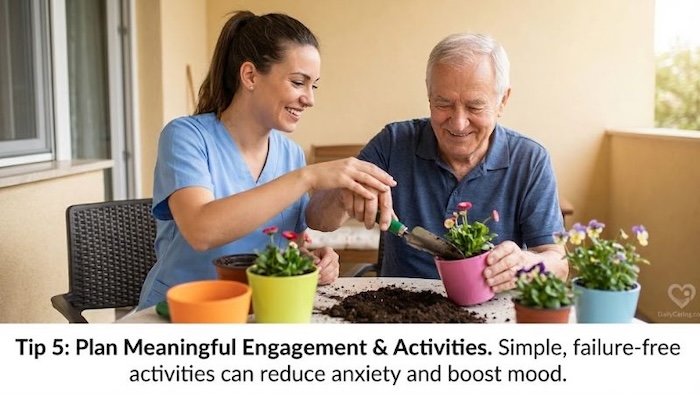
Even though the disease may have changed how your older adult acts, it’s still important to spend quality time with them. This helps them feel safe, happy, and content, and helps you feel more connected.
The activities you share will need to change as the disease progresses and their cognitive abilities decline. Meaningful conversations or complex hobbies might not work well anymore.
Instead, spend time listening to their favorite music, trying simple activities, looking at picture books, or reminiscing over family photos of happy times.
6. Prevent severe chronic stress and burnout with regular breaks
You can’t completely eliminate the stresses of caregiving, but there are ways to manage it and reduce the negative effects on your body and mind.
The most important thing is not to try to do it alone. Caregiving requires a team, whether it’s made up of family, friends, hired helpers, outside services like an adult day program, or a combination of these. This gives you much-needed regular breaks and time to recharge.
Find out how to get family to help, where to find respite care services, what to do if your family can’t agree on your senior’s care needs, and how to manage stress so you avoid burning out.
Final Thoughts on Alzheimer's Disease Caregiver Tips
Remember, caregiving is not a solo journey but a marathon that requires a supportive team and regular rest stops. By integrating these six essential strategies (from seeking a clear diagnosis to prioritizing your own well-being), you build a sustainable foundation of care.
This approach helps you manage daily challenges with greater compassion and resilience, ensuring you can be present for your loved one without sacrificing your own health.
Embracing this supportive path allows you to find moments of connection and peace amidst the difficulties, honoring the profound love at the heart of your commitment.
Recommended for you:
- 6 Excuses That Prevent Dementia Caregivers from Taking Breaks
- 5 Benefits of an Early Diagnosis of Alzheimer’s or Dementia
- 6 Ways to Help Someone Who Doesn’t Know They’re Ill: Anosognosia in Dementia
About the Author

Connie is the founder of DailyCaring.com and was a hands-on caregiver for her grandmother for 20 years. (Grandma made it to 101 years old!) She knows how challenging, overwhelming, and all-consuming caring for an older adult can be. She also understands the importance of support, especially in the form of practical solutions, valuable resources, and self-care tips.