












Caring for a loved one with dementia is an immense physical and emotional undertaking. While your dedication is invaluable, recent data shows that the scale of this challenge is growing rapidly, and more families are reaching a breaking point without support.
According to the 2025 Alzheimer’s Disease Facts and Figures report, over 7.2 million Americans are now living with Alzheimer's. To support them, nearly 12 million family members provided an estimated 19.2 billion hours of unpaid care last year – a contribution valued at over $413 billion.
Why “Going It Alone” Is Getting Harder in Dementia Care
While most families prefer to provide care at home, the intensity of that work has reached new heights. The Caregiving in the U.S. 2025 report reveals that 64% of caregivers report high emotional stress, while nearly half face a negative financial impact, such as using up savings or taking on debt.
The “hidden” costs of caregiving (including your own physical health and mental well-being) often far outweigh the price of bringing in professional support. Hiring help isn't just a luxury; it is a strategy to ensure both you and your loved one remain safe.
6 Benefits of Hiring Professional Help for Dementia Care
If you are on the fence about hiring help, consider these six ways professional assistance changes the trajectory of the disease for the entire family.
1. Specialized Behavior Management
Professional caregivers are trained in techniques to manage the “Big Four” of dementia behaviors: wandering, aggression, sundowning, and repetitive questioning. They use person-centered approaches to de-escalate frustration without the emotional triggers that often arise between family members.
2. Enhanced Physical Safety
Falls are the leading cause of injury for seniors with dementia. Professionals are trained in safe transfer techniques (getting in and out of tubs or chairs) that protect an aging adult from hip fractures and protect you from chronic back strain.
3. Sustainable “Aging in Place”
Ironically, hiring help early actually keeps your loved one at home longer. By preventing caregiver burnout, you avoid the “emergency placement” scenario where a family member is suddenly moved to a facility because the primary caregiver had a health crisis.
4. Professional Medication Oversight
As dementia progresses, medication management becomes dangerously complex. Professional aides ensure the right dose is taken at the right time, reducing the risk of adverse drug interactions or ER visits.
5. Social and Cognitive Stimulation
Family members often get stuck in “task mode” (feeding, cleaning, dressing). A professional caregiver’s primary job is engagement. They provide cognitive stimulation through music, puzzles, or conversation that can help maintain functional abilities longer.
6. Peace of Mind (The “Respite” Effect)
When you aren't worried about whether your loved one left the stove on, you can actually be a daughter, son, or spouse again. This mental “white space” is essential for preventing the clinical depression that affects nearly 40% of dementia caregivers.
Comparing Your Care Options
To help you visualize the landscape of care in 2026, here is a breakdown of the typical costs and service levels.
| Care Type | Avg. Cost (2025/26) | Best For… |
|---|---|---|
| In-Home Health Aide | $33–$35 / hour | Aging in place; personalized 1-on-1 attention. |
| Adult Day Programs | $95–$110 / day | Socialization; caregivers who work full-time. |
| Memory Care Facility | $6,500–$9,000 / month | Advanced stages; 24/7 medical supervision. |
| Respite Care (Short-term) | Varies by provider | Temporary relief for caregiver vacations or recovery. |
*Source: National median estimates based on 2025 Cost of Care data trends.
How to Start (Without the Guilt)
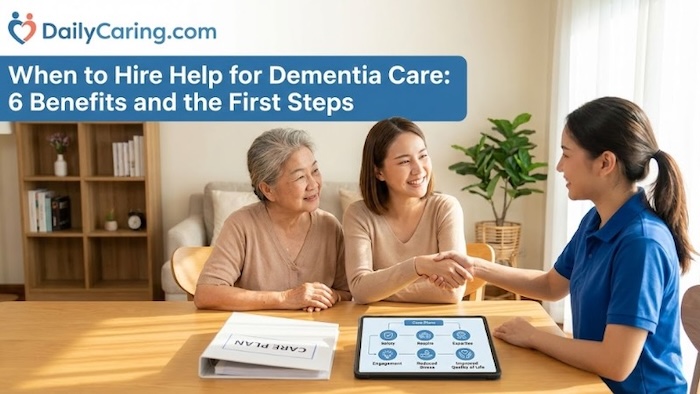
If the idea of hiring help feels overwhelming, you don't have to commit to 40 hours a week immediately. Many families start with a “trial run.”
- The “Small Bite” Approach: Hire a companion for just 4 hours on a Tuesday. Use that time to leave the house entirely. Go to a movie, a park, or a doctor's appointment – for yourself!
- Leverage New Benefits: Check whether you qualify for the CMS GUIDE Model, a new Medicare initiative that provides up to $2,500 annually for respite services and 24/7 support for dementia caregivers.
- Focus on the Benefit to Them: Remind yourself that a professional caregiver provides your loved one with a fresh face, new stories, and specialized safety that even the most loving family member cannot always provide alone.
In-Home Caregiver Agency Interview Checklist
Finding the right partner in care starts with asking the right questions. Use this interactive checklist during your agency interviews to ensure an in-home caregiver agency has the specific dementia expertise and staffing reliability your family deserves.
📋 In-Home Care Agency Interview Checklist
Use these questions to ensure an agency is equipped to handle the unique challenges of dementia care.
Dementia Training & Expertise
- Does the agency provide specific, ongoing dementia-care training for all staff?
- How do they handle “difficult” behaviors like sundowning, wandering, or aggression?
- Do they conduct a baseline cognitive assessment before care begins?
Staffing & Continuity
- Will my loved one have a consistent caregiver, or will different people rotate in?
- How does the agency handle caregiver call-outs or emergencies? Is there a backup plan?
- Are all caregivers W-2 employees, background-checked, and insured?
Communication & Logistics
- How is information (mood, appetite, medication) documented and shared with the family?
- What is the minimum number of hours required per visit or per week?
- Can the care plan be easily adjusted as the disease progresses?
First-Day Caregiver Briefing
A smooth transition begins with clear communication. Use the following briefing guide to organize your loved one’s personal preferences and safety triggers, giving your new caregiver the “insider knowledge” they need to provide comfort from the very first hour.
☀️ First Day Success: The Caregiver Briefing
Even the best professional needs a roadmap to your loved one’s unique world. Have this information ready to share during their first visit to ensure a smooth transition.
❤️ Likes & Comforts
- Favorite topics (hobbies, pets, past work).
- Preferred “comfort” snacks or drinks.
- Music or TV shows that help them relax.
⚠️ Triggers to Avoid
- Topics that cause distress or confusion.
- Environmental triggers (loud noises, specific lights).
- Physical boundaries or sensitive areas.
Key Logistics to Cover:
- • The “House Rules”: Where to find supplies, how to use the coffee maker, and which rooms are off-limits.
- • Red Flags: Specific medical or behavioral signs that mean they should call you immediately.
- • The Exit Strategy: How you will say goodbye to minimize separation anxiety?
Final Thoughts: Finding Your New Normal When it Comes to Dementia Caregiving
Choosing to hire professional help isn't a sign of failure or a lack of love; it is a vital step in preserving the quality of life for both you and your loved one. By bringing in a trained partner, you transition from being an overwhelmed task manager back to being a supportive family member.
This shift allows you to focus on meaningful connections while knowing the demanding aspects of daily care are in expert hands. Remember that sustainable caregiving is a marathon, not a sprint. Investing in support today ensures you have the emotional and physical energy to be there for your loved one throughout the journey ahead.
Recommended for you:
- 5 Tips for Dealing with Caregiver Guilt in Dementia Care
- Adult Day Services Help Seniors Live at Home Longer
- 6 Must-Read Alzheimer’s Books for Caregivers
About the Author

Chris is a seasoned healthcare executive and entrepreneur from the Pacific Northwest. He strongly advocates for older adults and the caregivers who serve them. Chris has personal experience caring for his father, who had dementia. Chris is a technology enthusiast and an avid outdoorsman; if he's not in his office, he can usually be found on a golf course or fly-fishing out west somewhere.