











If you are an aging woman going solo in 2026, you are part of a historic “quiet revolution.” You represent a demographic that is more educated, more independent, and more long-lived than any generation before you. However, you are also navigating a world designed for pairs.
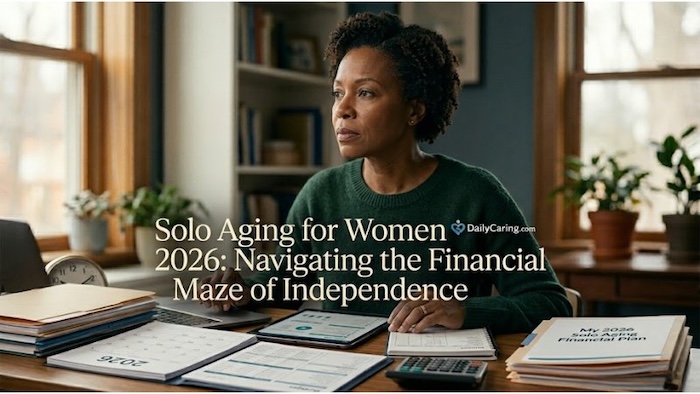
A landmark Harvard JCHS report released just today reveals a sobering reality: older women are now 37% more likely than men to face a severe housing cost burden. This isn't just a personal budgeting issue; it’s the result of a “Singles Tax” combined with a lifetime of lower earnings and longer life expectancies.
To thrive, and not just survive, solo aging in 2026 requires moving from a “getting by” mindset to a “total sovereignty” strategy.
The Challenge: Beating “Financial Gravity” When it Comes to Solo Aging
In 2026, the “Singles Tax” is more than just paying full price for a hotel room. It’s the reality that property taxes, utilities, and home maintenance don't care if one person lives in a house or four.
- The Opportunity: 2026 has seen a massive surge in State Caregiver Tax Credits. Even if you live alone, “reciprocal care” arrangements with neighbors can now sometimes qualify for state-level stipends. Check our 2026 State-by-State Relief Guide to see if your jurisdiction has expanded its definition of “caregiver.”
- Action: Use the NCOA Benefits CheckUp tool to audit your eligibility for “invisible” savings on prescriptions and cooling/heating costs.
Of the 16 million older adults who live alone, 10 million are women. This raises concern about loneliness and isolation as well as access to care since professional care at home is unaffordable to most. – Samara Scheckler, Harvard Joint Ctr for Housing Studies
The Big Challenge When it Comes to Solo Aging for Women in 2026: Avoiding a Random Health Event
The greatest threat to a solo ager’s independence isn't a major disease; it’s a minor health event. A simple bout of the flu or a sprained ankle can become a crisis when there is no one in the next room to hand you a glass of water.
- The Opportunity: AgeTech and the “Joy Span.” 2026 is the year AI companions moved from “gimmick” to “lifeline.” New voice-activated AI monitors can now detect subtle changes in your gait or speech patterns, alerting your “Chosen Family” before a fall even happens.
- Preparation: Ensure your home is a “clinical asset” by performing a 2026 Home Safety Audit. If a recovery is needed, the Hospital at Home model now allows for acute recovery in your own bedroom, provided you have the right digital infrastructure.
Solo Aging for Women in 2026: Challenges and Helpful Resources
Solo Aging Sovereignty Matrix
Turning Challenges into Opportunities for Women in 2026
| 2026 Challenge | The “Sovereignty” Solution | Immediate Tool |
|---|---|---|
| Housing Squeeze | Finance Utilize “Elderly Homeowner” property tax credits and local utility cost-sharing programs. | NCOA Benefits Check |
| The Acuity Trap | Safety Deploy AI-driven passive monitoring to notify your “Chosen Family” in case of a health shift. | AI Caregiver Guide |
| Legal Lockout | Legal Ensure your “Chosen Family” has digital power of attorney to manage your accounts remotely. | Digital Estate Guide |
Building Your “Chosen Family” Network
In 2026, the most resilient solo agers are those who treat community like a health insurance policy. If you don't have biological children or a spouse, your “Chosen Family”—the neighbor who has your spare key, the friend you check in with via text every morning—is your frontline defense against the loneliness epidemic.
- Legal Security: Your chosen family can only help you if you give them the keys. Without a finalized Digital Estate Plan, a trusted friend may find themselves locked out of your life at the very moment you need them to step in.
Final Thoughts About Solo Aging for Women in 2026
Solo aging for women isn't about “doing it alone.” It's about having the independent authority to choose how, where, and with whom you live. While the structural challenges of 2026 are real, the tools to overcome them (from AI companions to state-level financial relief) have never been more accessible.
By building a plan today, you aren't just protecting your future; you are reclaiming your power.
About the Author

Amie Clark is a senior care expert with over 25 years of experience in aging services, caregiving, and senior housing. She combines her professional expertise and personal caregiving insight to help families navigate aging, long-term care, and end-of-life decisions with clarity and compassion.