












Tax season in 2026 has brought a new wave of sophistication to financial fraud. While the Internal Revenue Service (IRS) has ramped up security, scammers are now using AI-driven tools to impersonate officials and family members with chilling accuracy.
According to recent 2026 elder fraud reports, financial losses for seniors have skyrocketed, with total fraud losses exceeding $2.4 billion annually. For caregivers, staying informed isn't just a precaution – it’s a vital part of protecting your loved one’s legacy.
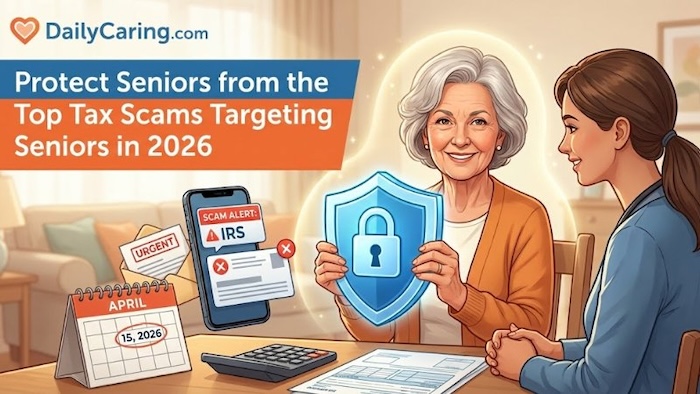
Here are the two most critical scam categories to watch for this year:
2 Critical Tax Scam Categories to Watch in 2026
1. The Modern IRS Imposter Scam (Now with AI)
The “imposter scam” is no longer just a poorly written email. In 2026, scammers use AI Voice Cloning to mimic the authoritative tone of an IRS agent. They may even use “Deepfake” technology in video calls to appear in a simulated government office.
The “New” Red Flags:
- Aggressive Demands for “Safeguarding”: A scammer may claim your account is compromised and that you must transfer money to a “protected” government account. The IRS will never ask you to move money to protect it.
- Payment via Cryptocurrency or Gift Cards: Despite the year, scammers still rely on untraceable methods. If they demand payment via a Bitcoin ATM or retail gift cards, hang up immediately.
- Threats of Immediate Arrest: Real IRS agents will always send multiple paper notices via the U.S. Postal Service before taking any legal action.
2. Tax Identity Theft & “Ghost” Preparers
Tax identity theft occurs when a criminal uses a senior’s Social Security number to file a fraudulent return and pocket the refund. In 2026, this often starts with Smishing (SMS phishing) – text messages that appear to be official IRS “refund alerts.”
How to Stay Safe:
- Get an IP PIN: The IRS now encourages all seniors to get an Identity Protection PIN. This 6-digit number adds a “digital lock” to your tax return, preventing anyone else from filing in your name.
- Vet Your Preparer: Avoid “Ghost” preparers who refuse to sign the return or promise “guaranteed” massive refunds. Always verify a professional’s credentials through the IRS Directory of Federal Tax Return Preparers.
2026 Tax Scam Detection Table
Use this quick-reference guide to distinguish between real government outreach and a fraudulent attempt.
What to Do if You Suspect Fraud
If you or your older adult has been targeted, do not be ashamed. Fraudsters in 2026 are highly trained manipulators. Take these steps immediately:
- Report it: Visit ReportFraud.ftc.gov to alert the Federal Trade Commission.
- Contact the IRS: If you suspect identity theft, use the IRS Identity Theft Affidavit (Form 14039).
- National Elder Fraud Hotline: Call 1-833-FRAUD-11 for free support for those 60 and older.
Recommended for you:
- Get Free Tax Preparation Help for Seniors from the IRS
- Tax Season = More Financial Scams Against Seniors
- 3 Top Senior Scams to Watch Out For: Advice From the FBI
About the Author

Chris is a seasoned healthcare executive and entrepreneur from the Pacific Northwest. He strongly advocates for older adults and the caregivers who serve them. Chris has personal experience caring for his father, who had dementia. Chris is a technology enthusiast and an avid outdoorsman; if he's not in his office, he can usually be found on a golf course or fly-fishing out west somewhere.