










Heart disease is so common that it causes 1 in 4 deaths in the U.S., and as you may have experienced yourself, the medical system doesn’t focus nearly enough on effective, preventative testing for heart health.
To help seniors get the best care, caregivers need to be strong health advocates and ask for important tests before serious symptoms show up. This can be intimidating because we’re not medical professionals and don’t know what to ask for.
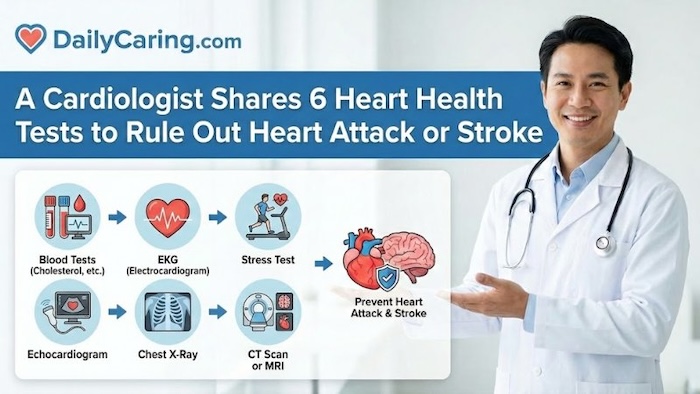
Dr. Joel Kahn, a cardiologist focused on prevention, shares his 6 best tips for the most effective heart health tests. He recommends asking for these tests during routine office visits or if your loved one is in the Emergency Room for chest pain.
Dr. Kahn’s expert recommendations may help you keep an older adult’s heart as healthy as possible. We’ve summarized his key recommendations here.
6 Diagnostic Tests That Could Prevent a Future Heart Attack or Stroke
1. Ask for a coronary artery calcium scan (CACS)
A CACS is the most accurate way to determine whether heart arteries are being blocked.
Without the scan, there will be no warning until the arteries are badly blocked. Dr. Kahn says, “The first symptom you have may be the day you die.” Scary!
Key facts about CACS:
- Widely available CT scan
- Costs $80
- Uses no dye
- Takes one minute
- More accurate than a stress test
- The score should be zero – anything higher means your older adult should see a preventive cardiology expert
2. Never leave the ER without a complete evaluation
If your loved one has chest pain, pressure, tightness, or squeezing, Dr. Kahn recommends going to an emergency room, not an urgent care clinic.
What to ask for in the ER:
- A thorough evaluation
- “Serial” cardiac enzymes that are repeated 2 or 3 times every 4 to 6 hours
- A repeat ECG to compare with the initial one
- A definitive test before discharge – either a treadmill stress test with echocardiography (no radiation) or nuclear imaging (radiation). If CACS or an advanced coronary CT angiogram (which uses iodine dye) is available, do one to ensure the arteries are clear.
Dr. Kahn says that ERs are under pressure to get patients out the door, so they’re less likely to perform in-depth exams. He’s seen charts from young people who got basic evaluations in the ER and were sent home, only to die of massive heart attacks within days.
That’s why it’s so important to be a strong health advocate. Don’t be afraid to calmly but firmly push back if the ER tries to discharge your older adult without proper evaluation.
3. Ask for 5 advanced lab tests
Dr. Kahn suggests asking for the following advanced tests. He says many commonly used tests have been around since the 1970s and are quite outdated.
Insist on these tests instead:
- Advanced lipid profile: Measures LDL particle number and size, which are more predictive of future heart and stroke events.
- Lipoprotein A: It's rarely used, but hundreds of research studies indicate that if it's high, the risk of heart attack and stroke skyrockets.
- Homocysteine: It's important for artery and brain health. If elevated, it can be treated to bring the level back to normal.
- Inflammatory markers: The best-known is hs-CRP, but he recommends at least 5 others, such as MPO.
- TMAO: A new marker of heart and kidney health that's been shown to cause heart and kidney damage and is associated with worsened prognosis
4. Ask for an ECG
Routine physical exams used to include an ECG or EKG, but they’re usually skipped now. Dr. Kahn recommends asking for one to measure your older adult’s QT interval (the time between heartbeats).
If someone has a long QT interval (it’s genetic), they shouldn’t be prescribed common medications like cardiac drugs, antibiotics, antidepressants, and others that prolong the QT interval – that could cause death from cardiac arrhythmia.
5. Get a vascular screening
For seniors who smoke or have a family history of early heart disease or stroke, a vascular screening could be worth it. This test uses ultrasound to scan the carotid arteries, the abdominal aorta, and the legs.
The scan should show no plaque in the arteries. If there’s “mild” plaque, get a complete evaluation by a vascular expert.
6. Check for drug interactions
Many drugs will interact with each other, food, or supplements. Even if the interaction isn’t fatal, it can affect how well the medication will work or if your senior will have side effects.
Dr. Kahn stresses the importance of reviewing medications for potentially fatal interactions, for example, those that make a long QT interval even longer.
Final Thoughts on the Top Diagnostic Tests for Heart Health
Safeguarding heart health isn't about a single grand gesture, but the consistent, daily choices that build a resilient future. These six practical steps from a cardiologist empower you to move from concern to confident action.
Remember, even small, manageable lifestyle improvements are significant victories on the path to prevention. By making these evidence-backed habits part of your routine, you are taking powerful control of your well-being, actively protecting your heart and brain to enjoy a fuller, healthier life for years to come.
Next Steps: See Dr. Kahn’s full article about how to prevent heart attack at Thrillist
Medical Disclaimer
This article is for informational and educational purposes only. It is not intended to be a substitute for professional medical advice, diagnosis, or treatment.
- Consult Your Doctor: Always seek the advice of your cardiologist or other qualified health provider with any questions you may have regarding a medical condition.
- Emergency Care: If you think you or a loved one may be having a medical emergency, call 911 or go to the nearest emergency room immediately.
- No Professional Relationship: Reliance on any information provided by this website or featured experts is solely at your own risk.
Last updated: January 2026. Recommendations are based on the expert insights of Dr. Joel Kahn as shared via DailyCaring.
Recommended for you:
- Recognize Signs of Stroke and Act F.A.S.T.
- Medications Seniors Should Avoid: The Beers List
- Check Medications to Prevent Dangerous Drug Interactions
About the Author

Connie is the founder of DailyCaring.com and was a hands-on caregiver for her grandmother for 20 years. (Grandma made it to 101 years old!) She knows how challenging, overwhelming, and all-consuming caring for an older adult can be. She also understands the importance of support, especially in the form of practical solutions, valuable resources, and self-care tips.