













A holiday visit is a perfect opportunity to reconnect with aging parents, but it is also your best window to see how they are truly managing “day to day”. Phone calls can easily hide subtle declines in health, mobility, or home upkeep. Beyond festive meals and gift exchanges, paying quiet attention to their living space lets you spot small problems before they become emergencies.
By focusing on these three critical observations while visiting aging parents for the holidays, you can turn a seasonal trip into an act of proactive care that protects their independence long after the decorations come down.

Quick Guide: Visiting Aging Parents for the Holidays
- Align With Siblings First: Talk with siblings before you arrive to set shared expectations and avoid holiday family conflict.
- Do a 5-Minute Discreet Check: Quietly scan the fridge, mail piles, medication bottles, personal grooming, and car exterior for subtle red flags.
- Make 1-Hour Safety Fixes: Swap out slippery bath mats, clear cluttered walkways, and improve dim lighting to prevent winter falls.
- Open Gentle Future Talks: Use low-pressure, empathetic conversation starters to discuss medical documents, home upkeep, and future support.
What Should You Do Before Visiting Aging Parents for the Holidays?
Before visiting aging parents for the holidays, coordinate privately with your siblings or other family stakeholders to agree on what to watch for and how to communicate. Setting clear expectations ahead of time prevents parents from feeling ganged up on and reduces the sibling issues that often arise during stressful holiday gatherings.
Take a few minutes on a quick phone call before anyone travels to decide who will handle specific tasks, such as checking the home's smoke detectors or gently bringing up estate paperwork. Walking in as a calm, united team makes the visit far more enjoyable for everyone.
Holiday Visit Action Plan at a Glance
| Holiday Step | What to Focus On | Real-World Benefit |
|---|---|---|
| 1. Discreet Health Check | Kitchen, mail, medications, hygiene, and car exterior. | Catches early memory, mobility, or nutrition changes without embarrassing your parents. |
| 2. 1-Hour Safety Updates | Non-slip bath mats, grab bars, lighting, and clear walkways. | Eliminates the most common household fall hazards before you fly or drive home. |
| 3. Future Conversations | Legal documents, home upkeep, and wishes for aging in place. | Replaces crisis decision-making with a calm, respectful plan for the year ahead. |
VIDEO: Home For The Holidays? Keep An Eye Out for Hidden Hazards
3 Critical Observations to Make While Visiting Aging Parents for the Holidays
During the holidays, many people visit aging parents or relatives, and this is a great chance to see how they’re really doing in their natural environment.
This year, use some of your holiday time with family to do three things:
- Check in to make sure your loved ones are doing well.
- Make simple home safety recommendations and/or updates.
- Start meaningful conversations about the future.
DailyCaring shares tips to help you focus on “essential details” that will make a big difference around the holidays and beyond.
*Pro tip: Make sure to have conversations in advance with your siblings or other stakeholders in your aging loved one's care. Set clear expectations and agree on a plan. This will pay dividends in the long run and will prevent sibling issues that tend to occur around the holidays.
1. How Do You Discreetly Check on Aging Parents During a Visit?
To discreetly check on independent aging parents, observe their daily environment naturally without turning the visit into an inspection. Pay quiet attention to expired food in the kitchen, piles of unopened mail, missed medications, noticeable weight loss, and new scrapes on their car. Jotting down brief private notes each year helps you track gradual changes over time.
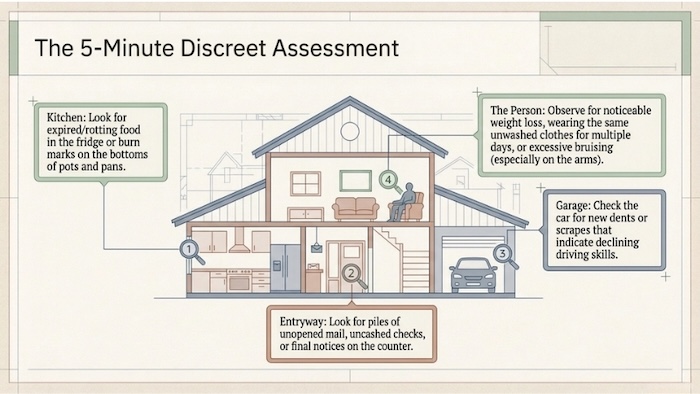
- The Kitchen: Are there expired foods in the fridge? Burn marks on the bottoms of pots and pans?
- The Mail: Are there piles of unopened mail, final notices, or uncashed checks on the counter?
- Physical Appearance: Have they lost noticeable weight? Are they wearing the same clothes for multiple days? Any unexplained bruises?
- The Car: Check the car for new dents or scrapes that might indicate declining driving skills.
The 5-Minute Discreet Assessment Checklist
- The Kitchen: Look for expired foods in the refrigerator, scorched pots or pans that suggest forgotten burners, or a nearly empty pantry.
- The Mail and Finances: Notice stacks of unopened mail, overdue utility notices, or uncashed checks sitting on the counter.
- Medications: Glance at pill bottles to see if prescriptions are expired, duplicated, or sitting untouched.
- Physical Appearance: Watch for unintended weight loss, wearing the same clothes for several days, poor grooming, or unexplained bruises.
- The Car: Walk past their vehicle to check for fresh dents, bumper scrapes, or cracked mirrors that may signal declining driving skills.
2. What Quick Home Safety Updates Can You Make in One Afternoon?
During a holiday visit, you can dramatically lower your parents' fall risk in under an hour by tackling high-traffic areas like the bathroom, bedroom, and hallways. Simple upgrades like replacing slippery bath mats, securing loose throw rugs, brightening dim hallways, and testing smoke detectors can help older adults stay independent longer.
According to the CDC, more than one in four older adults falls each year, and most falls happen right at home. Framing these quick fixes as helpful holiday favors makes them much easier for proud parents to accept.
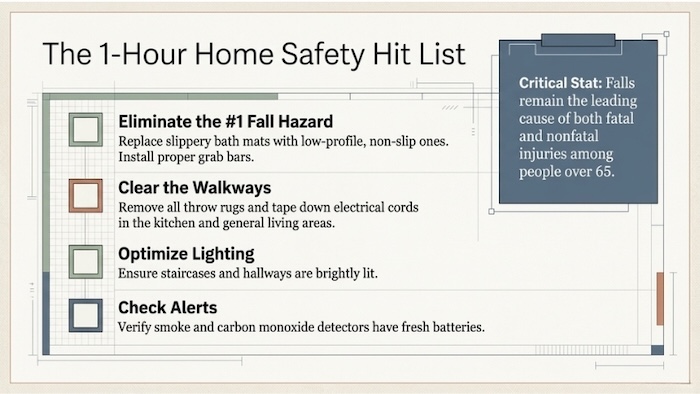
- Tackle the High-Risk Zones: Start with the most common fall areas by making quick fixes to the bathroom, bedroom, and kitchen.
- Clear the Walkways: Next, move on to decluttering and securing the kitchen and general living areas.
- Eliminate the #1 Fall Hazard: Slippery bath mats are incredibly dangerous. Before you head home, replace theirs with a low-profile, non-slip mat.
3. How Do You Start Meaningful Conversations About the Future?
The best way to start conversations about aging during the holidays is to pick a calm, private moment away from the dinner table and lead with curiosity rather than criticism. Using gentle “I” statements and focusing on small, practical topics like emergency paperwork or home upkeep helps parents feel respected, not controlled.
You might be surprised by how relieved many parents feel once the ice is broken. The National Institute on Aging recommends organizing key medical and legal documents well before a health crisis hits. Review these tips to prepare for a successful conversation before you sit down together.
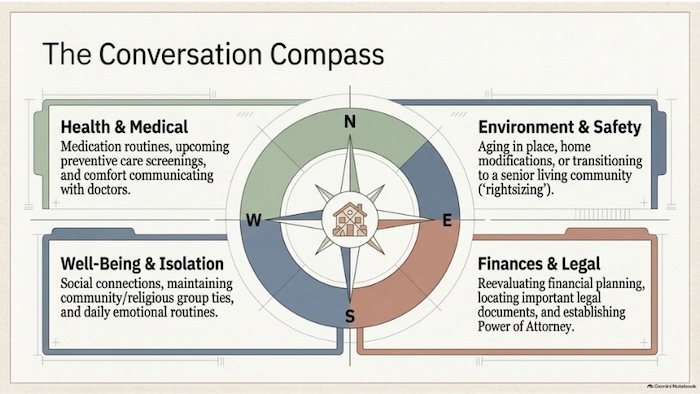
“I noticed the stairs seem a bit tougher for you this year. Would it be helpful if we added a second handrail or better lighting?”
“A friend of mine was just dealing with a medical emergency for their parents, and it made me realize I don't know where your important medical and legal documents are kept. Can we review that just in case?”
“How are you feeling about managing the house lately? Is the upkeep starting to feel like too much?”
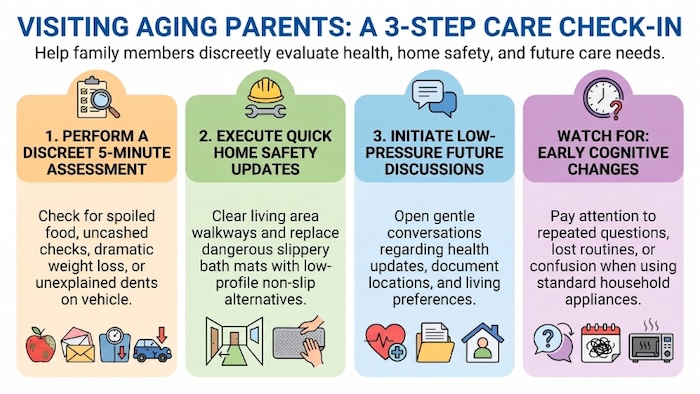
Infographic: Visiting Aging Parents Checklist
Frequently Asked Questions About Visiting Aging Parents
What are the warning signs that an elderly parent should not live alone?
Key warning signs include significant weight loss, poor personal hygiene, frequent falls, unopened mail and unpaid bills, spoiled food in the refrigerator, scorched cookware, and new dents or scratches on their car. If you notice several of these during a holiday visit, it may be time to discuss bringing in home care or exploring assisted living.
How do you assess home safety for seniors?
Start by removing tripping hazards such as loose throw rugs and electrical cords. Check the bathroom for sturdy grab bars and non-slip bath mats, ensure hallways and staircases are brightly lit, and verify that smoke and carbon monoxide detectors have fresh batteries.
How do I talk to my aging parents about getting help?
Approach the conversation with empathy and curiosity, not criticism. Use “I” statements like, “I noticed the stairs seem a bit tougher for you, and I worry about you falling,” rather than dictating what they must do. Start by suggesting small, low-pressure changes, such as hiring housekeeping help or adding grab bars, before discussing major care transitions.
What should I do if my parents get defensive during a holiday visit?
Pause the conversation and avoid arguing. Defensiveness usually comes from fear of losing independence. Reassure them that your goal is to help them stay in their home safely for as long as possible, and revisit the topic gently in a few weeks after the holiday stress has passed.
Final Thoughts on Visiting Parents Over the Holidays
Your holiday visit, filled with these thoughtful observations and conversations, is one of the greatest gifts you can give to someone. It's a chance to show your love not just by being there, but by offering proactive support that honors their independence while keeping them safe.
Leave with a clearer picture, a plan for the coming months, and the peace of mind that comes from knowing you're helping them navigate aging with dignity and grace.
Recommended for you:
- How to Talk with Parents About Aging: 5 Tips and Conversation Starters
- Do’s and Don’ts for Visiting Someone with Dementia
- Caregiving Holiday Tips: 3 Ways to Deal with Difficult Family
About the Author

Connie is the founder of DailyCaring.com and was a hands-on caregiver for her grandmother for 20 years. (Grandma made it to 101 years old!) She knows how challenging, overwhelming, and all-consuming caring for an older adult can be. She also understands the importance of support, especially in the form of practical solutions, valuable resources, and self-care tips.



As an adult who has been there as caregiver for my aging parents, it is important to check your attitude and method of approach. They are your parents and deserve dignity and respect, rather than meddling and takeover before due time. Properly assess their status before any conversation or action. Ask permission before jumping in, ask “Can I” or “Would you like me to…” rather than barging in with any discrediting or disrespecting attitude.
Great suggestions, thank you for sharing!