













As caregivers, our days are filled with prioritized checklists: Is Dad eating enough? Did Mom take her heart medication? Are we doing enough to prevent falls? Often, one vital appointment gets pushed to the bottom of the list: the dentist.
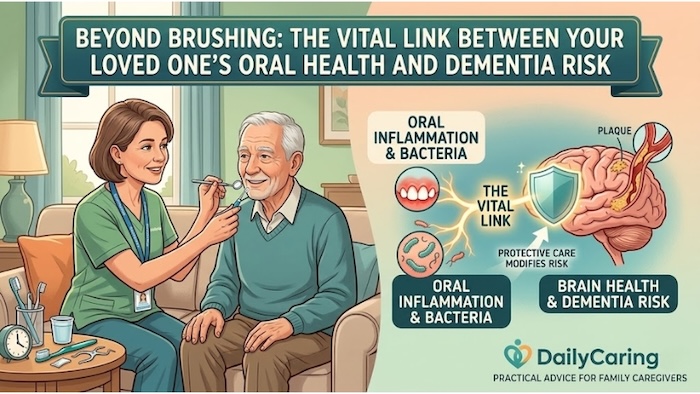
The Surprising Science Behind Gum Disease and Dementia Risk
For decades, oral inflammation was treated as separate from systemic health. The prevailing wisdom has changed. Dr. Reza Hosseini, a prominent neuropsychiatrist, recently highlighted research showing that a specific pathogen responsible for gum disease, Porphyromonas gingivalis (P. gingivalis), may directly damage the brain.
Research Snapshot: Gum Disease & Dementia Risk
Researchers identified P. gingivalis (a gum disease bacteria) in 96% of Alzheimer’s brain tissue samples examined at autopsy. It produces toxic enzymes (gingipains) that damage memory neurons.
A significant study found that individuals over age 70 with chronic periodontitis (gum disease) for more than 10 years were 70% more likely to develop Alzheimer’s disease.
The distinction is critical: studies establish a powerful statistical association, not a direct cause-and-effect link. What they confirm is that treating gum disease early is a tangible, fixable step that may reduce overall systemic inflammation, a major driver of memory decline.
Unlike genetics or age, oral health is a tangible, modifiable risk factor. Maintaining hygiene is an accessible intervention that can change a senior's brain health trajectory.
Proper Oral Care and Dementia: A Vicious Cycle
This connection is particularly challenging for caregivers because it often creates a vicious cycle.
Dementia affects memory, executive function, and motor skills, making it harder for our loved ones to perform routine dental hygiene:
- They Forget to Brush: It may not occur to them to brush, or they might forget halfway through.
- They Can’t Follow Complex Steps: Flossing or using mouthwash may become too complex.
- Resistance to Care: Some seniors may resist oral care, fearing it or simply not understanding why it’s being done.
This leads to poor oral hygiene, which can cause severe gum disease. Then, the chronic systemic inflammation from the gum disease may, in turn, accelerate the progression of dementia, further worsening their cognitive decline and making hygiene even harder.
As caregivers, we face a critical challenge in breaking this cycle.
VIDEO: The Link Between Gum Disease and Dementia
Actionable Steps for Caregivers
If you are feeling overwhelmed, take a deep breath. You don’t need to become a dental professional overnight. What you can do is make small, consistent changes that provide an early, visible warning signal and reduce overall inflammation.
Here are the most effective dementia friendly dental care steps we recommend:
Key Takeaways for Preventive Brain Health
Dr. Ghomi's concluding point is one we should all carry with us: “Prevention doesn’t wait for certainty.“
While we must be honest about the causal question still being studied, the biological association is extremely strong and plausible. This means that a standard, twice-yearly cleaning might be one of the most proactive steps you can take to modify a loved one's risk trajectory.
Our healthcare system often silos the body into specialties. Dental, brain, and cardiovascular health are part of a single system, and the body doesn’t work in pieces. Oral inflammation is a crucial, early warning signal that the body is in trouble. It’s up to us, as caregivers, to make sure it gets heard.
About the Author

Chris is a seasoned healthcare executive and entrepreneur from the Pacific Northwest. He strongly advocates for older adults and the caregivers who serve them. Chris has personal experience caring for his father, who had dementia. Chris is a technology enthusiast and an avid outdoorsman; if he's not in his office, he can usually be found on a golf course or fly-fishing out west somewhere.