













Caring for aging parents is one of life's most profound responsibilities, yet it can unexpectedly strain sibling relationships. When childhood roles resurface, and logistical pressures mount, even the closest families can struggle to work as a team.
This guide provides five essential, practical strategies to help you and your siblings navigate this challenging journey together. By focusing on communication, fairness, and shared goals, you can transform potential discord into a source of strength, ensuring your parents receive the best possible care while preserving the invaluable family bond.
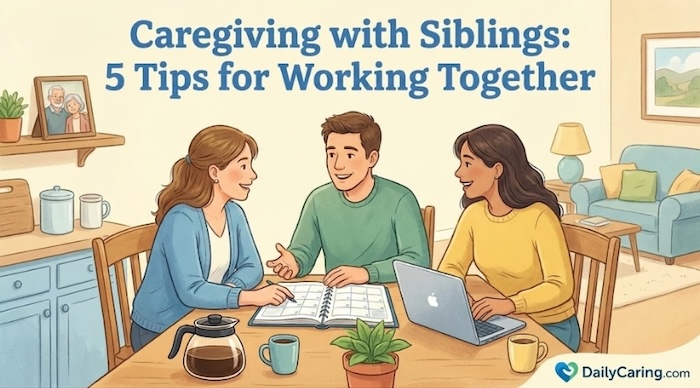
Caregiving Can Strain Sibling Relationships
For some families, working with siblings to care for aging parents can be almost as challenging as the caregiving itself.
In an AARP article, Dr. Barry Jacobs discusses his experience caring for their mother with his brother and the challenges and conflicts that arise for most siblings.
We share his five tips for improving caregiving and sibling relationships and highlight the key points.
Putting these tips into action can improve relationships and help team caregiving run more smoothly.
5 Tips to Improve Caregiving and Sibling Relationships
1. Focus on the quality of your parents’ care
It’s helpful to remember that when siblings work together to care for aging parents, parents receive better overall care.
Plus, when siblings conflict, parents are likely to know. It will likely upset them to create a problem unintentionally.
Dr. Jacobs also makes a good point that if you’re spending time and energy fighting with each other, it takes away from the effort you could use to advocate for your older adult.
Considering these factors might help you set aside differences for your parents’ sake.
2. Don’t get stuck in childhood roles
It’s easy to revert to childhood roles and rivalries when working together to care for aging parents. Siblings might compete to be the favorite or fight to control decisions.
It’s helpful to remind yourselves that everyone is now an adult and that you don’t have to follow childhood behavioral patterns.
Try to treat each other with respect, as you would any other adult.
3. Get rid of sexist stereotypes
Gender stereotypes shouldn’t be used to assign caregiving responsibilities.
Brothers shouldn’t expect sisters to do all the work because they’re used to the idea of women taking care of the household.
Siblings can work effectively only when gender stereotypes are put aside.
4. Don’t aim for equality, do what makes the most sense
It’s not likely and not practical that you’ll find a truly equal distribution of caregiving work.
Instead, it helps the whole team when responsibilities are distributed in ways that make sense given each person’s unique situation.
Siblings will live varying distances from parents, have different financial situations, and have different life responsibilities. It’s natural for one or two to take on more responsibility than others.
This “inequality” isn’t always a bad thing. When one or two people respond quickly to events or are in person more often, they can take the lead.
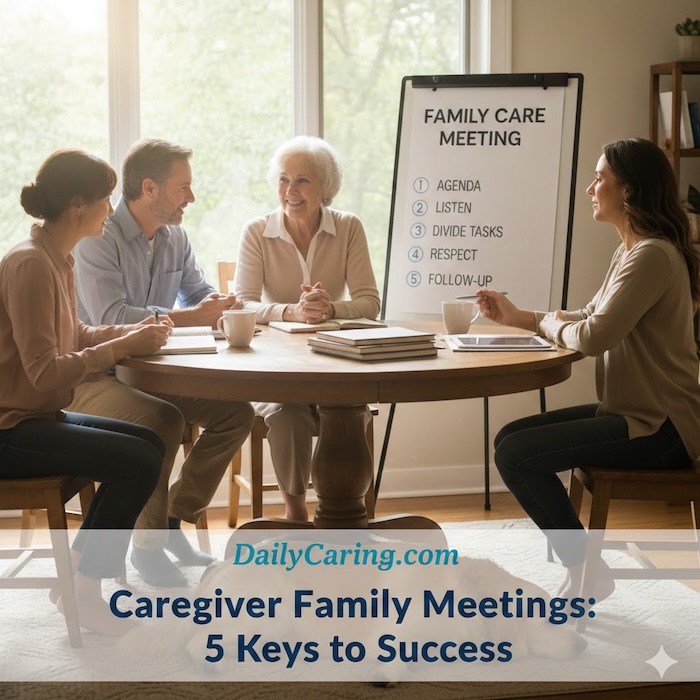
Of course, it’s still essential that all siblings contribute. Regular family meetings to check in and acknowledge everyone’s contributions help keep things on track.
5. Be kind to each other
Caregiving is a tough job that tests everyone’s patience. Some parents are uncooperative, rude, or unappreciative.
It makes the job a little easier when siblings are kind to each other.
Plus, you can vent your frustrations to each other and get support, knowing that you all understand the situation.
VIDEO: Caregiving With Siblings: How to Make it Work
Final Thoughts on Caregiving with Siblings
Implementing these five strategies can turn the immense challenge of sibling caregiving into an opportunity for renewed connection and shared purpose. When you consciously set aside old patterns, distribute tasks sensibly, and lead with kindness, you build a resilient team capable of weathering immense stress.
Remember, the goal is not a perfect, conflict-free process, but a cooperative effort where everyone feels heard and valued. By prioritizing your parents' well-being alongside your relationships with each other, you create a sustainable caregiving foundation.
Ultimately, working together effectively is one of the greatest gifts you can give to your aging parents and to each other during this significant chapter of family life.
Next Steps: Get more tips about caregiving and sibling relationships from Dr. Barry Jacobs in the full article at AARP
Recommended for you:


I wish we could have known this early could not have lost husband.
And I could have got answers for anything I am going through now is condition getting tired when reading too much
We’re so sorry that happened. Hopefully the articles on our site can help answer future questions about caring for older adults.