












There's perhaps no sting quite like unsolicited criticism when you're already giving everything you have as a family caregiver.
A comment from a family member, such as “You should be doing more” or “I wouldn't handle it that way,” can shatter your composure, leaving you feeling defensive, angry, and utterly unappreciated.
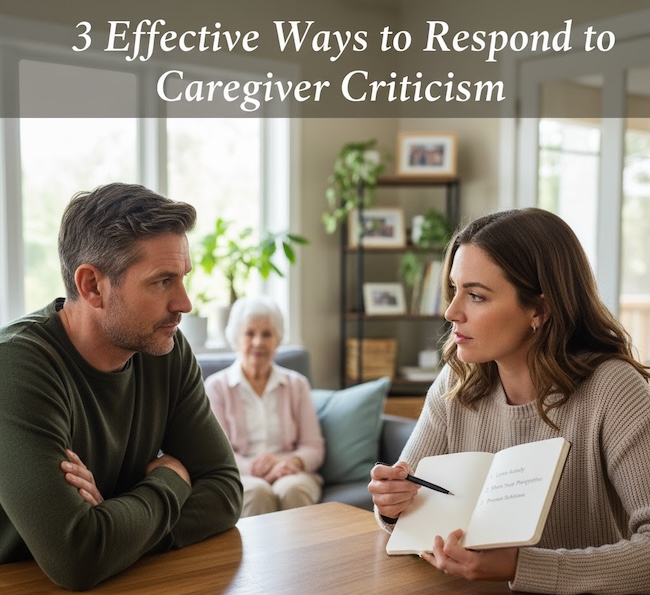
Learning to navigate these painful jabs is essential for protecting your emotional well-being. Let's explore three practical ways to respond to caregiver criticism, reclaim your confidence, and set healthy boundaries.
How to Respond to Caregiver Criticism
Getting criticized is unpleasant – especially from family or friends who don’t lift a finger to help care for your loved one.
Yelling or getting upset might feel justified in the moment, but it won’t reduce your stress or prevent future comments.
To help you shift the conversation and, hopefully, reduce future criticism, we share 3 ways to respond to caregiver criticism.
Your Caregiver Response Roadmap: From Conflict to Control
When you’re in the middle of a heated moment, it’s incredibly hard to remember the “right” thing to say. Your heart is racing, your defenses are up, and the words usually come out as a sharp retort or a silent, painful retreat.
To help you navigate these interactions without losing your peace, we’ve created this Quick Response Roadmap. Think of it as a “cheat sheet” for those high-stress moments.
Whether you choose to pivot the conversation, share your feelings, or stand your ground, these scripts help you respond from a place of strength rather than hurt.
Quick Response Roadmap
| If they say… | Try responding with… |
|---|---|
| “You should be doing [X] differently.” | The Pivot: “I see your concern. What specific suggestions do you have to make this better?” |
| “I'm just too busy to help out right now.” | The “I” Statement: “I feel unappreciated when you say you're too busy to visit or help with Mom’s care.” |
| “You’re obviously neglecting them!” | The Boundary: “I am not neglecting them. We are following a specific care plan recommended by the doctor.” |
3 Ways to Respond to Caregiver Criticism
1. Acknowledge and Ask For Improvement Suggestions
When someone criticizes how you did something, it’s automatic to snap back defensively.
But that’s only going to cause a shouting match that will leave your blood boiling and won’t stop the criticism from happening again.
Next time, acknowledge their concern and ask for their suggestions on how to improve.
You might not be interested in their opinion, but because they’re probably expecting a fight, this response will surprise them and change the tone of the conversation.
For example:
- Your sister says, “Why did you give Mom a cheeseburger and a chocolate milkshake for lunch?” That’s so unhealthy! Are you trying to give her a heart attack?
- You could say, “I see why you’re concerned.” But Mom’s appetite has been terrible lately. She’s hardly eating at all. Her doctor says that even less healthy foods are better than not getting enough nutrients. What other favorites could we offer her?
2. Restate their Criticism, and Let Them Know How It Made You Feel
Some people don’t think before they speak and don’t realize they’ve hurt your feelings or come across as critical. It might be possible to let them know that what they said was not acceptable without starting a fight.
Try this by calmly repeating what they said back to them, but frame it as an “I” statement.
Example 1
- Your brother says, “I’m too busy to help out.”
- You could say: I feel like you don’t value my time and take what I do for granted when you say that you’re too busy to visit or help out with Dad.
Example 2
- Your adult child says, “Why are you sending Dad to that adult day place?” He doesn’t need that, and he’s not like those other people! He should be at home with you. You’re always at home anyway.
- You could say: It really upsets me when you tell me how I should be doing things without first understanding the real situation with your father.
Example 3
- Your aunt says, “This kitchen isn’t as clean as she used to keep it!” And that living room looks like it hasn’t been dusted in weeks! Do you even try to keep your mom’s house clean?
- You could say: It makes me feel unappreciated when you focus on what else needs to be done rather than recognizing all the things I already do for my mom.
3. Politely Stand Up For Yourself
Some criticism is entirely out of line. In these cases, you should absolutely stand up for yourself. The trick is to do it calmly and politely. This way, the person saying those things will be more likely to listen and think twice before repeating them.
For example:
- Your brother says, “You’re obviously neglecting mom!” You don’t even bathe her every day. She loves to be clean and shower every day.
- You could say, “I’m not neglecting Mom.” Because of her Alzheimer’s disease, she’s developed a fear of bathing, so her doctor said that we only need to do it twice a week. Her clothes are always clean, and she’s healthy, well-fed, and happy. Mom is very well cared for.
Final Thoughts About Caregiver Criticism
Remember, you are the expert on your caregiving situation, and your well-being is non-negotiable. Implementing these strategies isn't about winning arguments; it's about preserving your energy and peace for the work that truly matters.
The next time criticism comes your way, you can respond not from a place of hurt, but from a place of strength and clarity. Stand firm in the knowledge that you are doing your best in an incredibly challenging role.
Protecting your heart from unfair judgment is not selfish – it's a necessary part of sustainable caregiving.
Disclaimer: This content is for informational purposes only and is not intended as professional legal, financial, or healthcare advice. Always seek the advice of a qualified healthcare provider, attorney, or financial advisor with any questions you may have regarding a specific medical condition, legal issue, or financial plan.
Recommended for you:
- 6 Ways to Improve the Situation When Siblings Don’t Help with Aging Parents
- Caregiving with Siblings: 5 Tips for Working Together
- Caregiver Family Meetings: 5 Keys to Success
About the Author

Connie is the founder of DailyCaring.com and was a hands-on caregiver for her grandmother for 20 years. (Grandma made it to 101 years old!) She knows how challenging, overwhelming, and all-consuming caring for an older adult can be. She also understands the importance of support, especially in the form of practical solutions, valuable resources, and self-care tips.