













For the estimated 6 million seniors affected by dysphagia, the simple, life-sustaining act of swallowing can become a daily source of anxiety, risk, and frustration.
When a sip of water or a bite of food could lead to choking or a severe lung infection, such as aspiration pneumonia, mealtimes shift from moments of enjoyment into periods of intense vigilance for caregivers.
This condition, which weakens the mouth and throat muscles due to aging, stroke, or other illnesses, requires a fundamental shift in how we approach eating and drinking.
This guide moves beyond the fear to offer seven practical, expert-backed strategies that empower you to navigate this challenging diagnosis.
What Is Dysphagia?
Difficulty swallowing food or liquids is a serious problem for seniors. This is often caused by a condition called dysphagia, which could cause malnutrition, dehydration, or aspiration pneumonia.
It’s estimated that this condition affects 15% of seniors and up to 68% of nursing home residents. To keep your aging loved ones safe and healthy, Vive Health shares seven expert tips on managing dysphagia.
Dysphagia, or difficulty with swallowing, affects an estimated 6 million seniors in the United States.
Dysphagia (pronounced dis-fay-gee-ah) typically results from the weakening of the mouth and throat muscles.
It can be caused by aging, diseases like multiple sclerosis (MS), cancer, or Alzheimer’s disease, or by a medical trauma like a stroke.
How Is Dysphagia Diagnosed?
A dysphagia diagnosis is typically evaluated through a swallow test administered by a speech pathologist.
In this type of test, your older adult will swallow a contrast solution (made of barium) and then be continually x-rayed while swallowing liquids of different consistencies – water (thin), nectar thick, honey thick, and pudding (spoon) thick.
If additional tests are needed, they may include a visual examination of your older adult’s esophagus, an endoscopic swallowing evaluation, an esophageal muscle test, or further imaging scans.
The x-ray swallow test is used to detect aspiration, where liquid is swallowed and enters the lungs instead of the stomach. Aspiration typically causes pneumonia or other severe conditions.
If aspiration is happening, doctors will make recommendations for managing dysphagia with a diet consisting of thickened liquids and pureed foods.
When it comes to caring for someone with dysphagia, there are seven key things for caregivers to keep in mind.
VIDEO: How to Understand and Manage Dysphagia
7 Tips for Safely Managing Dysphagia At Home
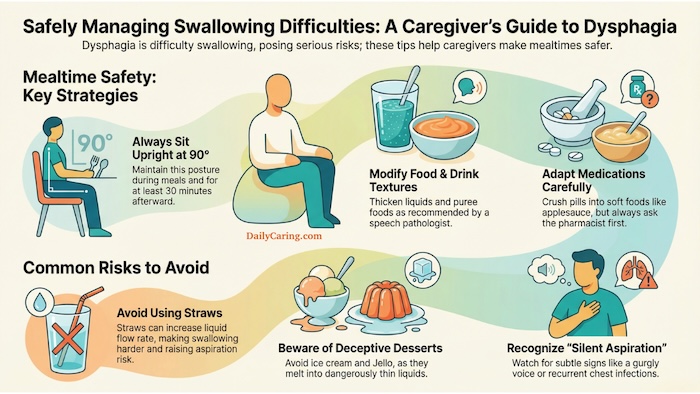
1. Safely thicken medications
If your older adult used to take oral medications with water, they’ll now need to swallow them with a thickened beverage.
Alternatively, the pills can be crushed and mixed into a thicker food, such as pudding or applesauce.
Crushed pills typically taste horrible and are difficult for most people to tolerate (probably why they were encased in the first place).
Using chocolate or vanilla pudding, applesauce, or something else sweet to mask the strong, bitter flavor of medication is always a good idea.
Important: Some pills are labeled as ‘not to be crushed,’ so always talk with the pharmacist about the medications your older adult is taking, if their pills can be crushed, and if you should avoid mixing them with anything specific. An ‘oral suspension’ (liquid version) of your older adult’s medicine may be a better alternative since it can be easily thickened.
2. Avoid using straws
Depending on your older adult’s condition, a speech pathologist may explain to you that it’s generally not a good idea for dysphagia patients to use straws.
For someone who has difficulty drinking, using a straw may seem helpful, but it can increase the rate of liquid flow in the mouth.
That makes it more difficult for weakened muscles to get the liquid down ‘the right pipe’ – which may lead to choking or aspiration.
3. Stay hydrated
Proper hydration is essential for anyone providing care for an older adult. With a dysphagia diagnosis, all water and drinks must be thickened.
Drinking thickened liquids takes longer than drinking non-thickened ones, so managing healthy hydration requires patience and even keener attention from you.
Thickening agents may come as gels or powders that are mixed into a beverage – typically available at drugstores or online.
4. Avoid ice cream and jello
Ice cream and jello seem like staple desserts for older adults, but when it comes to preventing aspiration with a dysphagia diet, they are out!
Why? Both ice cream and jello can melt in the mouth and turn to a thin liquid, which, when swallowed, may cause aspiration.
For people with dysphagia, it physically takes their tongue and jaw longer to get food to the back of the throat for swallowing, leaving more time for things like ice cream and jello to melt into a dangerously thin liquid.
INFOGRAPHIC: Managing Dysphagia in Aging Adults
5. Get enough healthy nutrition
For many dysphagia patients, getting enough calories as well as vitamins and minerals becomes a tough challenge.
Drinks like Ensure and Boost may seem like good options to replace meals and add calories, but they’re often tricky to thicken properly because of the protein and vitamins in the liquid.
Plus, they’re loaded with sugar and artificial ingredients.
There are other ways to incorporate whole foods and nutritional ingredients into a dysphagia diet:
- High-fat foods such as Greek yogurt, avocado, peanut butter, coconut cream, and soft cheeses can be added to sweet and savory dishes to increase calorie content and help older adults maintain weight.
- Easily pureed foods like winter squash, beans (cannellini, black, refried, etc), steamed vegetables (cauliflower, broccoli, kale, spinach, etc), and fruits (banana, strawberries, mango, etc) add loads of vital nutrients to your older adult’s diet and can be incorporated into thickened soups and purees.
- Ice cream and heavy cream can be blended with other ingredients to achieve thickened consistencies suitable for individuals with dysphagia. Milk can be mixed with foods like banana, squash, and peanut butter to naturally thicken into shakes without artificial additives.
- Some nutritionists may recommend adding protein powders or therapeutic drink mixes (such as Juven) to an older adult’s diet to help them maintain weight, especially for seniors building muscle.
6. Use good posture
Patients with dysphagia must sit completely upright when eating and drinking. This helps food and drink go down most successfully.
If your older adult is in a hospital bed, wheelchair, or recliner, you may need to adjust their backrest or help them hold their head and upper torso upright while eating and drinking.
7. Be mindful of timing
For people with dysphagia symptoms that accompany chronic illnesses like MS or Parkinson’s, extreme fatigue and weakness can make eating for more than 15 minutes at a time simply exhausting.
The more tired your older adult is, the harder it will be for them to swallow food and drink correctly.
A speech pathologist may recommend eating and drinking in small amounts throughout the day.
A dysphagia diagnosis takes caregiving to the next level, especially if you’re managing care for an aging parent or older adult who already has other chronic conditions.
Speak with your older adult’s doctor right away if you are worried about any trouble swallowing or if you notice any dysphagia symptoms.
Helpful tests and consultations with speech pathologists and nutritionists, as well as the seven tips above, will give you the tools you need to keep your older adult as healthy as possible.
Final Thoughts About Managing Dysphagia
Successfully managing dysphagia is a profound act of care that blends meticulous attention with deep compassion. By implementing these tips (from perfecting postures and timing to creatively ensuring nutrition), you are doing more than preventing aspiration; you are actively preserving your loved one’s health and quality of life.
Remember, you are not navigating this complex journey alone. Work closely with your healthcare team, including speech pathologists and dietitians, to tailor these strategies to your loved one’s specific needs. Each small, safe meal is a victory, and each day you apply this knowledge, you are building a stronger foundation of well-being for both of you.
Let this be the start of a more confident and empowered chapter in caregiving.
Recommended for you:
- Why Do Seniors Have Trouble Swallowing?
- Pneumonia in Seniors: Symptoms, Treatment, and Prevention Tips
- Improve Seniors’ Doctor Visits with 3 Communication Tips
Guest contributor: Jessica Hegg is the content manager at ViveHealth.com. Interested in all things related to a healthy lifestyle, she shares valuable information to help others overcome obstacles and improve their quality of life.
Frequently Asked Questions About Dysphagia in Seniors
Using a straw increases the flow rate of liquid into the mouth. For older adults with weakened throat muscles, this rapid flow makes it significantly harder to swallow correctly and drastically increases the risk of choking or aspirating liquid into the lungs.
No. Ice cream and jello melt in the mouth and turn into dangerously thin liquids. Because individuals with dysphagia require more time to move food to the back of the throat, these melted liquids create a high risk of aspiration pneumonia.
Medications must be swallowed with a thickened beverage or crushed and mixed into a thick food like pudding to mask the bitter taste. You must always consult a pharmacist first, as some pills cannot be crushed safely. In some cases, a liquid oral suspension is a better alternative.
Medical Disclaimer
The information provided by DailyCaring is for educational and informational purposes only and does not substitute for professional medical advice, diagnosis, or treatment. Dysphagia requires careful individual clinical evaluation. Always consult with a primary care physician, a speech-language pathologist, or a registered dietitian before introducing new food consistencies or changing a therapeutic diet plan.
This article contains some affiliate links. If you buy through an affiliate link on our site, we may earn a small commission, at no additional cost to you. For more information, see How We Make Money.
About the Author
Jessica Hegg is a manager at ViveHealth.com. Ms. Hegg was also a full-time caregiver for her Mom who had Primary Progressive MS and Epilepsy. She is a freelance writer with a passion for cooking and lives in Austin, TX with her Mom and her wonderful husband. You can find her personal blog about caregiving tips, ideas, and solutions at Givea.Care.