












One of the most stressful things about caregiving is the fear of failure. This happens because there’s no instruction manual, most situations are new and different, and there’s no way to know if what you’re doing is “right.”
To avoid becoming paralyzed or overwhelmed by this fear, it’s important to understand why we feel this way and find productive ways to reduce and manage it.
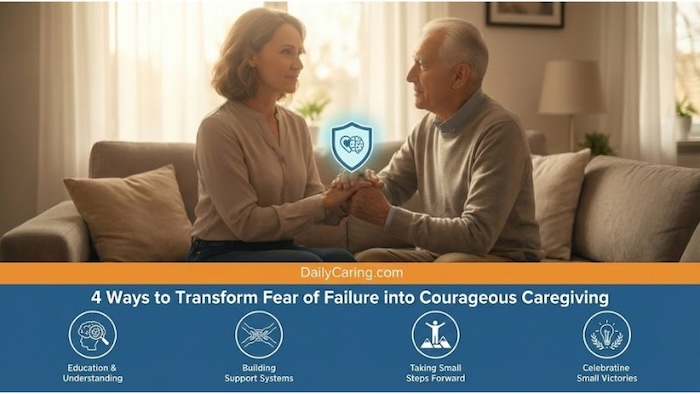
In his article, Dr. Barry J. Jacobs writes about his own experience with fear of failure when caring for his mother and stepfather. He shares 4 helpful tips for transforming that fear into caregiving courage and confidence.
The Most Insightful Caregiving Lessons Are Often the Most Obvious
If you only remember one thing, it should be Dr. Jacobs’ final thoughts on the subject. This could help when you get stuck in worry mode and have trouble snapping yourself out of it. He says:
“In hindsight, I think I fretted too much about preventing what catastrophes could happen to my stepfather and mother, and focused too little on simply being with them as they were declining. Fear of failure didn’t make me a more attentive, capable, or loving caregiver – it only made me more distracted with exaggerated worry.”
4 Ways to Reduce Fear of Failure in Caregiving
1. Find your own way and use mistakes as lessons learned
Caregivers are often scared of making a mistake that could harm their older adult. In a few situations, like a significant medical decision, this is a valid fear.
But more often than not, this fear affects everyday decisions that won’t have serious consequences – worries get blown out of proportion.
That fear can cause you to regularly avoid decisions, procrastinate, and endlessly second-guess yourself. All of this significantly increases your stress and doesn’t improve outcomes.
To turn this around, it’s necessary to accept that caregiving means experimenting to find what works best for you and your loved one. You’re figuring it out as you go, and mistakes are going to happen no matter how hard you try to avoid them.
Focus on doing the best you can and learning from whatever happens. That will give you the confidence to know you’ll be able to figure it out and continue improving your abilities.
2. Correct negative bias / be fair to yourself
We often overlook our caregiving accomplishments and focus on beating ourselves up for mistakes we’ve made.
But that’s an unfair perspective, and talking that way to ourselves increases stress and worsens health.
Instead, we need a balanced view of our caregiving. It’s just as important to celebrate accomplishments as it is to acknowledge and learn from mistakes.
For every mistake we blame ourselves for, Dr. Jacobs recommends thinking about 3 positive wins. There are many successes we take for granted, like getting a prescription refilled on time, convincing your loved one to drink a little more water, or discovering something that brightens their day.
3. Limit the what-ifs
There’s a difference between planning for the realistic future and going through endless “what-if” scenarios.
It’s good to be aware of worst-case scenarios so you can prepare essentials like important legal documents and end-of-life wishes, but it’s neither helpful nor productive to fret about what disaster might happen next.
Worry without action just creates anxiety. If you’re worried about something, figure out if there’s an action you can take to reduce the risk. If you’re not sure, ask a qualified expert.
If there’s no way to reduce the risk and it isn’t likely to happen anyway, remind yourself that it’s not something you can control and work on not giving it so much attention.
That way, you’ll have more mental energy to focus on positive things and on being present when spending time with your older adult.
4. Accept what is
Aging and decline are inevitable. Falls, accidental injuries, innocent medication mistakes, or health crises like a stroke may happen – we can’t control most of life.
That’s why we can’t judge our success as caregivers by an older adult’s health. There’s no way to keep them in a safety bubble!
To be a great caregiver, all we can do is try our best to keep them as reasonably safe as possible, support them through tough times, and help them enjoy the best possible quality of life.
Final Thoughts on the Fear of Failure When Caregiving
The journey of caregiving, while often accompanied by the fear of failure, can be transformed into an act of profound courage and presence. Dr. Barry Jacobs’ insights remind us that courage is not the absence of fear, but the choice to move forward with compassion and intention.
By finding your own way and learning from mistakes, correcting negative self-talk, limiting unproductive worry, and accepting the realities of aging, you can release the paralyzing weight of perfection.
This shift allows you to focus on what truly matters: being a loving, supportive presence for your loved one. Ultimately, successful caregiving is measured not by preventing every hardship but by the strength, love, and grace you bring to each shared moment.
Next Steps: Get Dr. Barry J. Jacobs’ thoughts on overcoming fear of failure in caregiving
Recommended for you: