













Feeling like you're carrying the entire weight of your aging parents' care while your siblings watch from the sidelines? You're not alone. The profound exhaustion and simmering resentment that come with being the “default” caregiver can strain even the strongest family bonds, often reigniting old rivalries and arguments.
While you wish for a supportive team, navigating these conversations can feel like an emotional minefield. This article provides four clear and practical strategies to help you break the cycle of frustration, communicate your needs effectively, and finally get the meaningful support you deserve from your siblings.
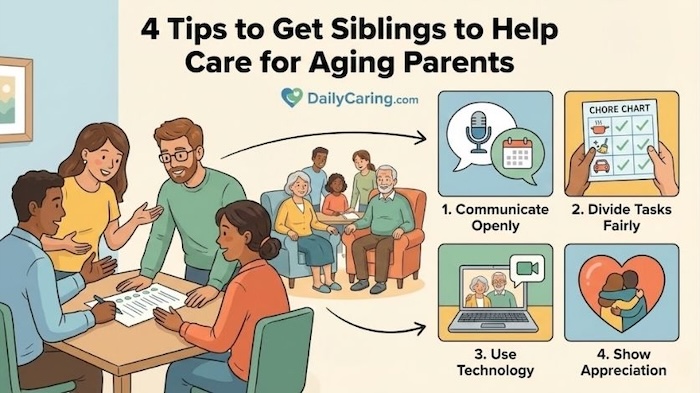
Caregiving can be extra stressful when siblings aren’t supportive
When caring for aging parents, the last thing you need is more stress or resentment because of issues with your siblings.
But getting siblings to help with parents can bring up old family arguments, cause sibling rivalries to flare up, and generally add to your burden.
We found helpful advice in an article from the Family Caregiver Alliance about resolving common issues when caregiving with your siblings.
We’ve highlighted the four tips we found most helpful in getting more caregiving support from siblings.
4 Tips for Getting More Caregiving Support From Your Siblings
1. Ask yourself what you really want from your siblings
Before you can ask others for something, you need to have figured out what you want. It’s important to ask yourself what kind of caregiving help you really want.
Caregivers often find themselves turning down help that’s offered. If you’ve done that, think about why. Maybe you want help with specific tasks and not others.
Maybe you only want help at certain times or just once in a while. Or perhaps you’d like your siblings to help pay for services or for respite care.
This is important because if you're not exactly sure what you want, you may be sending your siblings mixed messages.
For example, some caregivers sometimes refuse help but, at other times, get angry because they’re not getting enough help.
To improve your chances of getting the help you need:
- Don't fall into the common trap of thinking that you shouldn't have to ask. Your siblings can’t read your mind and might assume that you have everything handled. Plus, if they’ve never been the primary caregiver, they genuinely don’t know how overwhelming it is.
- Ask clearly, directly, and for something specific. For example, say, “Can you stay with Mom every Thursday? I have to get the grocery shopping done for the week, and it also gives me some time to myself.”
- Ask for something realistic. Think about your sibling's relationship with mom or dad, and ask for what they can realistically give. For example, if your sister can't spend 10 minutes with mom without screaming at her, don't ask her to do that. Instead, ask for something that works better, such as doing paperwork, bringing groceries, or refilling medications.
2. Do you want more help, or do you want emotional support?
Caregiving is lonely and isolating, and most caregivers feel unappreciated.
If what you’d really like is more emotional support, say so.
You could ask them to call once a week or say that it would help if they recognized and appreciated what you’re doing.
3. Stop the cycle of guilt and anger, and be careful about how you ask for help
Try to avoid making your siblings feel guilty. It’s tempting because you’re probably feeling angry and resentful.
It’s difficult, but taking the high road benefits you because guilt only makes them feel uncomfortable and defensive.
They might get angry, minimize or criticize what you’re doing, or avoid you. That will make you even more irate, and you’ll want to make them feel even more guilty.
That puts everyone into a vicious negative cycle that doesn’t get you the help you need and deserve.
When you do ask for help, be careful of your tone and body language. If you're angry, that's what your siblings will see and hear, even if the words you use are polite.
Asking with a pleasant tone works much better than asking angrily. As the saying goes, “you can catch more flies with honey than with vinegar.”
4. Get help from a professional outside the family
Caring for parents is an emotional and stressful time, and families have long, complicated histories.
That combination can make communicating difficult because it’s easy for everyone involved to overreact, misinterpret, or rehash old fights.
If family discussions keep turning into fights and decisions aren’t being made, consider getting a professional to help.
People like family therapists, social workers, geriatric care managers, elder mediators, or faith leaders can help families work through challenging situations.
Sometimes an unbiased outside party is needed to help resolve conflicts, focus conversations on the present, and find solutions that everyone can accept.
VIDEO: Getting Siblings to Help with Caregiving Duties
Final Thoughts on Getting Your Siblings to Help with Aging Parents
By applying these strategies (starting with a clear understanding of your own needs and approaching conversations with empathy rather than guilt), you are taking the crucial first steps to transform a stressful, one-sided situation into a more balanced family effort. Remember, the goal isn't to assign blame, but to build a collaborative support system that ensures the best care for your parents and preserves your own well-being.
If direct conversations continue to hit a wall, don't hesitate to seek the guidance of a professional mediator or counselor. Asking for help is a sign of strength, not failure. By taking the lead with compassion and clarity, you can pave the way for a more united and supportive family chapter ahead.
Next Steps: Get more tips on how to work with siblings when caring for parents at Family Caregiver Alliance
Recommended for you:
- 6 Ways to Improve the Situation When Siblings Don’t Help with Aging Parents
- Caregiving and Sibling Relationships: 5 Tips for Working Together
- Overcome 3 Excuses from Relatives Who Avoid Caregiving
About the Author

Connie is the founder of DailyCaring.com and was a hands-on caregiver for her grandmother for 20 years. (Grandma made it to 101 years old!) She knows how challenging, overwhelming, and all-consuming caring for an older adult can be. She also understands the importance of support, especially in the form of practical solutions, valuable resources, and self-care tips.



Sharing caregiving responsibilities among siblings significantly reduces caregiver burnout and protects the mental and physical health of everyone involved in supporting aging parents. Collaborative care leads to far better outcomes. Truly appreciate the compassionate and genuinely practical approach to navigating sibling caregiving dynamics for the benefit of parental health!
Practical caregiving tips help siblings share responsibilities, communicate clearly, and reduce stress while supporting aging parents. The advice encourages teamwork, respect, and balance during challenging times, with compassion and patience. Thanks for sharing.
Should adult middle-age children (late 30s- early 40s) have any responsibility for caregiving a parent when the other parent is the designated “full-time caregiver”?
These are typically family decisions since everyone’s situation and relationships are unique.