












Making decisions about nutrition for a loved one with advanced dementia is one of the most emotional milestones in caregiving. As of 2026, the medical consensus has shifted significantly toward “Comfort-First” feeding, prioritizing quality of life over medical intervention.
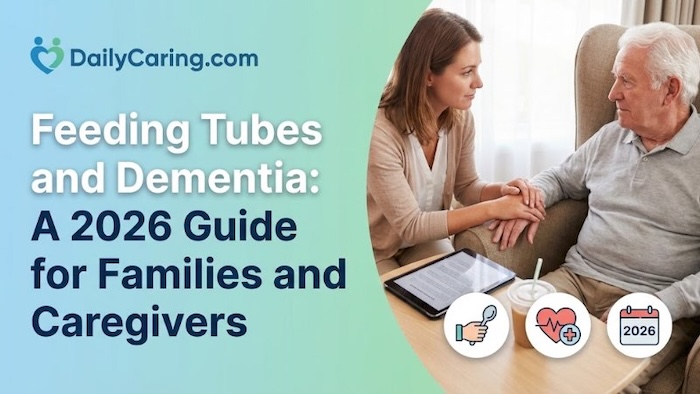
In the final stages of Alzheimer’s Disease or other forms of dementia, the body’s natural process includes a gradual decline in the desire and ability to eat. When this happens, families often face the pressure of choosing between a feeding tube and continuing hand feeding.
The 2026 Clinical Reality: Tube Feeding vs. Hand Feeding
Newer studies, including the 2024 ESPEN Guidelines, emphasize that for patients with severe dementia, enteral nutrition (tube feeding) often does more harm than good.
The following table compares the two most common approaches based on recent clinical outcomes:
| Decision Factor | Careful Hand Feeding | Tube Feeding (PEG/NG) |
|---|---|---|
| Primary Care Goal | Comfort and sensory pleasure | Caloric intake and hydration |
| Long-term Survival | Equal to tube feeding | No proven survival benefit |
| Infection Risks | Low (Natural process) | High (Pneumonia/Stoma) |
| Social/Human Value | High (Engagement) | Low (Medicalized) |
| Use of Restraints | Never required | Often required to prevent pulling |
Feeding Tubes and Dementia: Key Statistics for 2026
Understanding the data can help remove the “guilt” often associated with declining a feeding tube:
- No Survival Benefit: A 2021 Cochrane Review found no evidence that tube feeding increases longevity in advanced dementia.
- Increased Hospitalization: Seniors with feeding tubes are significantly more likely to be admitted to the ICU or experience complications compared to those who are hand-fed.
- Restraint Risk: Up to 50% of dementia patients with feeding tubes try to remove them, leading to the use of physical or chemical restraints to keep the tube in place.
Why Do Medical Professionals Still Suggest Feeding Tubes for People with Dementia?
Despite the guidelines, you may still feel pressured. Hospitals are often measured by “successful” discharges, and patients with feeding tubes are more likely to be placed in a skilled nursing facility.
Furthermore, Medicare reimbursement models historically favored tube feeding, though this is evolving under new 2025–2026 “Value-Based Care” initiatives that prioritize patient-centered goals.
The Alternative: “Comfort-First” Feeding
Rather than focusing on calories, a palliative approach focuses on the enjoyment of food. This includes:
- Modifying Textures: Using thickeners or purees to make swallowing easier.
- Small, Frequent Meals: Offering high-flavor, small-portion foods during the times of day when the senior is most alert.
- Hospice Support: Engaging hospice services early to manage symptoms like dry mouth without invasive procedures.
Important Note: Refusing food and water is a natural part of the body shutting down. Modern palliative medicine shows that artificial hydration at this stage can actually cause discomfort by flooding the lungs and causing labored breathing.
Feeding Tube Discussion Guide to Use With Doctors
Navigating a medical consultation while balancing your loved one’s dignity can feel overwhelming, especially when you’re being presented with complex clinical options.
To help you advocate for a “Comfort-First” approach, we’ve developed this DailyCaring Discussion Guide featuring targeted questions designed to shift the focus from medical metrics back to your loved one’s quality of life.
Discussion Guide: Questions to Ask the Medical Team
Use these questions to help frame the conversation around “Comfort-First” care and ensure your loved one's dignity is the priority.
-
Goals of Care: “Given that my loved one is in the advanced stages of dementia, how will a feeding tube improve their daily quality of life specifically?”
-
Risk vs. Benefit: “What are the risks of aspiration pneumonia or infection with a feeding tube versus continuing with careful hand-feeding?”
-
Physical Comfort: “If they try to pull the tube out, what is the protocol? Will physical or chemical restraints be used to keep the tube in place?”
-
The ‘Hand-Feeding' Support: “What resources or staff assistance are available to support ‘comfort feeding' by hand if we choose to decline the tube?”
-
Palliative Involvement: Can we consult with a Palliative Care or Hospice specialist to discuss a comfort-focused nutrition plan?
Summary: Making Your Own Choice About Feeding Tubes and Dementia is Personal
There is no “wrong” decision when it is made with love and information. However, current medical standards from the American Geriatrics Society strongly recommend hand-feeding as the gold standard of care for advanced dementia.
The information provided in this article, including text, graphics, and tables, is for educational and informational purposes only. It is not intended to be a substitute for professional medical advice, diagnosis, or treatment. Always seek the advice of your physician or other qualified health provider with any questions you may have regarding a medical condition or the use of feeding tubes. Never disregard professional medical advice or delay in seeking it because of something you have read on DailyCaring.com.
Recommended for you:
- 3 Stages of Dementia: What to Expect
- The Five Wishes Living Will Makes End of Life Easier
- Make End-of-Life Conversations with Seniors Easier with This Helpful Guide
About the Author

Chris is a seasoned healthcare executive and entrepreneur from the Pacific Northwest. He strongly advocates for older adults and the caregivers who serve them. Chris has personal experience caring for his father, who had dementia. Chris is a technology enthusiast and an avid outdoorsman; if he's not in his office, he can usually be found on a golf course or fly-fishing out west somewhere.



Mother 86yrs.old speech is slurred,would g tube cause her to lose the ability to talk
This is definitely something you should tell her doctor right away. They would be able to evaluate whether a medical condition or her g-tube is causing a problem.
Thank you for the information in this article. My husband and I have been caregivers to his 95 year old aunt for 1 1/2 years and her dementia has gotten worse. About 10 days ago she fell and was sent to the hospital. While there it was found through a swallow test that she could no longer swallow .This article was very helpful about making a decision between a feeding tube vs hospice.
You’re so welcome! We’re so glad that this information was helpful 💜
My autistic non verbal son appendix busted at group home wasn’t taken to hospital for 2 days. Immediate surgery performed with 6 inches of bowel then. Has been in hospital with feeding tube open wound stomach vac machine. Bospitsl wants a nursing home BUT all have refused due to complex case. I am 78yrs old I need help what is his prognosis are they sending him go nursing home to die? What are my options
We’re so sorry to hear about your son’s condition. It sounds like you need local help from someone who can navigate the healthcare and nursing home systems. In terms of his condition and health outlook, you’d need to speak with a doctor who is familiar with his case to answer that question.
We’re not familiar with agencies that work with disabled adults, but a good starting point might be your city or county’s department of disability services.
I went to this URL to find out about feeding tubes and did not find out anything about them….why beyond the use with dementia problems.. what I want to know is the facts about their construction, how they are cleaned, how the food is fed through them and a whole lot more questions pertaining to the how the food is fed through them, how the tube is kept clean, etc; etc; etc.
I’m sorry you were disappointed by the content of this article. The focus is on looking at the reasons why someone might choose to use or not use a feeding tube for someone with dementia who is no longer able to eat on their own. The purpose wasn’t to discuss the mechanics of a tube feeding system.