













For many stroke survivors, the simple act of getting dressed can feel like a mountain to climb. What used to take minutes might now take much longer, often leading to frustration for both the survivor and their caregiver. However, regaining this skill is a powerful milestone in recovery, offering a sense of dignity and a tangible step toward independence.
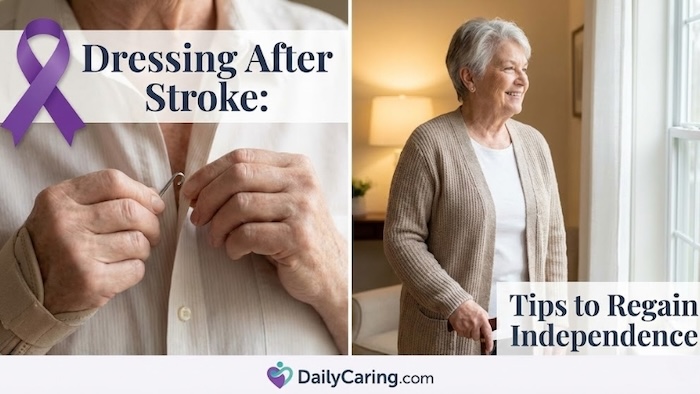
With patience, the right techniques, and a few clever tools, dressing doesn't have to be a daily struggle. Here is how to navigate the process and regain your confidence.
The Golden Rule: Weak Side First
The most important technique to remember is the “Affected Side First” rule.
- When Dressing: Always place your affected (weaker) arm or leg into the garment first. This allows you to use your stronger side to maneuver the fabric around the side that has less mobility.
- When Undressing: Do the opposite. Remove your stronger arm or leg first, which makes it much easier to slide the garment off the affected side.
Safety and Energy Conservation
Stroke recovery is exhausting work. Save your energy for the tasks that matter by making the dressing process as safe and efficient as possible.
- Sit to Succeed: Always dress while seated in a sturdy chair with armrests. This eliminates the risk of falls and conserves energy for the actual dressing movements.
- Plan Your Layout: Before you start, lay your clothes out in the order you will put them on. This reduces the cognitive load and prevents you from having to reach or twist once you’ve already started.
- Use Your Mirror: Dressing in front of a mirror can help you stay oriented and ensure that buttons or seams are aligned without straining your neck or body.
VIDEO: One-Handed (Upper Body) Dressing Following a Stroke
This is an excellent video because it provides practical, step-by-step demonstrations that cover:
- One-Handed Techniques: Clear instructions on how to put on and take off both t-shirts and button-down shirts using only one arm.
- Adaptive Strategies: It highlights the importance of choosing looser-fitting clothing and sitting for balance.
- Clever “Hacks”: The video includes a unique tip for using a simple back scratcher to adjust clothing in hard-to-reach areas.
Smart Wardrobe Choices: Adaptive Clothing
You don't have to struggle with tiny buttons or complicated laces. Modern adaptive clothing is designed to look like regular fashion while incorporating features that make dressing easy.
- Magnets and Velcro: Swap traditional buttons for magnetic or Velcro closures. These allow you to “fasten” a shirt with one hand almost instantly.
- Elastic Everything: Choose pants with full elastic waistbands. They are far easier to pull up than denim with traditional zippers and buttons.
- Slip-On Footwear: Look for shoes with Velcro straps or elastic “no-tie” laces to eliminate the need for two-handed knot tying.
Helpful Tools (Dressing Aids)
Sometimes, a little extra reach or grip is all you need. These simple tools act as an extension of your body:
- Button Hooks & Zipper Pulls: These allow you to manipulate small fastenings with one hand and very little finger dexterity.
- Sock Aids: A simple plastic sleeve that allows you to slide your sock onto your foot without having to bend over deeply.
- Reachers/Dressing Sticks: These help you hook clothing from the floor or pull a shirt over your shoulder without overextending.
VIDEO: One-Handed (Lower Body) Dressing Following a Stroke
A Note for Caregivers: Practice the Power of Patience
It is tempting to jump in and do it for them to save time, but partial assistance is often more helpful for long-term recovery. Offer encouragement and only step in when the survivor hits a genuine “wall”. Celebrating the small win of successfully pulling up a sleeve can do wonders for their mental health and motivation.
Final Thoughts About Learning How to Dress Following a Stroke
Mastering independent dressing after a stroke is a journey that requires patience, practice, and the right support. By incorporating adaptive clothing, using thoughtful techniques, and celebrating incremental progress, stroke survivors can gradually rebuild their confidence and autonomy.
This process not only enhances daily living but also contributes to broader physical and emotional recovery. With perseverance and the tools shared here, dressing can transform from a frustrating challenge into an empowering achievement, reinforcing the resilience and dignity of every individual on the path to recovery.
Recommended for you:
- Stroke Therapy Exercises for Upper and Lower Body [Video]
- Specialized Senior Clothing Solves Dressing Problems
- 11 Adaptive Utensils and Eating Aids for Hand Tremors, Dementia, Parkinson’s, Stroke
About the Author

Chris is a seasoned healthcare executive and entrepreneur from the Pacific Northwest. He strongly advocates for older adults and the caregivers who serve them. Chris has personal experience caring for his father, who had dementia. Chris is a technology enthusiast and an avid outdoorsman; if he's not in his office, he can usually be found on a golf course or fly-fishing out west somewhere.


I am a Home caregiver and I have a client,whohad a stroke in her right arm.
We hope these tips are useful in helping your client get dressed more independently.