











As we age, our immune systems need a stronger defense team to stay in the game. What might be a minor illness for a younger person can lead to serious complications, hospitalization, or even long-term health decline for aging adults.
The good news is that you have a powerful, proactive tool to help protect your loved one: recommended vaccines. Think of them as a vital shield, bolstering their natural defenses to prevent common yet dangerous illnesses and safeguard their hard-earned vitality.

Vaccinations Protect Aging Adults from Serious Illness
Vaccines are a simple, quick, and inexpensive way to protect seniors from serious illness.
Vaccines are necessary because people aged 65 and older have weaker immune systems or ongoing health conditions that put them at higher risk of complications from vaccine-preventable diseases.
For example, about 320,000 people get pneumococcal pneumonia every year, which leads to over 150,000 hospitalizations and 5,000 deaths, mostly among older adults.
We explain why vaccines are essential for senior health and share the top 5 recommended vaccines for seniors.
We also share a helpful CDC resource to take to doctor’s appointments – an adult vaccine schedule.
Why Vaccinations are Critical for Aging Adults
The most important reason to keep up to date with vaccinations is that seniors are more vulnerable to serious, potentially life-threatening infections.
Older adults also need to keep vaccines current because:
- They might not have been vaccinated as a child
- New or more effective vaccinations might be available now
- Their immunity could have faded over time
5 Recommended Vaccines for Seniors
Seniors should discuss these five vaccinations with their doctors:
- High-dose flu (annual)
- Pneumococcal
- Shingles
- Diphtheria, Tetanus, and Whooping Cough (Tdap)
- Respiratory Syncytial Virus (RSV)
Bring the CDC Vaccine Schedule to Your Doctor's Appointments
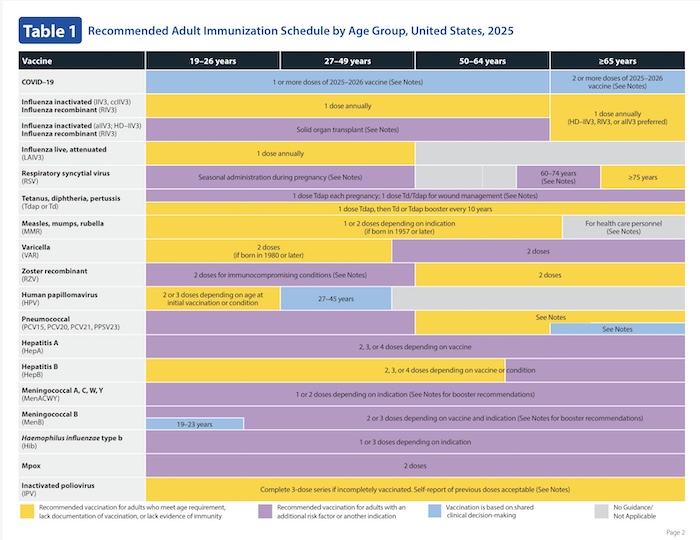
The CDC created a handy adult vaccine schedule that shows which vaccines are recommended at which ages.
Please print it out and take it to your loved one's next doctor appointment.
The schedule helps you learn more about the vaccines they might need and make sure they aren’t missing essential vaccines that could help protect their health.
*Pro tip: A quick way to take notes is to circle the vaccines the doctor recommends. If your older adult isn’t getting the shots right away, you’ll be able to remember which ones are needed later. If they get the vaccines right away, you can write the date next to each vaccine they received and have your own record.
CDC Online Vaccine Finder Creates a Custom List for Doctors
Note: The CDC hasn't updated their vaccine finder yet, keep checking back for updates.
Another quick way to figure out which vaccines you should ask your older adult’s doctor about is to take the CDC’s online vaccine quiz.
Answer 10 simple yes/no questions to get a list of recommended vaccines to print out and show to an older adult’s doctor.
Next Steps: Print the CDC adult vaccine schedule to determine which vaccines are needed today!
Final Thoughts About Vaccines for Aging Adults
Scheduling a vaccination appointment is a simple act that carries profound weight. It’s an investment in continued independence, quality of life, and your own peace of mind. By taking this proactive step, you're not just preventing disease; you're helping to ensure aging adults have the strength to enjoy more active, fulfilling days ahead.
Have a conversation with their doctor today – it's one of the most effective and loving ways to champion their health for seasons to come.
*This post is for informational purposes only. Aging adults and their caregivers should always consult with their physician or healthcare advocate before making any medical decisions.
Recommended for you:
- Flu Shot for Seniors: 5 Reasons Why It’s So Important
- 7 Tips for Helping Seniors at the Doctor’s: Being a Health Advocate
- 5 Questions to Ask Doctors About Tests and Treatments for Seniors
About the Author

Connie is the founder of DailyCaring.com and was a hands-on caregiver for her grandmother for 20 years. (Grandma made it to 101 years old!) She knows how challenging, overwhelming, and all-consuming caring for an older adult can be. She also understands the importance of support, especially in the form of practical solutions, valuable resources, and self-care tips.