












In 2026, as the “Silver Tsunami” reaches its peak, the number of seniors taking five or more daily prescriptions has climbed to over 80%. This increase in polypharmacy has led to a surge in Drug-Induced Parkinsonism (DIP) – a condition where medication side effects mimic the tremors, stiffness, and balance issues of Parkinson’s disease.
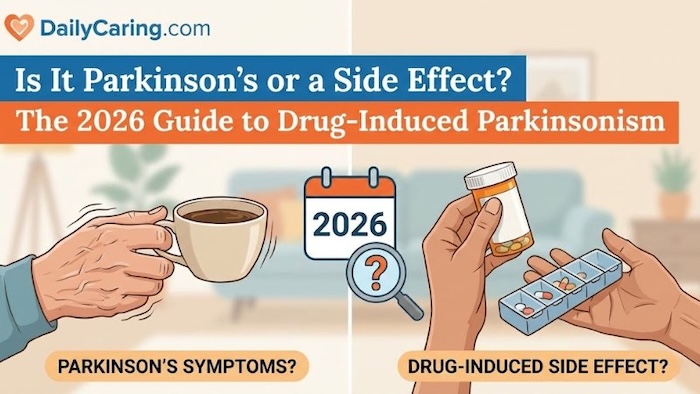
For a caregiver, the sudden onset of a “shuffling gait” is alarming. However, unlike idiopathic Parkinson's, DIP is often reversible if caught early. Research from the National Institute on Aging suggests that nearly 20% of all Parkinsonism cases in older adults may actually be caused by medications rather than the disease itself.
The 2026 Landscape: Parkinson's By the Numbers
- 15–20%: The estimated percentage of secondary Parkinsonism cases worldwide attributed to medication side effects.
- 1.2 Million: The number of Americans currently living with Parkinson’s, a figure that continues to rise, making accurate diagnosis vital to avoid unnecessary lifelong treatment.
- 10%: The percentage of DIP cases that may actually “unmask” an underlying neurodegenerative condition like Lewy Body Dementia.
2026 Clinical Snapshot: The Impact of a Parkinson's Disease Misdiagnosis
- Misdiagnosis Rate: Up to 15% of seniors diagnosed with Parkinson’s are later found to have symptoms caused solely by their medication regimen.
- Recovery Window: Symptoms of DIP typically begin to resolve within 4 to 8 weeks after the offending drug is discontinued under medical supervision.
- Key Indicator: While Parkinson’s usually starts on one side of the body, medication-induced symptoms often appear symmetrically on both sides at once.
High-Risk Medications to Watch in 2026
The “Beers Criteria,” the gold standard for senior medication safety, continues to warn against several drug classes that block dopamine receptors.
The following table highlights the most common culprits. If your loved one is taking these, a medication review with their doctor is a critical next step.
| Drug Class | Common Examples | Risk Level |
|---|---|---|
| First-Gen Antipsychotics | Haloperidol (Haldol), Fluphenazine | CRITICAL RISK |
| GI & Anti-Nausea | Metoclopramide (Reglan), Prochlorperazine | HIGH RISK |
| Second-Gen Antipsychotics | Risperidone (Risperdal), Olanzapine | MODERATE |
| Certain Antihistamines | Diphenhydramine (Benadryl), Promethazine | USE CAUTION |
New Parkinson's Developments in 2026
This year, the FDA is reviewing Tavapadon, a promising new D1-selective dopamine agonist. As these new treatments emerge, distinguishing between “true” Parkinson's and “Drug-Induced” symptoms is more important than ever to ensure your loved one receives the correct therapy.
The Caregiver Action Plan When Encountering Parkinson's Symptoms
If you notice sudden tremors, stiffness, or a “shuffling gait” after a medication change:
- Review the Timeline: Did symptoms start within 1–3 months of a new drug or dose increase?
- Ask for a Medication Review: Use the 2026 Beers Criteria as a reference.
- Consult a Specialist: A movement disorder specialist can use tools like a DaTscan to differentiate between DIP and PD.
Conclusion: Empowerment Through Information
The distinction between Parkinson’s Disease and Drug-Induced Parkinsonism is more than a clinical nuance; it is a pathway to potentially reversing debilitating symptoms.
As we navigate the complex medical landscape of 2026, your role as an informed caregiver is the most powerful tool in your loved one’s care team. By staying vigilant about medication timelines, utilizing the 2026 Beers Criteria, and advocating for a specialist’s review, you can ensure that your loved one receives the most accurate diagnosis and the most effective treatment possible.
Remember, a “shuffling gait” or a new tremor doesn't always mean a permanent diagnosis; sometimes, the solution is as simple as a safer prescription.
Medical Disclaimer
IMPORTANT: The content found on DailyCaring.com is for informational and educational purposes only. It is not intended as a substitute for professional medical advice, diagnosis, or treatment.
Always seek the advice of your physician or other qualified health provider with any questions you may have regarding a medical condition or medication. Never disregard professional medical advice or delay in seeking it because of something you have read on this website.
DailyCaring.com does not recommend or endorse any specific tests, physicians, products, procedures, or opinions. Reliance on any information provided by DailyCaring, its employees, or others appearing on the site is solely at your own risk.
© 2026 DailyCaring.com. All rights reserved.
Recommended for you:
- Advice from a Doctor: Check If Meds Are Causing Problems
- Medications Seniors Should Avoid: The Beers List
- Hand Tremors: Adaptive Utensils and Eating Aids
About the Author

Chris is a seasoned healthcare executive and entrepreneur from the Pacific Northwest. He strongly advocates for older adults and the caregivers who serve them. Chris has personal experience caring for his father, who had dementia. Chris is a technology enthusiast and an avid outdoorsman; if he's not in his office, he can usually be found on a golf course or fly-fishing out west somewhere.